French National Dishes

Poulet Gaston Gérard

This Dijon chicken combines paprika, Burgundy white wine, Dijon mustard, cream and Comté, with the cheese gratinated only after the chicken has already reached 74 °C.

French National Dishes
Share
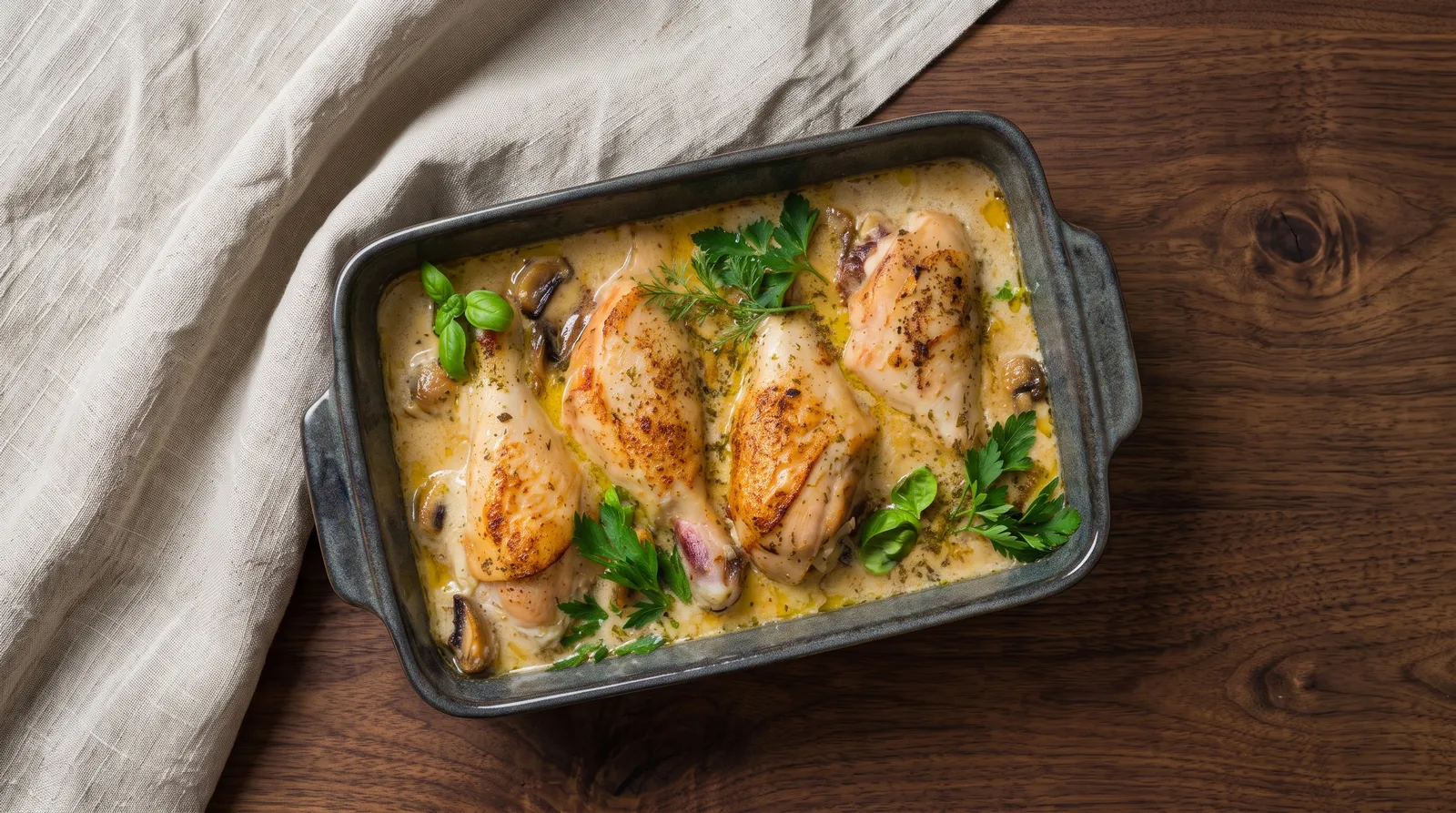
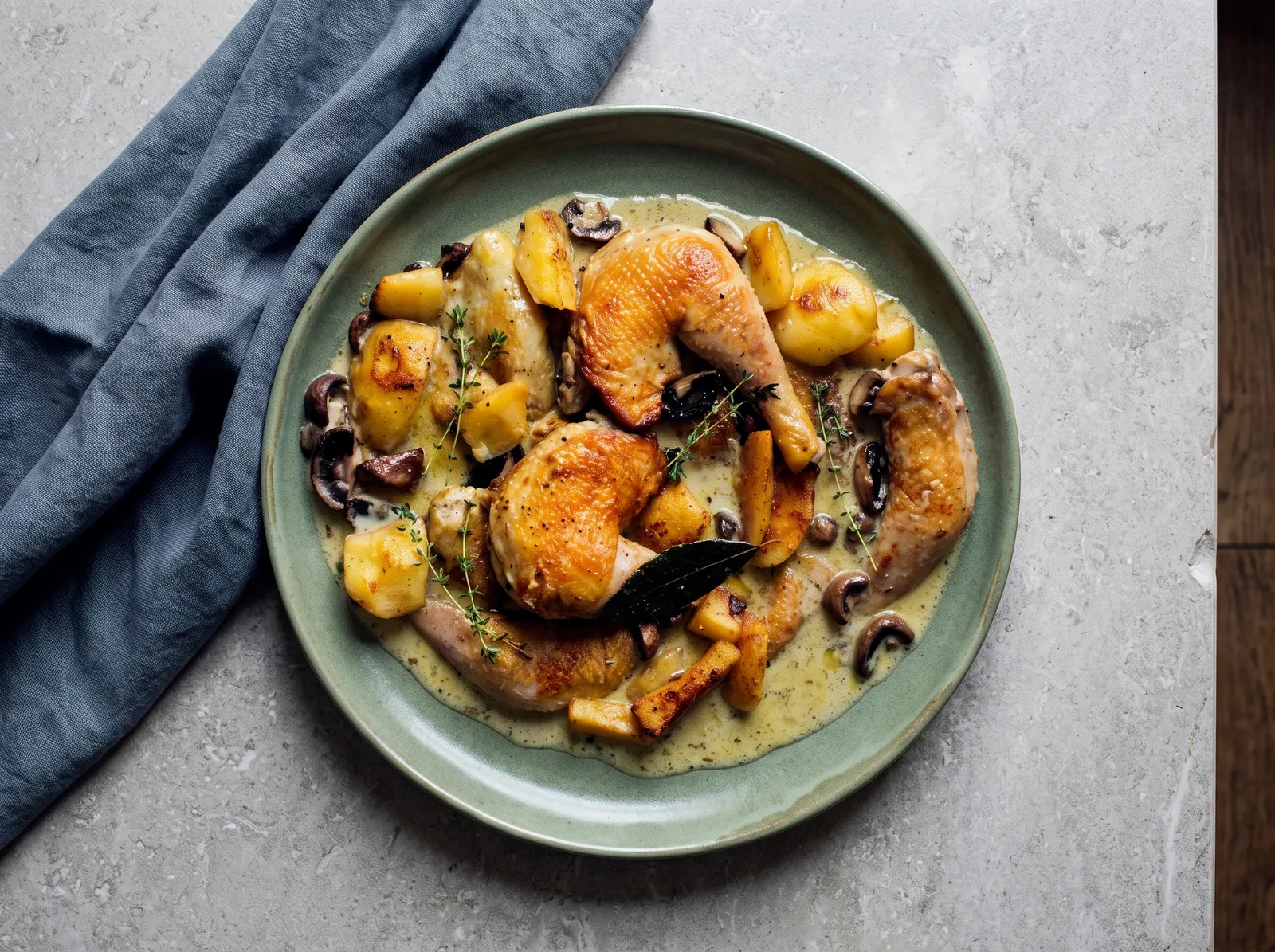
Poulet Gaston Gérard — shown in an oven dish
Prep 20 minutes
Cook 70 minutes
Total 90 minutes
Yield 6 main-course portions
Overview

Dijon Poulet Gaston Gérard with mustard, cream and Comté

Poulet Gaston Gérard is a Dijon preparation whose identity depends on more than mustard. Paprika, Burgundy white wine, Dijon mustard, cream and Comté work together: paprika colours and perfumes the savoury base, wine lifts the browned fond, mustard gives the sauce its sharpness, and Comté both enriches the sauce and forms the final gratin.

The familiar story associates the dish with Gaston Gérard, a former mayor of Dijon, and a kitchen accident involving his wife, but the anecdote should not carry more certainty than the evidence allows. What matters at the stove is the characteristic composition. Removing paprika or mustard while keeping the same title would flatten the dish into a generic cream chicken.

This method cooks the chicken safely before the gratin. After browning, the pieces braise in the reduced wine base until every thick section reaches 74 °C. Only then are cream, Dijon mustard and part of the Comté worked into the sauce. The remaining cheese goes on top for a short, hot finish, so the gratin colours without becoming the primary cooking method for raw poultry.
Success points

Success points

  • Paprika goes into the sauce base and again lightly at the finish; it is not optional under this name.
  • Dijon mustard is stirred into the cream sauce over gentle heat.
  • Comté is divided between the sauce and the final gratin.
Ingredients

Ingredients

Chicken

  • 1800 g bone-in chicken pieces — 8 skin-on pieces; purchased weight; expected cooked edible yield about 1050 g
  • 30 g unsalted butter
  • 7 g fine salt — divided
  • 2 g black pepper — freshly ground

Gaston Gérard sauce and gratin

  • 120 g yellow onion — finely chopped
  • 15 g plain wheat flour
  • 8 g sweet paprika — divided
  • 300 ml dry Burgundy white wine — contains sulphites
  • 300 ml full-fat liquid cream
  • 35 g Dijon mustard
  • 180 g Comté — finely grated
Method

Method

Cook the chicken and sauce

  1. Brown the chicken. Melt the butter and brown the seasoned chicken in batches, starting skin-side down. The skin is golden and the butter solids are nutty rather than burnt. Move the chicken to a clean plate.

  2. Build the paprika base. Add the onion and cook until soft, then stir in the flour and 6 g of the paprika for the final minute. The onion is soft, the flour smells toasted rather than raw, and the paprika has not darkened.

  3. Reduce the wine. Pour in the Burgundy white wine, scrape the base and simmer for 5 minutes. The wine has reduced to about two thirds of its starting volume and the fond is dissolved.

  4. Cook the chicken safely. Return the chicken, cover and cook gently for 30 minutes. Every chicken piece registers 74 °C at the coldest thick point away from bone. Transfer the cooked chicken briefly to a clean dish.

  5. Finish the mustard cream sauce. Lower the heat, stir in the cream and Dijon mustard, then melt in 90 g of the grated Comté over about 7 minutes. The sauce is smooth, mustard-sharp and thick enough to coat the chicken without splitting. Return the chicken and coat it.

  6. Gratinate at the end. Scatter the remaining 90 g Comté over the coated chicken, add the remaining 2 g paprika and gratinate at 220 °C for about 10 minutes. The remaining Comté is bubbling with scattered golden-brown spots while the sauce remains creamy below.

Serving and planning

Practical

Serving and planning

Serve directly from the hot casserole once the gratin settles for a minute. Potatoes, rice or pasta can accompany it but are outside the base nutrition.

Make-ahead

The chicken can be browned and the onion-paprika base prepared earlier the same day, refrigerated separately and brought back together for the braise. Make the cream-mustard sauce and gratin near service.

Storage and reheating

Refrigerate within 2 hours for 3–4 days. Reheat gently, covered, until the chicken reaches 74 °C; uncover only briefly if the cheese surface needs refreshing.

Valid substitutions

Another Alpine hard cheese can melt, but it does not preserve the Comté identity. Yellow prepared mustard is not a direct substitute for Dijon mustard. Non-Burgundy dry white wine changes the regional profile.

Nutrition per serving

Nutrition per serving

  • Serving sizeabout 175 g cooked edible chicken meat and skin plus about 150 g sauce and gratin
  • Calories720 kcal
  • Carbohydrate11 g
  • Protein55 g
  • Fat46 g
  • Fibre1 g
  • Sodium980 mg
Allergens and food safety

Allergens and food safety

Milk from butter, cream and Comté.

Mustard from Dijon mustard.

Gluten from wheat flour.

Sulphites from white wine.

Prevent raw-poultry cross-contamination.

Cook every piece to 74 °C away from bone before gratinating.

White wine may retain alcohol after cooking; sulphites remain.

Mustard and dairy allergens remain after cooking.

Refrigerate leftovers within 2 hours and reheat to 74 °C.

Bones, hot fat and the gratin pan are physical hazards.

Closing

Closing

  • Result: browned chicken under a mustard-cream sauce with paprika warmth and a bubbling Comté gratin.
  • Decisive technique: get every chicken piece to 74 °C before the brief 220 °C cheese gratin.