French National Dishes

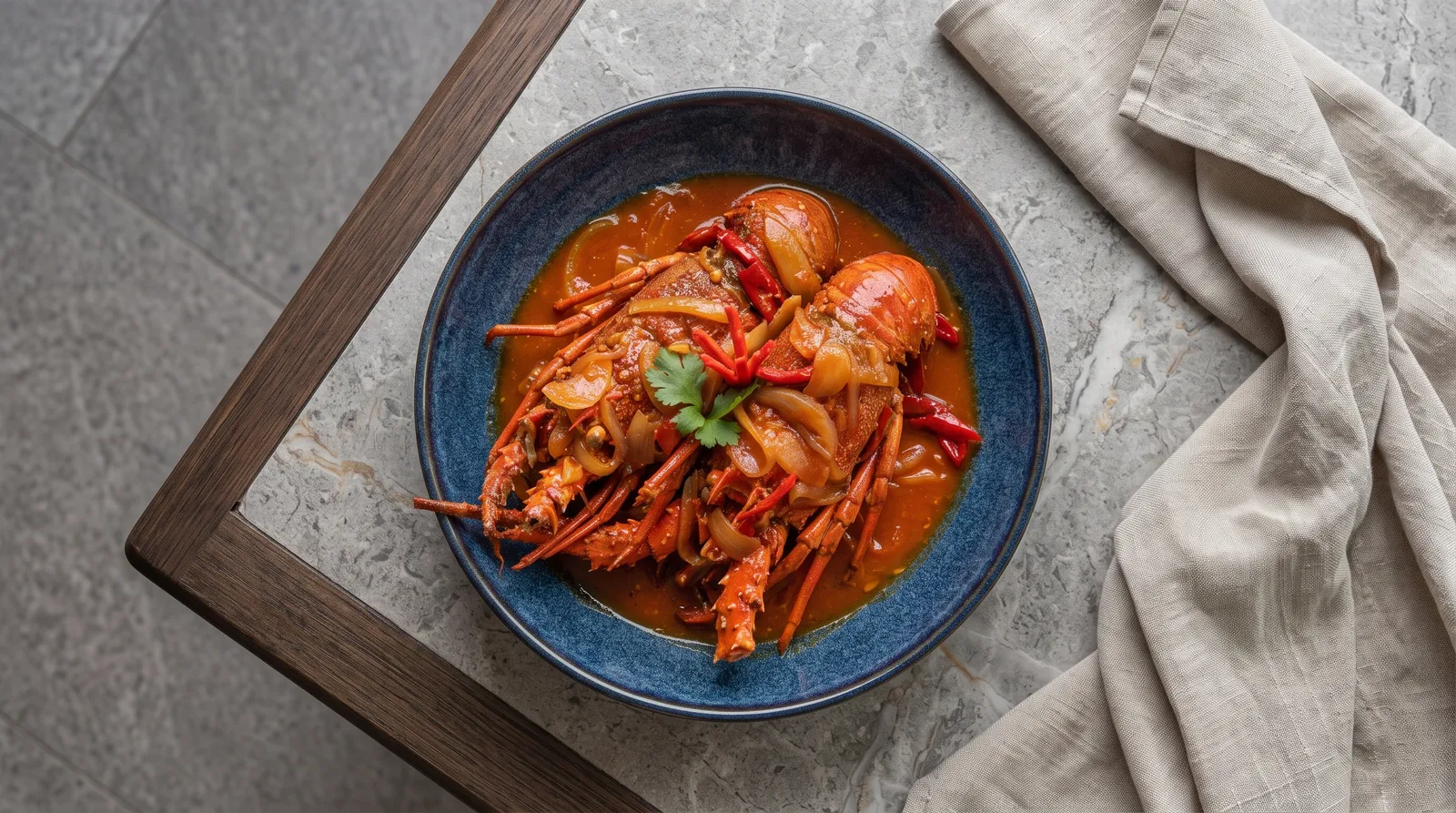
Homard à l’armoricaine

Jointed commercially dispatched lobster cooks in a light tomato sauce reduced with white wine, Cognac and shallot, then finishes with butter without flambéing or overcooking the meat.

French National Dishes
Share
Homard à l’armoricaine — served on a plate
Prep 22 minutes
Cook 46 minutes
Total 68 minutes
Yield 4 plated lobster portions with about 650 ml sauce
Introduction and overview

Homard à l’Armoricaine with Tomato, White Wine and Cognac

Homard à l’armoricaine, also encountered as homard à l’américaine, is a French lobster preparation in which shell-on pieces finish in a sauce of tomato, dry white wine, Cognac and aromatics. The sauce should taste of lobster and reduced wine rather than behave like a thick tomato pasta sauce, and the lobster remains recognisably in jointed pieces rather than being turned into bisque.

The lobster is commercially dispatched before it enters the kitchen. That avoids turning the recipe into instructions for killing a live animal and keeps the focus on cooking. Brief searing colours the shell and starts the aroma; the pieces then come out while the shallots, Cognac, wine, tomato and stock are reduced in stages.

Flambéing is unnecessary. Cognac can be added with the pan moved away from an open flame, then reduced normally with the wine. That is safer around extraction systems and still concentrates the sauce. Cooking lowers the alcohol content but does not guarantee that all alcohol disappears, so the finished dish remains an alcohol-containing preparation.

Lobster is easy to overcook. The covered finish is brief, and each piece should come out when its thickest edible flesh reaches 63 °C and looks pearly opaque. Any extra sauce reduction happens after the lobster has left the pan, followed by cold butter off the heat for a thin glossy finish.
Success points

Success points

  • Use only commercially dispatched lobster or traceable raw pieces; the method does not include live dispatch.
  • Reduce the alcohol before adding the tomato and stock, and skip flambéing entirely.
  • Remove lobster pieces as soon as the thickest flesh reaches 63 °C so the meat stays tender.
Ingredients

Ingredients

Lobster

  • 1400 g commercially dispatched whole raw lobster, chilled, jointed into claws, knuckles and tail pieces — about 350 g cooked edible lobster meat after shells are discarded
  • 30 g olive oil, for controlled searing

Armoricaine sauce

  • 80 g shallots, finely chopped
  • 10 g garlic, finely chopped
  • 400 g ripe tomatoes, peeled if desired, seeded and chopped
  • 20 g tomato paste, concentrated
  • 250 ml dry white wine, about 12–13% alcohol
  • 60 ml Cognac, about 40% alcohol
  • 200 ml unsalted fish or crustacean stock, measured
  • 30 g unsalted butter, cold, cubed for finishing
  • 3 g fresh thyme, leaves picked
  • 1 piece bay leaf, whole
  • 10 g flat-leaf parsley, chopped
  • 1 g cayenne pepper, measured
  • 1 g black pepper, freshly ground
  • 2 g fine salt, measured
Method

Method

Directions

  1. Prepare the lobster safely. Use a commercially dispatched lobster. Separate the tail and claw sections into manageable pieces and remove loose shell fragments. The tail and claw sections are separated into manageable pieces without loose shell shards.

  2. Sear the lobster pieces. Heat the olive oil over medium-high heat. Sear the lobster pieces for about 6 minutes, turning them so the shells colour without scorching. The shells turn vivid red in patches and the exposed flesh just begins to turn opaque. Transfer the pieces to a tray.

  3. Build the aromatic base. Lower the heat to medium, add the shallots and cook for 4 minutes, then add the garlic for 1 minute. The shallots are soft and translucent with only light colouring.

  4. Reduce the wine and Cognac. Move the pan away from any open flame, add the Cognac, return to medium heat, then add the wine. Simmer for about 12 minutes. The alcohol mixture has reduced to roughly one third of its initial volume and smells less sharply alcoholic. Do not flambé.

  5. Develop the sauce. Add the tomatoes, tomato paste, 200 ml stock, thyme, bay, cayenne, pepper and salt. Simmer for 10 minutes. The tomatoes have softened and the sauce lightly coats a spoon while remaining fluid enough to braise the lobster.

  6. Finish the lobster in the sauce. Return the lobster pieces to the pan, coat with sauce, cover and cook for about 8 minutes. The lobster flesh is pearly opaque and reaches 63 °C in its thickest section. Remove each piece as soon as it reaches temperature.

  7. Finish the sauce. If the sauce is still thin, simmer it for up to 5 minutes with the lobster removed. Take the pan off the heat and whisk in the cold butter and parsley for about 2 minutes. The finished sauce coats the back of a spoon in a thin glossy layer without looking greasy.

Serving

Practical

Serving

Place one share of lobster pieces in each warmed shallow bowl and spoon the glossy sauce around and over them. Provide a separate bowl for discarded shells. Bread can be offered at the table, but it is not part of the recipe or nutrition estimate.

Storage and reheating

Lobster is best immediately after cooking. If leftovers remain, remove edible meat from shells, cool meat and sauce promptly and refrigerate within 2 hours at 4 °C or below for up to 2 days. Reheat the sauce gently and warm the lobster only until it reaches 74 °C; repeated heating quickly toughens the meat.

Make-ahead and substitutions

The tomato-wine base can be prepared through the first reduction a few hours ahead, cooled rapidly and refrigerated. Reheat it before adding the lobster. Do not cook the lobster ahead merely for convenience. Some alcohol remains after cooking; the recipe must not be presented as alcohol-free.

Nutrition per serving

Nutrition per serving

  • Serving sizeabout 90 g edible lobster plus sauce
  • Calories285 kcal
  • Carbohydrate12 g
  • Protein25 g
  • Fat14 g
  • Fibre3 g
  • Sodium620 mg
Allergens and food safety

Allergens and food safety

Crustaceans from lobster, milk from butter, and sulphites from wine and potentially Cognac depending on product labelling. Keep raw lobster chilled at 4 °C or below, avoid sharp shell injuries, cook the thickest lobster flesh to 63 °C, refrigerate leftovers within 2 hours and reheat leftovers to 74 °C. Alcohol is reduced but not guaranteed to evaporate completely.

Closing

Closing

  • Result: Jointed commercially dispatched lobster cooks in a light tomato sauce reduced with white wine, Cognac and shallot, then finishes with butter without flambéing or overcooking the meat.
  • Decisive technique: Use only commercially dispatched lobster or traceable raw pieces; the method does not include live dispatch.