




Velence, az Adriai-tenger gyöngyszeme
Romantikus csatornáival, lenyűgöző építészetével és nagy történelmi jelentőségével Velence, ez a bájos Adriai-tenger partján fekvő város, lenyűgözi a látogatókat. Ennek a nagyszerű központnak a…


6
adagok45
jegyzőkönyv120
jegyzőkönyv780
kcal60
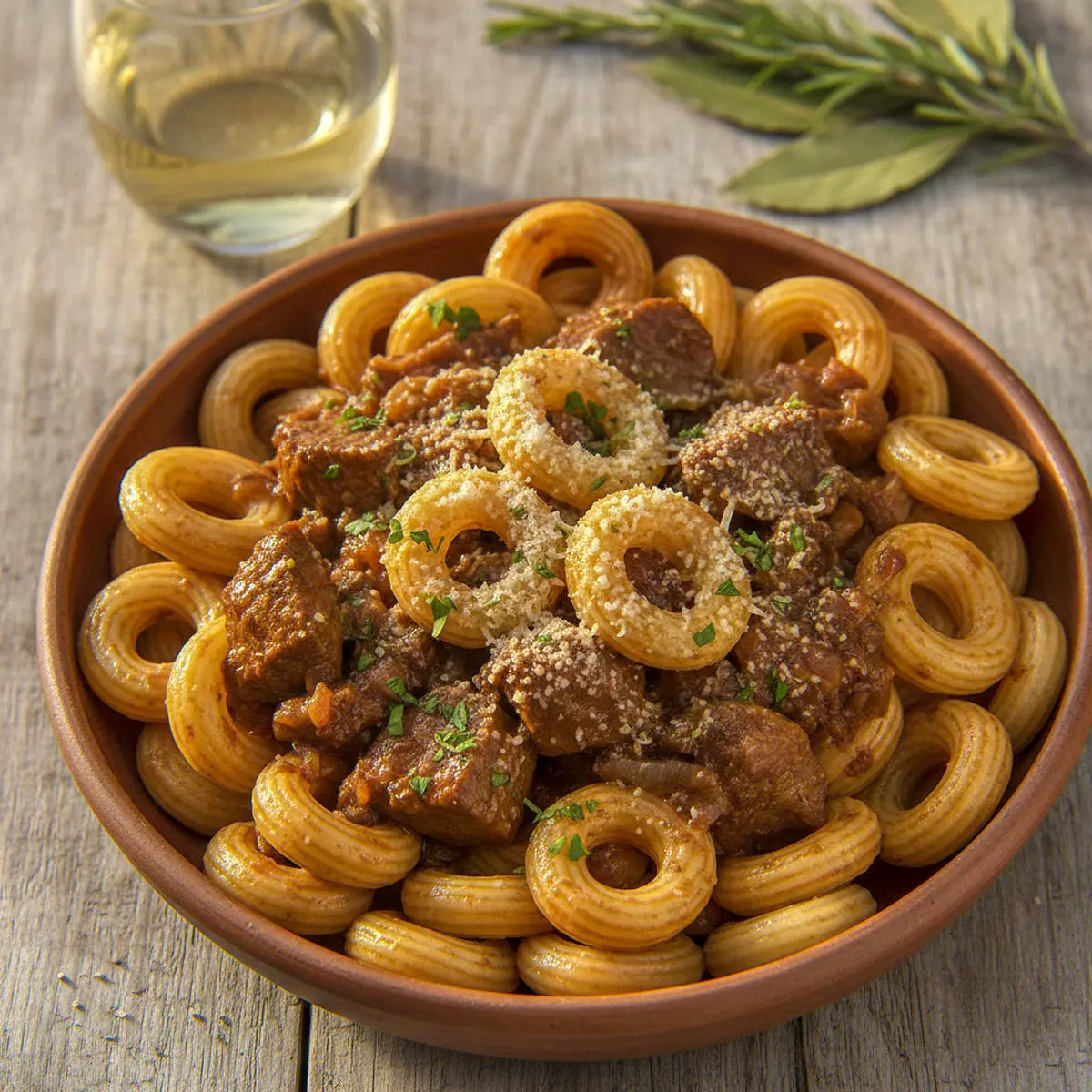
jegyzőkönyvThis recipe presents šurlice, the hand-rolled island pasta of Krk, paired with a slow-simmered beef goulash. A firm, elastic dough of flour, egg, water, and olive oil rests, then gets rolled around a slim stick to create long, hollow tubes that cook to a pleasantly chewy texture. While the dough relaxes, beef chuck stews with onion, tomato, paprika, and red wine until the meat turns tender and the sauce thickens, glossy and brick-red. The finished pasta absorbs the sauce both inside and out, so each strand carries meat, sweetness from long-cooked onions, and fragrant paprika. A final shower of grated sheep cheese or pecorino and a scatter of parsley lift the dish at the table. Though rooted in Krk’s festival and family cooking, the method suits any kitchen willing to devote a little time to rolling and simmering.
400 g (about 3 ¼ cups) all-purpose flour
Creates a firm, workable dough; bread flour yields a chewier bite, while “00” flour gives a silkier texture.
1 large egg, room temperature
Adds richness and structure to the dough.
1 large egg yolk, room temperature
Deepens color and flavor without adding too much extra moisture.
160–190 ml (⅔–¾ cup) lukewarm water
Hydrates the dough; exact amount varies with flour and humidity.
1 tbsp extra-virgin olive oil
Softens the dough slightly and contributes subtle fruitiness.
1 ½ tsp fine sea salt
Seasons the pasta from within.
Flour for dusting
Prevents sticking while rolling and shaping.
2 tbsp extra-virgin olive oil
For sautéing and gentle richness in the finished sauce.
800 g (about 1 ¾ lb) beef chuck, cut in 2–3 cm cubes
Well-marbled and suited to long simmering; shoulder or blade cuts work similarly.
450 g (about 1 lb) yellow onions, finely chopped
Forms the sweet, savory base of the goulash.
3 gerezd fokhagyma, apróra vágva
Aromamális mélységet ad.
2 evőkanál paradicsompüré
Concentrates tomato flavor and helps the sauce cling to the pasta.
400 g (14 oz) canned crushed tomatoes
Provides body and gentle acidity; fire-roasted tomatoes add a light smokiness.
250 ml (1 cup) dry red wine
De-glazes the pan and contributes complexity; a medium-bodied Croatian-style or other Mediterranean red fits well.
500 ml (2 cups) beef stock, low sodium
Extends the braising liquid while keeping flavors balanced; vegetable stock works for a lighter profile.
2 tsp sweet paprika (Croatian, Hungarian, or Spanish)
Lends warm color and a gentle pepper note.
½ tsp smoked paprika (optional)
Adds a subtle smoky layer, especially pleasant if fire-roasted tomatoes are not used.
1 tsp dried rosemary, lightly crushed
Echoes herb notes common in regional goulash.
2 babérlevél
Give a background herbal aroma.
1–1 ½ tsp fine sea salt, plus more to taste
Seasons the sauce and meat.
½ tsp freshly ground black pepper, plus more to taste
Brings gentle heat and complexity.
45 g (about ½ cup) finely grated hard sheep cheese or pecorino
Echoes Krk’s sheep-cheese tradition; Parmesan can stand in if needed.
2–3 tbsp chopped fresh flat-leaf parsley
Adds color and freshness at the end.
Combine dry ingredients
Place the flour and 1 ½ tsp salt in a large mixing bowl and stir to distribute the salt evenly (2 minutes).
Add egg, yolk, and most of the water
Make a shallow well in the center, add the egg, yolk, olive oil, and about ⅔ of the water, then mix with a fork until a shaggy dough forms (3–4 minutes).
Knead to a firm, smooth dough
Turn the mixture onto a lightly floured surface and knead, adding small splashes of the remaining water only if the dough feels dry, until smooth, elastic, and quite firm (8–10 minutes).
Rest the dough
Shape the dough into a ball, wrap it in plastic or cover with an upturned bowl, and let it rest at room temperature while the goulash starts cooking (45–60 minutes).
Brown the beef
Warm 1 tbsp olive oil in a wide heavy pot over medium-high heat, add the beef in a single layer (in batches if needed), season lightly with salt and pepper, and brown on at least two sides; transfer browned pieces to a plate (10–15 minutes).
Cook the onions
Lower the heat to medium, add the remaining 1 tbsp olive oil and the chopped onions, scrape up browned bits from the pot, and cook until soft and golden, stirring often (12–15 minutes).
Add garlic, paprika, and tomato paste
Stir in the garlic, sweet paprika, smoked paprika if using, and tomato paste, and cook until fragrant and slightly darkened, stirring constantly (2–3 minutes).
Deglaze with wine
Pour in the red wine, scraping the bottom of the pot, and let it simmer until reduced by about half (4–6 minutes).
Build the braise
Return the browned beef and any collected juices to the pot, add the crushed tomatoes, beef stock, rosemary, bay leaves, and 1 tsp salt, then bring to a gentle simmer (5 minutes).
Simmer until tender
Cover the pot partially and cook at a very gentle simmer, stirring occasionally and adjusting heat as needed, until the beef turns tender and the sauce thickens to a spoon-coating consistency (60–80 minutes).
Divide and roll the dough
Uncover the rested dough, cut it into 4 equal pieces, keep 3 pieces covered, and roll the first piece into a rope about 1–1.5 cm thick (3–5 minutes).
Cut into small nuggets
Slice the rope into pieces about 2–3 cm long, dust them lightly with flour, and cover with a cloth while working (3 minutes).
Form the hollow pasta
Take one piece, flatten it slightly in the palm, place the floured dowel or needle along its length, then roll the dough around it with the other hand until it forms a uniform tube; slide the tube off gently and set it on a floured tray (10–15 minutes per quarter of dough).
Repeat with remaining dough
Work through the remaining pieces of that portion, then repeat with the other three quarters, keeping finished šurlice lightly floured and in a single layer so they do not stick (30–40 minutes).
Adjust the goulash
Taste the sauce, add salt and pepper as needed, and remove the bay leaves; if it seems too thick, loosen with a splash of stock or water, and if too loose, simmer uncovered for a few minutes (5–10 minutes).
Boil the pasta water
Bring a large pot of generously salted water to a rolling boil; aim for water that tastes pleasantly seasoned (10 minutes, overlapping with step 15).
Cook the šurlice
Shake excess flour from the pasta, add it to the boiling water, stir gently to prevent sticking, and cook until the tubes float and feel tender yet pleasantly chewy at the center (5–7 minutes).
Combine pasta and sauce
Use a slotted spoon to transfer the cooked šurlice directly into the simmering goulash, reserving some pasta water; toss gently, adding a ladle of pasta water if needed to loosen and gloss the sauce (3–4 minutes).
Befejezés és tálalás
Stir in most of the grated cheese and parsley, leaving a little for garnish, then serve the pasta and beef goulash in warm bowls with extra cheese and parsley on top (2–3 minutes).
Romantikus csatornáival, lenyűgöző építészetével és nagy történelmi jelentőségével Velence, ez a bájos Adriai-tenger partján fekvő város, lenyűgözi a látogatókat. Ennek a nagyszerű központnak a…
Görögország népszerű úti cél azok számára, akik egy felszabadultabb tengerparti nyaralásra vágynak, köszönhetően a tengerparti kincsek bőségének és a világhírű történelmi helyszíneknek, lenyűgöző…

Fedezze fel Európa leglenyűgözőbb városainak nyüzsgő éjszakai életét, és utazzon emlékezetes úti célokra! London vibráló szépségétől az izgalmas energiákig…

A hajóutazás – különösen egy körutazáson – jellegzetes és all-inclusive nyaralást kínál. Ennek ellenére vannak előnyei és hátrányai, amelyeket figyelembe kell venni, ugyanúgy, mint minden másnak…

Nagy Sándor kezdetétől a modern formáig a város a tudás, a változatosság és a szépség világítótornya maradt. Kortalan vonzereje abból fakad,…