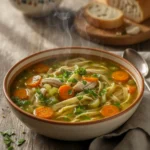
Croatian Rićet (Bean & Barley Stew)

Rićet (Barley & Bean Stew)

Rićet belongs to that family of thick, grain-and-bean stews that once powered farm work, mountain walks, and long winter evenings in Central Europe. In Croatia it appears most often in continental regions, especially the north, where barley and beans simmer slowly with smoked pork until the pot yields something closer to a village meal than a simple soup. Croatian cooks sometimes refer to similar pots as grah i kaša or grah i ričet, underlining how barley turns a bean stew into a more substantial dish with a distinct chewy softness.

The dish shares roots with the broader Central European stew known as ričet or ritschert, found in Slovenia, Austria, Bavaria, and parts of Croatia. It usually combines pot barley, beans, potatoes, carrots, celery, leeks, onions, garlic, tomato, and a generous amount of cured pork. Depending on how much liquid goes into the pot, the result can range from a ladleable soup to a spoon-standing porridge. In Croatian kitchens, the texture tends to sit somewhere in the middle: thick and creamy around the grains, yet still loose enough to sit comfortably in a deep bowl.

Traditionally, rićet carried a strong link to frugality. A modest piece of smoked pork neck, ribs, or bacon, stretched with plenty of barley, beans, and vegetables, could feed a family for days.  Mountain huts and rural taverns still serve similar bean stews to hikers on Medvednica and other ranges, where a hot, smoky bowl matched with bread answers both hunger and cold weather in a single ladle. The dish holds on to that heritage, even when it appears in modern kitchens with digital timers and enamelled cast-iron pots.

The flavor rests on three main pillars. First comes the broth from smoked pork: ribs, hock, bacon, or sausage. That base brings salt, fat, and smoke, so the stew tastes rich even when stretched with plenty of vegetables and grains. Next comes the barley, which softens but keeps a slight chew. As it cooks, the barley releases starch that thickens the pot and gives the liquid a creamy body without the need for roux. Finally, beans add both structure and a different kind of creaminess, breaking down just enough to cloud the broth while still holding their shape.

Aromatics round the whole stew out. Onions, carrots, celery root, and parsley root form a base that echoes French mirepoix but reflects Central European habits. Garlic and bay leaf deepen the flavor, while sweet paprika and a touch of tomato concentrate pull the liquid toward a warm, brick-red hue. The result is smoky but not harsh, gently sweet from the vegetables, with barley and beans giving each spoonful plenty of substance. A finishing handful of chopped parsley cuts through the richness.

This version of rićet stays close to that rural template while making a few choices that suit modern home cooks. It uses dried beans, soaked and cooked directly in the stew, which gives the broth flavor that canned beans cannot match. At the same time, the recipe keeps measurements precise and timings realistic for a weekend or relaxed evening in the kitchen. The amount of smoked meat remains moderate, so the dish feels hearty but not heavy, and the recipe relies on barley’s natural starch instead of flour, which suits those who prefer to avoid roux-thickened stews.

Rićet works well as a one-pot main course. A simple green salad or pickled vegetables on the side give brightness and crunch, while good bread takes care of the last streaks in the bowl. The stew reheats well and often tastes more rounded on the second day, which means a single cooking session can cover several meals. For households that like to cook in batches, this makes rićet a practical part of a cold-weather rotation, without losing the sense of a dish with long roots in Croatian village life.

Croatian Rićet (Bean & Barley Stew) – Hearty Village Soup

Recept od Cestovní S pomocníkKurs: Hlavní jídlo, Dušené jídloKuchyně: chorvatskýObtížnost: Středně pokročilý
Porce

6

porce
Čas na přípravu

25

zápis
Doba vaření

120

zápis
Kalorie

450

kcal

Croatian rićet is a thick bean and barley stew built on smoked pork, root vegetables, and paprika. Dried beans soak overnight, then simmer slowly with pot barley in a heavy pot until the grains turn tender and the broth thickens into a creamy, smoky base. A mix of carrots, celery root, and onion adds gentle sweetness, while tomato and paprika tint the liquid a deep rust color. The recipe yields six substantial servings and takes about two hours of hands-on cooking after soaking, with most of the time spent at a quiet simmer. The finished stew works as a complete meal in a bowl, especially when paired with bread, a crisp salad, or pickled vegetables.

Ingredience

  • Dried white beans – 300 g (about 1½ cups) — Traditional choice; navy beans, cannellini, or similar medium white beans work well.

  • Cold water for soaking and cooking – about 2.5–3 L (10–12 cups) — Enough to cover beans for soaking and to cook the stew; added in stages.

  • Smoked pork ribs or smoked pork neck – 400 g — Brings depth and smoke; meaty ribs or neck give both broth and tender pieces in the bowl. 

  • Smoked sausage (e.g., kranjska-style or similar) – 200 g — Sliced into thick rounds; adds extra smoke and a firm bite.

  • Pearl or pot barley – 250 g (about 1½ cups) — Main grain; pot barley holds a little more texture, pearl barley softens more.

  • Onions – 2 medium (about 250 g), finely chopped — Forms the aromatic base and helps thicken the stew.

  • Carrots – 2 medium (about 150 g), diced — Adds sweetness and color.

  • Celery root (celeriac) – 100 g, diced — Classic Central European flavor; can swap for 2 celery stalks if needed. 

  • Parsley root – 1 small (about 50 g), diced — Subtle, earthy note; if unavailable, increase carrot slightly and add extra chopped parsley at the end.

  • Garlic – 4 cloves, minced — For depth and aroma.

  • Tomato paste – 2 tablespoons — Brings gentle acidity and color; concentrated flavor suits long simmering. 

  • Sweet paprika – 2 teaspoons — Classic seasoning; choose good-quality mild paprika.

  • Hot paprika or chili flakes – ¼–½ teaspoon, to taste — Optional, for a mild heat.

  • Bay leaves – 2 — Traditional herbal note found in many versions of rićet and grah. 

  • Fresh marjoram – 1 teaspoon finely chopped (or ½ teaspoon dried) — Optional but common in bean stews; supports the smokiness. 

  • Potatoes – 2 medium (about 250 g), peeled and cut into 1.5 cm cubes — Add body and help thicken the stew as they soften. 

  • Sunflower oil or neutral oil – 2 tablespoons — For sautéing the aromatics; lard can be used for a more traditional flavor.

  • Salt – about 2–2½ teaspoons total, to taste — Adjust carefully; smoked meats contribute salt.

  • Freshly ground black pepper – ½ teaspoon, or to taste — Balances the sweetness of vegetables and smokiness of meat.

  • Fresh flat-leaf parsley – small handful, finely chopped — For stirring in at the end and for garnish.

Pokyny

  • Prepare the Beans and Meat
  • Soak the beans: Rinse the dried beans, place them in a large bowl, and cover with plenty of cold water. Leave to soak for 8–12 hours, then drain and rinse.

  • Blanch the smoked pork (optional but helpful): Place the smoked ribs or neck in a large pot, cover with cold water, bring to a simmer, and cook for 10 minutes. Drain, discard this water, and set the meat aside. This step moderates salt and smoke.

  • Build the Aromatic Base
  • Start the stew: In a heavy 5–6 L pot, warm the oil over medium heat. Add the chopped onions and cook for 6–8 minutes, stirring, until soft and lightly golden.

  • Add vegetables and garlic: Stir in the diced carrots, celery root, and parsley root. Cook for 5–6 minutes, until the edges start to soften. Add the minced garlic and cook for 1 minute, just until fragrant.

  • Bloom paprika and tomato: Stir in the tomato paste, sweet paprika, and hot paprika or chili flakes. Cook for 1–2 minutes, stirring constantly, until the paste darkens slightly and coats the vegetables.

  • Simmer Beans, Barley, and Smoked Meat
  • Combine main ingredients: Add the drained beans, barley, blanched smoked pork, sausage slices, bay leaves, and marjoram to the pot. Pour in about 2 L (8 cups) of fresh water, making sure everything is submerged by a few centimetres.

  • Bring to a simmer: Raise the heat until the stew just reaches a boil, then lower to maintain a gentle simmer. Skim any foam from the surface. Season lightly with salt and pepper at this stage, reserving the final adjustment for later.

  • Slow cooking phase: Partially cover the pot and simmer for 60–70 minutes, stirring every 10–15 minutes. Add hot water in small amounts if the stew thickens too quickly or the grains peek above the liquid. Beans and barley should be nearly tender by the end of this stage. 

  • Finish the Stew
  • Add potatoes: Stir in the potato cubes. Continue to simmer, partially covered, for 25–30 minutes, until potatoes, beans, and barley are fully tender and the liquid has thickened to a creamy consistency.

  • Adjust texture: If the stew feels too thick, add a little hot water and simmer for a few minutes. For a thicker result, uncover the pot for the last 10–15 minutes of cooking so more liquid can evaporate.

  • Final seasoning: Remove the smoked meat pieces, cut any large chunks into bite-sized pieces, and return them to the pot. Taste the stew and adjust salt and pepper carefully.

  • Finish with herbs: Stir in most of the chopped parsley, reserving a small portion for garnish. Let the stew rest off the heat for 10–15 minutes; the texture will settle and thicken slightly.

  • Sloužit: Ladle rićet into warm bowls, making sure each portion includes beans, barley, potatoes, and pieces of smoked meat. Sprinkle with the remaining parsley before serving.

Tipy, řešení problémů a varianty

  • Návrhy na servírování a kombinace
    Rićet works well as a full meal in a bowl. Thick slices of crusty country bread or corn bread soak up the smoky broth. A simple salad of raw cabbage with vinegar and sunflower oil, pickled peppers, or mixed pickles offsets the richness with acidity and crunch, a pattern common in Croatian bean dishes. For drinks, light red wine, gemischter Satz–style blends, or an easy lager sit comfortably next to the stew without overwhelming its gentle smoked flavor.
  • Skladování a ohřívání
    Once cooled, rićet keeps in the refrigerator for 3–4 days in a covered container. The stew thickens further as barley and beans continue to absorb liquid, so a splash of water or stock helps restore a ladleable texture during reheating. Warm portions gently on the stovetop over low heat, stirring now and then, or reheat in a microwave in short bursts, adding liquid as needed. The dish also freezes well for up to 2 months; thaw overnight in the refrigerator before reheating.
  • Variace a substituce
    Smoked pork ribs can trade places with smoked hock, bacon, or a mix of sausage and slab bacon, following local habits. For a vegetarian pot, omit meat, cook the stew in vegetable stock, increase sweet paprika slightly, and add a small amount of smoked paprika or smoked tofu cubes near the end for aroma. Gluten-free adaptations use brown rice, buckwheat, or millet in place of barley, with cooking time adjusted so grains stay tender but intact. A quicker weeknight version starts from canned beans and pre-cooked barley, shortening the main simmer to about 40 minutes.
  • Tipy šéfkuchaře
    Light blanching of smoked meats at the start gives control over salt and smoke levels, especially when using strongly cured cuts. Soaking beans generously and cooking them directly in the stew yields a fuller broth than boiling them separately and discarding the liquid. Keeping the simmer gentle prevents beans from bursting prematurely and helps barley cook evenly. Final seasoning should wait until the end, after the liquid has reduced, since smoke and evaporation concentrate the salt naturally present in the meat.
  • Potřebné vybavení
    A heavy 5–6 L pot or Dutch oven is ideal for rićet, since a thick base spreads heat evenly and helps prevent sticking during long simmering. A sturdy cutting board and sharp chef’s knife make it easier to cut smoked meats and root vegetables into even pieces that cook at the same rate. A wooden spoon or heatproof spatula is useful for stirring along the bottom of the pot, where barley and beans tend to settle. A ladle for serving and a small skimmer or spoon for removing foam during the first simmer complete the basic setup; no special tools are required beyond this solid set of kitchen staples.

Nutriční hodnoty

Approximate values for one of 6 servings, based on standard reference data for beans, barley, smoked pork, and vegetables:

ŽivinaApprox. Amount per serving
Kalorie~450 kcal
Sacharidy~60 g
Protein~22 g
Tuk~12 g
Vlákno~16 g
Sodík~900 mg
Klíčové alergenyGluten (barley); processed meats may contain additives (check labels)
Srpen 12, 2024

Top 10 – Europe Party Cities

Objevte živé scény nočního života těch nejzajímavějších evropských měst a cestujte do nezapomenutelných destinací! Od pulzující krásy Londýna po vzrušující energii…

Top-10-EVROPSKÉ-Hlavní město-zábavy-cestování-S-Helper
Srpen 11, 2024

Benátky, perla Jaderského moře

Benátky, okouzlující město na pobřeží Jaderského moře, fascinují návštěvníky svými romantickými kanály, úžasnou architekturou a velkým historickým významem. Hlavním centrem tohoto…

Benátky-perly Jaderského moře