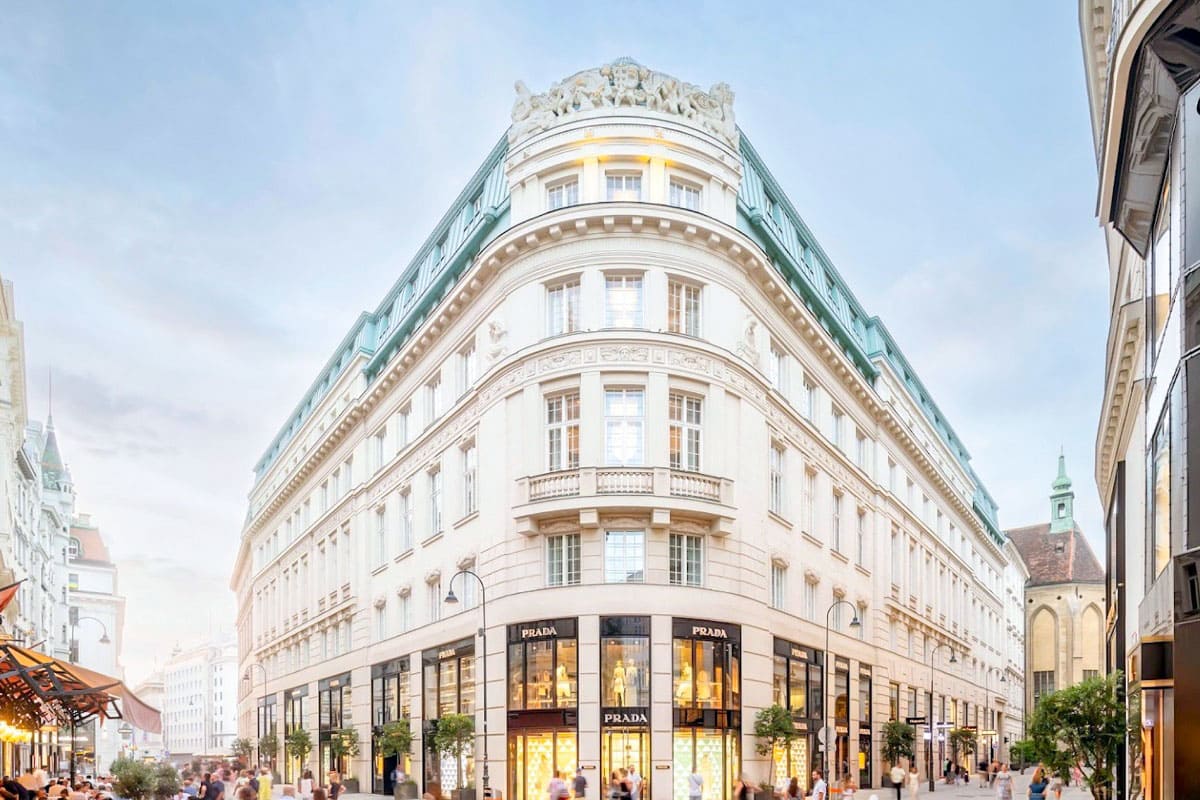
Back to Vienna
Share
Vienna · Historic Roman Catholic church; Gothic and Baroque architecture

Church Am Hof in Vienna: Gothic Core, Baroque Façade and Croatian Parish

One of central Vienna’s most layered churches pairs a medieval Gothic hall with a monumental Baroque façade and an active Croatian Catholic parish.

Kirche zu den Neun Chören der Engel·1386–1403·From 1662
Introduction

Kirche am Hof — Historic Church in Vienna

One of central Vienna’s most layered churches pairs a medieval Gothic hall with a monumental Baroque façade and an active Croatian Catholic parish.

Church Am Hof stands on the eastern side of Vienna’s Am Hof square in the Innere Stadt, a few minutes’ walk from some of the best-known streets and churches of the historic center. Its official ecclesiastical name is Kirche zu den Neun Chören der Engel, the Church of the Nine Choirs of Angels, but both the Archdiocese of Vienna and Vienna’s tourism service commonly use Kirche am Hof. It is one of those Viennese buildings that rewards visitors who know what they are looking at: the broad Baroque façade facing the square can make the church appear almost like a palace or ceremonial stage, yet behind it survives the structure of a late-medieval Gothic hall church. The result is not a single-period monument but a layered building in which medieval, Jesuit, Baroque, later eighteenth-century and modern parish histories remain visible at the same time.

The church was built for the Carmelites between 1386 and 1403 after Duke Albert III gave them the earlier chapel and castle site. The Archdiocese traces sacred use of the location still further back, to a wooden chapel of St. Pancras under the Babenbergs and a later Romanesque stone chapel. In 1568 the Jesuits took over, and the dedication to the Nine Choirs of Angels is associated with that period. After a major fire in 1607 the building was remodeled in a Jesuit-Baroque idiom, with side chapels added along both sides. Then, from 1662, the church received the monumental façade that now dominates Am Hof square. That exterior transformation is the key to the building’s first surprise: from outside, Baroque theatricality; inside, the proportions and spatial logic of a Gothic hall church still legible beneath later decoration.

The interior deserves more than a quick glance. The Archdiocese highlights the partially blocked Gothic windows in the apse, the coffered ceiling, rich stucco, high-quality side chapels and the large high-altarpiece of Mary, Queen of Angels, painted by Johann Georg Döringer in 1798. Vienna’s Old City Preservation Fund also documents a major restoration campaign in the 2000s that treated the church as a complex whole, including chapels, stucco, paintings, stone flooring and historic finishes. That restoration history is useful for visitors because it explains why details from different eras can coexist without the interior reading as a random collection of additions. The church’s character depends precisely on that accumulation.

Church Am Hof is also not a frozen heritage monument. Since 1969 it has served as the home of Vienna’s Croatian Catholic Mission. The Archdiocese’s current mission page, updated at the end of August 2026, describes a large Croatian-speaking parish community and lists regular Masses in the church. This contemporary role changes the correct way to visit. You are entering an active Roman Catholic church that is used for worship, pastoral work and community life, not a museum whose only function is tourism. Croatian is the normal language of services. If Mass, confession, a wedding, a funeral or another pastoral activity is under way, worship takes priority over sightseeing.

That living function is one reason the church is worth adding to a central Vienna itinerary even for travellers who have already seen St. Stephen’s Cathedral, St. Peter’s or the Jesuit Church. Church Am Hof offers a different combination of architecture and community history. It also sits on one of Vienna’s oldest urban squares, so the façade makes most sense when read in relation to the open space before it. For visitor hours, official church pages currently emphasize worship schedules more clearly than sightseeing times; the latest Vienna Tourism accessibility listing located for this review gives daily visiting windows of 09:00–12:00 and 16:00–18:00. Because this is a working church, it is still wise to verify same-day access around services.

A focused visit usually works best. Start outside on Am Hof so that you can understand the façade as an urban composition, then enter and allow your eyes to adjust to the different scale and structure of the interior. Look for the contrast between Gothic spatial bones and later Baroque and classicizing decoration rather than trying to identify every chapel immediately. Give particular attention to the sanctuary, the high altarpiece and the rhythm of side chapels. Then step back outside and compare the church with the surrounding square. In less than an hour, Church Am Hof can add architectural depth, religious history and a living Croatian dimension to a walk through central Vienna without duplicating the experience of the city’s more famous churches.

At a glance

Quick Facts

Essential context and practical details for planning your visit.

Ecclesiastical nameKirche zu den Neun Chören der Engel
Gothic church built1386–1403
Baroque façadeFrom 1662
Croatian Catholic MissionSeat of the mission since 1969
Worship languageCroatian
Vienna guide

From Carmelite Hall Church to Jesuit Center

The medieval phase establishes the basic form of Church Am Hof. According to the Archdiocese of Vienna, Duke Albert III gave the site to the Carmelites in 1386, and the order built the three-aisled Gothic hall church that was completed around 1403. A hall church differs from a basilica in the relationship between nave and aisles: instead of a dramatically higher central nave, the spaces rise to comparable heights, producing a broad and unified interior. That underlying arrangement is still one of the most important things to notice today. Later alterations changed surfaces, chapels, altars and the street-facing image, but they did not erase the medieval spatial core.

The Carmelite church was once known as the church of the “White Brothers,” a reference to the order. A decisive change came in 1568 when the Jesuits took possession. The Archdiocese associates the name “Nine Choirs of Angels” with this Jesuit phase and identifies Peter Canisius as the first church rector under the Society of Jesus. Vienna at this time was a major center of Catholic reform, education and confessional politics within the Habsburg lands, so the Jesuit presence connected the church to a much wider program than neighborhood worship alone. The building became part of an institutional network that linked preaching, education, religious discipline and court-centered Catholic culture.

Fire in 1607 led to substantial rebuilding. The later side chapels added along both sides changed the reading of the interior so strongly that the Archdiocese notes the church can appear almost five-aisled. This is an excellent example of how early modern Catholic architecture often worked with an older medieval shell rather than replacing it entirely. Chapels created additional devotional settings and opportunities for altars, sculpture, painting and patronage, while the original hall structure continued to organize the space. For visitors, the building becomes easier to understand once this sequence is clear: Gothic core first, then Jesuit adaptation and enrichment.

The Jesuit period did not continue without interruption. After the suppression of the Society of Jesus in 1773, the church served for about a decade as an imperial and royal garrison church and then as a parish church. The Jesuits returned in 1908 and remained until 1952. This institutional movement is more than administrative detail because each phase affected how the church was used and understood. Church Am Hof has repeatedly shifted between order church, military church, parish church and community center while retaining the same historic structure. That adaptability is one reason it has remained a living part of central Vienna rather than a preserved shell.

Kirche am Hof in Vienna, Austria — view 2

Vienna guide

The Baroque Façade and the Theater of Am Hof

The façade facing Am Hof is the building’s most immediate architectural statement. Although the church itself is medieval in origin, the Archdiocese dates the dominant Baroque treatment from 1662. Its scale and composition deliberately change the relationship between church and square. Instead of presenting the vertical emphasis of a conventional Gothic church front, the façade spreads across the eastern edge of Am Hof with a broad, palace-like presence. The building therefore participates in the square as much as it announces an entrance to a sanctuary.

This urban role helps explain why Church Am Hof can be easy to misread at first sight. Travellers accustomed to identifying churches by towers, pointed portals or exposed medieval masonry may register the façade as secular. That ambiguity is part of its interest. The Baroque front acts almost like a ceremonial screen in front of the older building. The church’s history is therefore legible in sequence: the façade belongs to a seventeenth-century vision of public Catholic representation, while the interior preserves evidence of the medieval hall church and subsequent adaptations.

Am Hof itself strengthens the effect. The open square provides the distance necessary to read the entire elevation rather than only the doorway, so the best first view is from across the square. Do not rush directly to the entrance. Step back, take in the width of the façade and notice how it organizes the urban space around it. Then, when you enter, the shift from exterior Baroque monumentality to the older internal structure becomes much more intelligible. The contrast is one of the most rewarding architectural experiences at the site.

The façade also reflects the close relationship between religious architecture and public ceremony in Habsburg Vienna. Even without reconstructing every event associated with the square, it is clear that this was not designed as a private devotional front. Its scale addresses crowds and civic space. That makes Church Am Hof particularly useful for travellers trying to understand Baroque Vienna not just as a decorative style but as an urban language: architecture was used to frame processions, worship, authority and public gathering. Few small central-city stops demonstrate that relationship so efficiently.

Kirche am Hof in Vienna, Austria — view 3

Vienna guide

Inside: Gothic Structure, Chapels and the High Altar

Once inside, concentrate first on structure rather than ornament. The Archdiocese specifically points to the church’s Gothic origins, the apse windows that remain legible from outside even where later alterations partially closed them, and the effect of the added side chapels. This is a building where chronology can be read in spatial relationships. The nave and aisles establish the medieval volume; the chapels expand devotional space; stucco, sculpture and later altar work overlay that framework. Seeing those layers is more informative than trying to assign the whole interior to one style.

The sanctuary is dominated by the large altarpiece of Mary, Queen of Angels, painted by Johann Georg Döringer in 1798. The Archdiocese describes it as Vienna’s largest altar painting. Its date is significant because it belongs to a later phase than the major seventeenth-century Baroque remodeling, reminding visitors that the visual center of the church continued to evolve long after the Jesuits first transformed the medieval building. The coffered treatment in the apse and the eighteenth-century work around the high altar add a classicizing note to the older architecture.

The side chapels deserve slower attention. The Archdiocese singles out their individual artistic quality, including stucco and sculpture, and notes a High Baroque Annunciation group at the triumphal arch. Because the chapels were created and decorated at different moments, they work almost like a series of concentrated rooms within the larger hall. If time is short, choose two or three and look carefully rather than walking rapidly past all of them. The most useful question is not “Which is the most famous?” but “What period and devotional purpose does this space reveal?”

Restoration has been crucial to preserving that complexity. Vienna’s Old City Preservation Fund documented a comprehensive campaign in the 2000s that addressed the interior as a whole while respecting the chapels as distinct ensembles. Work included the stone floor, historic wall finishes, stucco, paintings and other furnishings. The fund specifically highlighted the diagonally laid Adnet limestone floor covering more than a thousand square meters and the restoration of textile wall coverings on the organ gallery. These details show the scale of conservation required in a church where architecture, applied arts and liturgical furnishings are inseparable.

For a traveller, the restoration story supports a practical way of looking. Pay attention below eye level as well as above it: flooring, thresholds, wall surfaces and chapel boundaries help explain the building just as much as altar paintings and sculpture. Church Am Hof is not a spectacularly large church, but it contains a dense concentration of material history. Its value lies in relationships between elements. Gothic space, Baroque chapels, later sanctuary design and modern conservation all contribute to a single interior that has never stopped changing.

Kirche am Hof in Vienna, Austria — view 4

Vienna guide

A Living Croatian Catholic Church in Vienna

The modern identity of Church Am Hof is inseparable from Vienna’s Croatian Catholic community. The Archdiocese records that the church became the seat of the Croatian Catholic Mission in 1969. Its current mission page, updated in late August 2026, describes a wide pastoral and cultural program that includes sacramental life, religious education, choirs, youth groups, charitable activity and other community organizations. This is not a nominal tenancy in a heritage building; the church is a functioning center of Croatian Catholic life in the Austrian capital.

The mission’s current information states that Mass is celebrated in Croatian. It lists weekday services and Sunday Masses at 09:00, 11:00 and 18:00, although seasonal schedules and particular liturgical days can change. Travellers should treat those times as worship information, not as sightseeing appointments. If you want to experience the church liturgically and are comfortable attending respectfully, a service reveals the building in its intended religious use. If your purpose is architecture, choose a quieter period between services and be prepared to shorten or postpone your visit when pastoral activity requires it.

This contemporary Croatian presence adds a dimension that many quick architectural summaries miss. Vienna’s historic center is often presented as a preserved landscape of the Habsburg past, but buildings such as Church Am Hof continue to serve communities shaped by twentieth- and twenty-first-century migration. The church therefore links medieval Vienna, Jesuit and Baroque history, imperial institutional change and modern transnational Catholic life. That continuity is not an extra anecdote; it is part of what the place is today.

Kirche am Hof in Vienna, Austria — view 5

Vienna guide

Planning a Respectful Visit

Church Am Hof is centrally located at Schulhof 1, 1010 Vienna, on the eastern side of Am Hof square. It fits naturally into a walking route through the Innere Stadt, especially with Freyung, the Schottenstift area, the Clock Museum, St. Peter’s Church and St. Stephen’s Cathedral. Because the site is compact, it is better combined with nearby historic places than treated as a stand-alone half-day attraction. Allow roughly thirty to sixty minutes if you want to study the façade, interior and chapels without rushing.

The latest official Vienna Tourism accessibility listing located during this review gives visitor hours of 09:00–12:00 and 16:00–18:00 daily. Current Archdiocese pages, however, place greater emphasis on worship schedules than tourist hours, so same-day checking remains sensible, especially on Sundays, feast days or when ceremonies are scheduled. The hours table below repeats the official tourism visiting windows while explicitly noting that liturgical use takes priority.

There is no reason to approach the church as if it were a ticketed museum. Dress and behavior should be appropriate to an active place of worship, keep voices low, silence phones and avoid photographing people at prayer. If a service is beginning, move to the back or leave unless you intend to participate respectfully. Do not block aisles or chapels while studying details. These simple practices make it possible for tourism and parish life to coexist in a building whose greatest strength is precisely that it remains both historic monument and living church.

For the most coherent experience, begin outdoors, move inside slowly and end by returning to the square. The second exterior look is usually more revealing than the first because you now understand how much older the church is than its façade suggests. Church Am Hof is at its best when visited comparatively: not as a rival to Vienna’s grandest churches, but as a compact lesson in architectural layering, Catholic institutional history and the continuing cultural diversity of the historic center.

Kirche am Hof in Vienna, Austria — view 6
Traveller insights

Community Ratings & Reviews

No traveller ratings yet

5★0%
4★0%
3★0%
2★0%
1★0%
Filter by:

Share your experience at Kirche am Hof

Your email address will not be published. Required fields are marked *

Overall rating *

Traveller reviews

Loading reviews…

    Continue exploring

    Nearby places

    More places to explore in and around Vienna.