Trong tiếng Nhật, cái này (Trà đạo) hoặc sado/chadō (茶道) đều có nghĩa là “Trà Đạo”. Thuật ngữ này phản ánh rằng việc thực hành trà không chỉ đơn thuần là uống trà – đó là một nghệ thuật văn hóa có kỷ luật. Nguồn gốc bắt nguồn từ các nhà sư Thiền tông (những người đã du nhập trà từ Trung Quốc) và các bậc thầy trà đạo thời trung cổ. Sen no Rikyu sau đó đã cải tiến nó: Rikyu nhấn mạnh sự giản dị và tính thẩm mỹ của trà. wabi, tìm thấy vẻ đẹp trong những thứ mộc mạc, không hoàn hảo.
Trong một buổi lễ, người chủ trì thực hiện một trình tự gọi là mùa hè, chuẩn bị trà xanh dạng bột (trà xanh matcha) với những chuyển động chính xác. Khách lần lượt được phục vụ trà và đồ ngọt. Một bữa ăn đầy đủ thù lao bao gồm một bữa ăn và hai vòng trà, trong khi một thời gian ngắn cua chủ yếu là trà và đồ ngọt.
Sự kiện trà được chia thành hai loại chính: cua (một buổi tụ tập trà đơn giản) và thù lao (một cuộc họp trang trọng đầy đủ).
MỘT cua (茶会) là một buổi gặp gỡ trà đạo thân mật. Hãy coi đó như “giờ trà đạo”: khách có thể được phục vụ một chiếc bánh kẹo nhỏ (wagashi) và một bát trà loãng (usucha). Buổi trà đạo thường kéo dài 30–60 phút. Trong một buổi trà đạo, không có bữa ăn nhiều món; thay vào đó có thể chỉ có một món súp nhẹ hoặc một vài món mặn. Nghi thức vẫn được áp dụng (cởi giày, cúi chào, quỳ gối), nhưng không khí lại rất thoải mái. Ví dụ, một câu lạc bộ trà đạo của trường đại học có thể tổ chức một buổi trà đạo kéo dài một giờ cho du khách. Hướng dẫn viên hiện đại nói rằng trà đạo "tương đối đơn giản" - có thể chỉ bao gồm đồ ngọt và trà nhẹ.
Trà đạo Chaji (茶事) là một nghi lễ trà đạo cổ điển, trang trọng. Nghi lễ có thể kéo dài đến bốn tiếng. Dưới đây là quy trình điển hình: khách trước tiên được thanh tẩy tại một chậu nước trong vườn (tắm tượng trưng) và thường thưởng thức một bữa ăn nhẹ (kaiseki) trong im lặng. Sau đó, buổi trà đạo chính bắt đầu: chủ nhà rót trà đặc (koicha) vào một bát chung, tiếp theo là các món ngọt theo mùa, và cuối cùng là trà loãng (usucha) được rót riêng cho từng người. Mỗi bước đều chậm rãi và mang tính nghi lễ. Trong một buổi trà đạo Chaji đúng nghĩa, ghế không bao giờ được sử dụng – tất cả mọi người đều quỳ gối. Ở Kyoto, Chaji đôi khi được gọi là honcha, hay đơn giản là "buổi trà đàm".
Sự khác biệt này được tóm tắt trong các hướng dẫn về trà của Nhật Bản: “Chakai là những buổi tụ họp không chính thức… dịp trang trọng hơn là chaji”. Tóm lại, một buổi chaji bao gồm bữa ăn và cả hai loại trà, có thể kéo dài khoảng 4 giờ, trong khi chakai thì ngắn hơn và nhẹ nhàng hơn nhiều.
Chadō được thành lập trên bốn nguyên tắc, thường được nghe trong tiếng Nhật là của (Và), đây (sự tôn trọng), là (thông thoáng), mạnh (寂). Những điều này dịch thành sự hòa hợp, tôn trọng, thanh khiết và yên bình. Mỗi nguyên tắc hướng dẫn buổi lễ:
Trên thực tế, những lý tưởng này được đan xen vào từng cử chỉ: một cái cúi chào nhẹ nhàng tạo nên sự tôn trọng và hòa hợp; rửa tay tạo nên sự thanh tịnh; nhâm nhi trà trong im lặng tạo nên sự tĩnh lặng. Khi Rikyu đặt ra những lời chỉ dẫn này, ông muốn rằng ngay cả một buổi trà đàm ngắn ngủi cũng sẽ thể hiện được những điều đó.
Có hai loại matcha được sử dụng trong buổi lễ: koicha (trà đặc) và usucha (trà nhạt).
Đối với du khách, trải nghiệm này là: nếu bạn chỉ tham dự một buổi trà đạo, có thể bạn sẽ được mời dùng usucha kèm wagashi. Một số buổi trà đạo dài hơn sẽ bao gồm một vòng koicha trước.
Ngay khi bước vào quán trà, bạn cần tuân thủ một nghi thức nhất định. Dưới đây là sơ lược về thời gian của một buổi lễ tham gia điển hình. (Chủ nhà hoặc phiên dịch cũng có thể hướng dẫn bạn - hãy dùng đây làm “tài liệu tham khảo”).
Khi đến nơi, bạn sẽ bước vào phòng trà bằng chân trần. Hãy lặng lẽ đi theo những người khác vào genkan (lối vào). Cởi giày ở đây và xếp chúng ngay ngắn, mũi giày hướng ra ngoài. Bên trong, bạn có thể được mời một cốc nước ấm nhỏ để nhâm nhi khi ngồi; điều này giúp thư giãn và làm sạch vòm miệng.
Tiếp theo, bạn có thể sẽ đi (thường qua một lối đi trong vườn) đến phòng chờ rồi vào vườn (roji). Dừng lại ở cổng ngoài (kuro-mon). Chủ nhà (người đang chờ khách) đứng đối diện. Hai bạn cùng cúi chào trong im lặng. Cử chỉ tôn trọng này thể hiện sự chào đón chủ nhà và báo hiệu bạn đã bước vào thế giới trà đạo.
Sau khi cúi chào, hãy di chuyển đến chậu rửa mặt bằng đá (tsukubai). Cầm gáo tre và súc miệng: tay trái, rồi tay phải, và cuối cùng đổ nước vào lòng bàn tay trái để nhẹ nhàng súc miệng (nhổ nước ra đất cạnh chậu rửa một cách kín đáo). Sau đó, giữ gáo thẳng đứng để nước còn lại chảy xuống quai. Mỗi động tác đều nhẹ nhàng và cẩn thận. Nghi thức tẩy rửa này tượng trưng cho việc gột rửa bụi bẩn và căng thẳng.
Cuối cùng, bạn sẽ được mời vào chính phòng trà. Trước khi vào, hãy đảm bảo váy hoặc cổ áo kimono của bạn đã được chỉnh sửa đúng cách. Sau đó, bạn quỳ xuống và bò qua lối vào nijiriguchi (躙口) thấp. Bạn phải cúi chào gần như hoàn toàn mới được vào – điều này dạy cho bạn sự khiêm nhường (samurai và nông dân đều phải cúi chào khi vào). Sau khi bước qua ngưỡng cửa, hãy cẩn thận bước lên sàn tatami và nhẹ nhàng đóng cửa lại sau lưng. Khi vào trong, hãy quay mặt về phía tokonoma (hốc tường) – bạn sẽ cúi chào hốc tường như một lời chào chung đến tâm điểm tâm linh của căn phòng. Sau đó, tiếp tục cúi chào chủ nhà một lần nữa trước khi ngồi vào chỗ đã được chỉ định.
Khi bạn bò qua nijiriguchi, hãy đưa một chân về phía trước rồi kéo chân còn lại vào - về cơ bản là bò bằng cả bốn chân. Khi đã ngồi ở giữa phòng, đối diện với chủ nhà (quỳ hoặc ngồi trên gót chân), hãy cúi chào chủ nhà một chút. Đây là lời chào và cảm ơn vì đã được mời. Đặt nhẹ tay lên đùi (tay phải đặt phẳng trên lòng bàn tay trái đối với nam, hoặc cả hai tay chồng lên nhau đối với nữ). Giữ lưng thẳng.
Bạn sẽ ngồi trên chiếu tatami. Tư thế truyền thống là seiza: quỳ với hai chân gập lại, bàn chân bắt chéo và mông đặt trên gót chân. Nếu quỳ gây đau, bạn có thể ngồi theo cách khác sau khi khách đã ngồi vào chỗ. Ví dụ, bạn có thể dịch chân sang một bên (gọi là yokozuwari) hoặc ngồi xếp bằng ở hàng ghế sau nếu được mời. Nhiều trường dạy trà ngày nay sẵn sàng cho phép ngồi ghế nếu bạn báo trước. Tóm lại, hãy cố gắng hết sức để tỏ ra chú ý; nếu bạn phải điều chỉnh chân, hãy làm nhẹ nhàng khi chủ nhà không nói chuyện. Khách nước ngoài thường được sắp xếp chỗ ngồi - chủ nhà sẽ đánh giá cao việc bạn đã cố gắng hết sức.
Sau khi ngồi vào chỗ, chủ nhà hoặc trợ lý sẽ phục vụ wagashi (đồ ngọt theo mùa) trên đĩa nhỏ hoặc lá. Cầm đồ ngọt bằng tay phải và đặt lên kaishi (giấy trắng trước mặt bạn). Trước khi ăn, hơi cúi đầu và nói "chōdai itashimasu" (Tôi xin nhận). Dùng que gỗ (để cạnh đĩa) để cắt đồ ngọt thành từng miếng vừa ăn. Nếu đồ ngọt ẩm (như mochi hoặc thạch), thông thường bạn sẽ cắt bằng que; nếu đồ ngọt khô (như kẹo đường), bạn có thể ăn trực tiếp bằng tay. Ăn chậm và lặng lẽ; hương vị của wagashi sẽ làm nổi bật hương vị của trà. Sau khi ăn, hãy gấp giấy lại và nhét nhẹ vào cạnh bát.
Hãy nhớ: ăn đồ ngọt trước khi trà được mang ra, và đừng uống nước sau đó. Một lý do là việc làm rỗng miệng sẽ giúp bạn cảm nhận trọn vẹn hương vị matcha sau đó.
Sau khi thưởng thức đồ ngọt, chủ nhà sẽ mang trà đến. Hãy lắng nghe tên bạn hoặc tín hiệu; chủ nhà có thể nói “o-temae dōzo” (“xin hãy để tôi pha trà cho bạn”). Chủ nhà sẽ đưa bát trà cho khách chính (vị trí giữa bên phải) trước, sau đó lần lượt đưa cho từng khách.
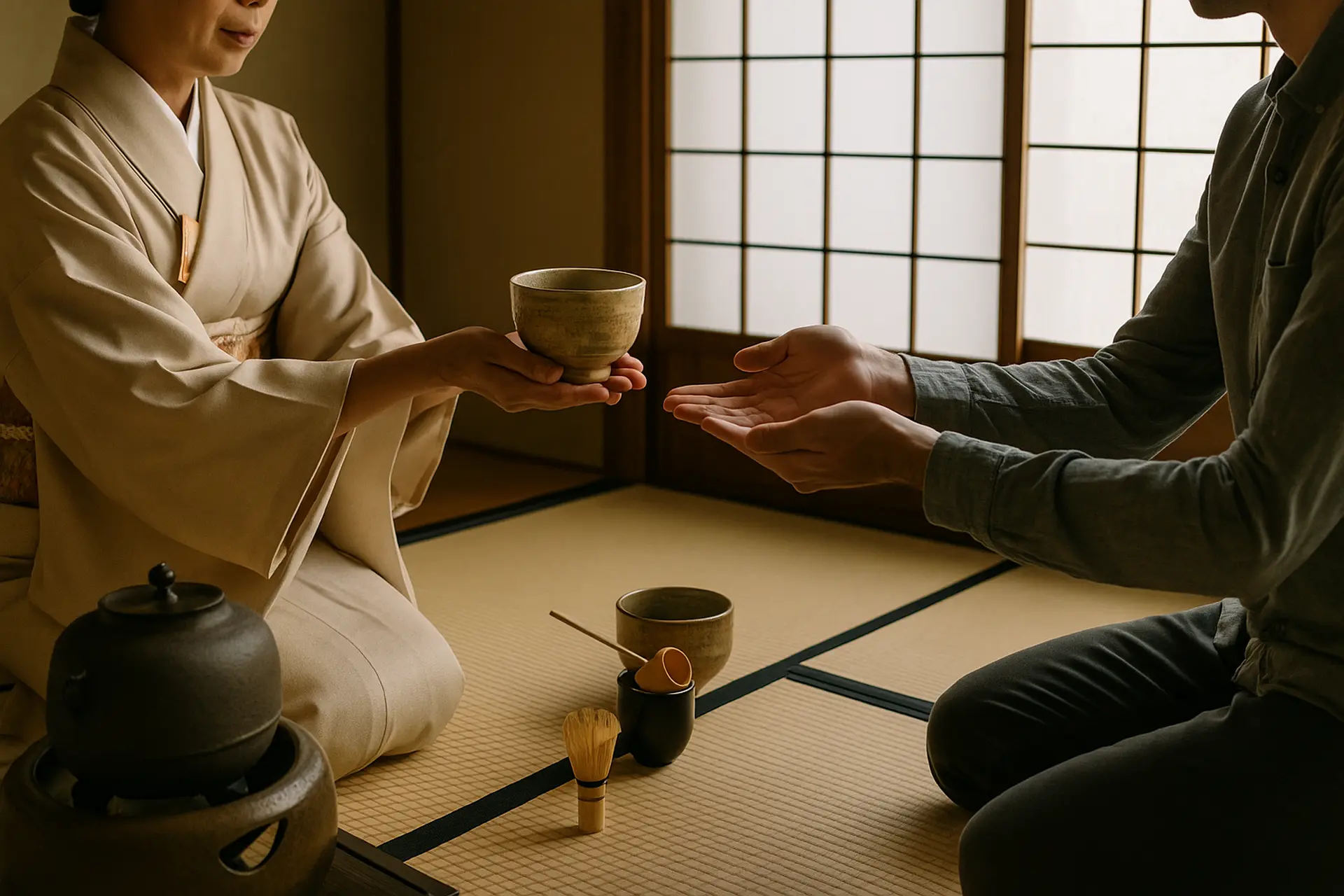
Khi được mời trà, hãy hơi nhích người lên và quỳ xuống. Sau đó, cầm bát bằng cả hai tay: tay trái đặt dưới đáy, tay phải đặt bên cạnh (hoặc dưới đáy nếu là bát phẳng). Luôn luôn nhận bằng cả hai tay để thể hiện lòng biết ơn. Đặt bát trước đầu gối. Gật đầu nhẹ hoặc cúi chào chủ nhà. Nên nói “o-kuchi itashimasu” (Tôi xin cảm ơn) hoặc chỉ cần mỉm cười cảm ơn khi nhận bát.
Tiếp theo, nâng bát lên giữa ngực và đầu gối, cúi đầu cảm ơn. Sau đó, đặt bát xuống chiếu tatami, giữa bạn và vị khách tiếp theo. Đặt cả hai tay lên bát: tay trái ở dưới, tay phải ở bên cạnh.
Trước khi uống, hãy xoay bát theo chiều kim đồng hồ khoảng hai phần ba vòng sao cho mặt trước (mặt được trang trí nhiều nhất) hướng ra xa bạn. Việc xoay này rất quan trọng: nó cho thấy bạn không đặt mặt đẹp nhất hướng về phía mình. Bây giờ, hãy đưa miệng bát lên môi.
Nhẹ nhàng nhấp một ngụm trà. Không có cách đếm chính thức, nhưng thông thường chỉ cần hai đến ba ngụm là bát trà sẽ đầy. Hãy lặng lẽ uống ngụm cuối cùng. Sau ngụm cuối cùng, hãy dùng góc kaishi lau miệng bát, chỗ môi bạn vừa chạm vào. Việc này nhằm mục đích làm sạch bát trà trước khi đưa lại cho người khác. Sau đó, xoay bát trà theo hướng ngược lại (mặt trước hướng về phía bạn).
Cầm bát bằng cả hai tay, nhấc nhẹ lên khỏi chiếu tatami và chiêm ngưỡng. Lưu ý kết cấu, màu sắc hoặc lớp men của nó - mỗi bát đều độc đáo. Sau đó, đẩy bát về phía chủ nhà để nhận. Khi đặt bát xuống, hãy nhẹ nhàng và đảm bảo mặt trước của bát hướng về phía chủ nhà. Cuối cùng, cúi chào một lần nữa và nói "oishii desu" (美味しいです, "ngon quá") hoặc "ありがとうございます" (cảm ơn) để khen ngợi chủ nhà về trà và bát. Chủ nhà có thể đáp lại bằng cách động viên hoặc gật đầu.
Sau lượt của bạn, tất cả khách mời sẽ uống và trả lại bát của mình. Khi vị khách cuối cùng uống xong, chủ nhà sẽ bắt đầu rửa bát đĩa. Trong thời gian này, hãy ngồi yên và im lặng; khách mời thường quay lại nhìn vào bức tranh treo tường hoặc nhìn nhau trong im lặng. Nếu bạn được phục vụ bát trà thứ hai, quy trình tương tự sẽ được lặp lại.
Sau khi trà được rót ra, bạn nên lịch sự đứng dậy khi chủ nhà ra hiệu kết thúc buổi lễ (đôi khi chủ nhà lùi lại hoặc khép khăn lại). Sau đó, bạn có thể đứng dậy, gấp khăn lại. Không có gì Hãy cúi chào chủ nhà và góc phòng một lần cuối trước khi rời đi. Nếu bữa ăn nhẹ đã được dọn ra trước đó, chủ nhà có thể sẽ dùng một câu kết lịch sự (như “ojaru-gokoro”). Một cụm từ kết thúc lịch sự là "Cảm ơn anh đã làm việc chăm chỉ." (Cảm ơn rất nhiều) chủ nhà khi bạn cúi chào. Chỉ sau những lần cúi chào này, bạn mới được vào lại phòng chờ hoặc khu vực sân vườn để đi giày lại.
Điểm chính: Hãy làm theo sự dẫn dắt của người dẫn chương trình. Nếu có lúc nào bạn cảm thấy bối rối, chỉ cần gật đầu và nhẹ nhàng quan sát hành động của người khác là bạn sẽ giữ được sự tập trung. Người dẫn chương trình mong đợi những sai sót nhỏ từ người mới bắt đầu, vì vậy hãy luôn khiêm tốn và chú ý.
Giờ đây, bạn đã hoàn toàn hòa mình vào không khí của buổi lễ, vì vậy trang phục rất quan trọng. Như đã đề cập, bạn không cần mặc kimono cho hầu hết các trải nghiệm của khách tham quan. Các buổi tham quan dành cho khách du lịch thường chấp nhận trang phục phương Tây, mặc dù khách tham quan nên ăn mặc chỉnh tề. Một số địa điểm thậm chí còn cho thuê kimono hoặc yukata nếu bạn muốn có cái nhìn toàn cảnh hơn.
Quần áo: Chọn màu sắc trang nhã và tay áo dài. Màu trắng là được, nhưng tránh màu đỏ tươi hoặc họa tiết lòe loẹt. Tay áo không nên buông thõng. Nữ: buộc tóc dài ra sau. Nam và nữ: bỏ mũ và kính râm. Nếu bạn mặc kimono, điều quan trọng là phải mặc đúng cách (mặt trái ở trên mặt phải).
Giày/Tất: Bạn luôn phải cởi giày. Tất hoặc tabi được mang bên trong. Đảm bảo tất không có lỗ thủng hoặc họa tiết rườm rà; màu trắng hoặc xám nhạt là an toàn nhất. Chân trần không phải là chuẩn mực (và có thể làm bẩn chiếu tatami). Phụ nữ mặc váy có thể cân nhắc mặc quần legging mỏng bên trong kimono để giữ kín đáo khi quỳ.
Phụ kiện: Cởi bỏ trang sức gây tiếng ồn (vòng cổ dài, vòng tay, giày cao gót có lắc lư). Trang sức phát ra tiếng leng keng có thể làm mất sự yên tĩnh. Không đeo vòng tay kim loại hoặc khuyên tai lủng lẳng. Nếu đeo đồng hồ, bạn có thể tháo ra và đặt sang một bên sau khi ngồi xuống.
Hương thơm: LÀM không Dùng nước hoa hoặc các sản phẩm khử mùi cơ thể mạnh. Phòng trà là nơi riêng tư và gần gũi; bất kỳ mùi hương mạnh nào cũng có thể làm phiền người khác. Cũng nên tránh hơi thở có mùi cà phê hoặc thuốc lá (thường thì hút thuốc bị cấm trong phòng).
Hình xăm: Nhật Bản có nhiều quan điểm khác nhau về hình xăm. Trong hầu hết các lớp học trà đạo (đặc biệt là các lớp học riêng tư hoặc tại khách sạn), hình xăm thường bị bỏ qua. Tuy nhiên, nếu buổi lễ được tổ chức tại một ngôi chùa cổ kính hoặc nhà truyền thống, những hình xăm lớn lộ rõ có thể gây ra sự chú ý. Nếu bạn có hình xăm lớn, hãy cân nhắc việc che nó bằng quần áo. Hình xăm nhỏ hiếm khi bị chú ý. Nếu bạn lo lắng, hãy lịch sự hỏi người tổ chức trước. Nhìn chung, những người tham dự có hình xăm thường được chào đón trong các buổi trà đạo, không giống như trong nhà tắm công cộng.
Nghi lễ trà đạo sử dụng một bộ dụng cụ chuyên dụng chadōgu). Dưới đây là những điều cần thiết mà bạn sẽ nghe hoặc thấy (thường được đặt trên một chiếc bàn thấp ở lối vào hoặc do chủ nhà mang đến):
Là khách, bạn không cần phải mang theo những vật dụng này, nhưng việc biết tên của chúng sẽ rất hữu ích để bạn có thể bình luận hoặc hỏi một cách lịch sự (ví dụ: "Đây là loại bát gì?"). Chúng tôi đã trích dẫn tên các dụng cụ chính ở trên, và một bảng thuật ngữ mở rộng hơn sẽ được cung cấp ở cuối bài viết này với định nghĩa của tất cả các thuật ngữ chính.
Kyoto là trung tâm của các nghi lễ trà đạo. Hầu như mọi ngôi chùa và quán trà truyền thống ở Kyoto đều cung cấp dịch vụ trà đạo. Những địa điểm nổi tiếng bao gồm trụ sở Urasenke và Omotesenke (đôi khi họ cho phép du khách tham quan các trường dạy trà riêng) và các quán trà cổ kính ở Gion. Nhiều du khách đặt tiệc trà đạo ở Gion hoặc gần Kiyomizu-dera.
Khu vực Uji (ngoại ô Kyoto) là vùng trồng trà hàng đầu Nhật Bản. Tại Uji, bạn có thể kết hợp tham quan chùa Byōdō-in với một buổi lễ tại một quán trà cổ, hoặc tham quan một trang trại trà và kết thúc bằng một buổi nếm thử trà. Một số quán trà ở Uji cho phép du khách nói tiếng Anh (vì đây là tuyến đường phổ biến cho những người yêu trà).
Ở Tokyo, trà đạo cũng có sẵn. Hãy tìm đến các trung tâm văn hóa như Nhà trình diễn Urasenke, hoặc thậm chí các sự kiện văn hóa tại khách sạn. Vườn đền Meiji ở Tokyo có một phòng trà mở cửa đón khách tham quan vào cuối tuần.
Bên ngoài những thành phố lớn này, các trung tâm khu vực nhỏ hơn thường cung cấp trà như một hình thức giới thiệu văn hóa. Ví dụ, khu phố samurai ở Kanazawa có các quán trà; các khu vườn ở Hiroshima có các buổi trà đạo thân thiện với người Anh; thậm chí cả những người chủ nhà Hokkaido (“Quán trà Sapporo”) cũng có mặt. Nhiều trang web thông tin du lịch có cung cấp các lựa chọn “trải nghiệm trà đạo” bằng tiếng Anh.
Mẹo quan trọng: Một số địa điểm "thân thiện với khách du lịch" và được giải thích bằng tiếng Anh, trong khi những nơi khác do người dân địa phương điều hành. Nếu bạn cần tiếng Anh, hãy tìm hướng dẫn ngôn ngữ hoặc hỏi khi đặt phòng. Ở Kyoto, các tổ chức như Camellia House đặc biệt dành riêng cho người không nói tiếng Nhật.
Đặt chỗ: Bạn có hai tuyến đường chính.
– Các công ty/nền tảng du lịch: Các trang web như Airbnb Experiences, Viator, hoặc thậm chí khách sạn của bạn đều có thể đặt tiệc trà theo nhóm. Những trang web này thường đảm bảo có hướng dẫn viên nói tiếng Anh và xử lý mọi chi tiết. Họ có thể yêu cầu thanh toán trước toàn bộ chi phí.
– Trực tiếp/Địa phương: Một số trường trà chấp nhận email hoặc cuộc gọi (bằng tiếng Nhật) và chào đón cá nhân. Các trường Urasenke và Omotesenke có chương trình chính thức, và có nhiều trường độc lập. sado Giáo viên quanh Kyoto. Tìm kiếm nhanh trên Google Maps với cụm từ "bài học Sadō" hoặc "茶道体験" kèm theo tên thành phố thường sẽ tìm thấy các studio địa phương. Nếu bạn đến trực tiếp, hãy làm rõ thời gian, chi phí và chính sách hủy phòng.
Cảm nhận hiện đại đã thích nghi với truyền thống theo một số cách:
Để đánh giá cao buổi lễ hơn, việc hiểu biết về phía chủ nhà sẽ rất hữu ích. Người pha trà (teishu) đang âm thầm chỉ đạo sự kiện này trong suốt thời gian qua.
Khi bạn bước vào, chủ nhà đã chuẩn bị sẵn sàng: họ chọn một bức tranh treo tường và sắp xếp hoa tươi trong hốc tường theo mùa hoặc chủ đề. Họ đặt ấm đun nước lên bếp than để đun nước. Mọi dụng cụ (đánh trứng, muỗng, khăn) đều được sắp xếp ngăn nắp, thường là trong một hành lang nhỏ ở lối vào (để chúng khuất tầm nhìn).
Trong buổi lễ, hãy quan sát cách chủ nhà làm giữa các vị khách. Trước khi phục vụ, chủ nhà sẽ lau sạch bát và chổi đánh trà trước mặt bạn. Họ lau từng dụng cụ bằng khăn lụa (fukusa), tráng lại chawan bằng nước và đảm bảo mọi thứ đều sạch sẽ hoàn hảo. Từng động tác đều được thực hiện một cách tỉ mỉ và cẩn thận. Sau đó, chủ nhà múc bột trà vào bát, rót nước nóng cẩn thận và đánh cho đến khi trà tan hết.
Trong khi pha trà, chủ nhà vẫn giữ được sự tập trung bình tĩnh (thể hiện là and mạnh). Họ dành ít thời gian nói nhất có thể, sử dụng mọi cử động để thể hiện sự tôn trọng (đây). Ngay cả hơi thở của họ cũng đều đặn.
Tóm lại, quan điểm của chủ nhà là sự phục vụ và nghệ thuật. Họ đoán trước nhu cầu của khách trước khi hỏi: có thể là chuẩn bị khăn choàng kimono nếu trời lạnh, hoặc dừng lại giữa các bước để khách nước ngoài cúi chào. Khi bạn nói "oishii" hoặc chiêm ngưỡng lớp men của bát, họ mỉm cười, bởi vì họ đã dồn hết tâm huyết vào từng chi tiết. Quan sát chủ nhà thật kỹ sẽ giúp bạn nhận ra lý do tồn tại của từng quy tắc (như tại sao bát phải hướng về một hướng nhất định, hay tại sao sự im lặng lại được trân trọng).
Hành trình của trà đến Nhật Bản bắt đầu từ nhiều thế kỷ trước, nhưng nó thực sự trở thành nghi lễ vào khoảng thời Muromachi và Azuchi-Momoyama (thế kỷ 15–16) dưới thời các bậc thầy trà đạo như Takeno Jōō và trên hết là Sen no Rikyu (1522–1591). Rikyu là hình tượng đồng nghĩa với trà hiện đại. Ông không chỉ chính thức hóa nhiều quy trình pha chế mà còn truyền bá triết lý wabi-sabi: tìm thấy vẻ đẹp sâu sắc trong sự giản dị, bất toàn và vô thường. Dưới sự dẫn dắt của Rikyu, trà thất trở thành một túp lều thiền định, bát trà trở thành một tác phẩm nghệ thuật quý giá, và những điều giản dị (một chiếc bát nứt, một bông hoa đơn độc) trở thành trung tâm của thẩm mỹ.
Di sản của Rikyu được lưu truyền qua các học trò và hậu duệ của ông. Thực tế, gia đình ông đã chia thành ba dòng chính vẫn còn lưu truyền đến ngày nay: Omotesenke, Urasenke và Mushakojisenke. Mỗi dòng có một phong cách riêng. Ví dụ, Urasenke (nổi tiếng nhất thế giới) thường khuyến khích một bầu không khí thân thiện – thậm chí còn sử dụng ghế đẩu để tạo sự thoải mái cho khách và đôi khi thêm nhiều bọt vào trà. Omotesenke thì khắc khổ hơn một chút và trân trọng những phẩm chất wabi sâu sắc.
Về mặt tôn giáo, trà đạo là sự kết hợp giữa Thiền tông và Thần đạo. Thiền dạy người thực hành sống trọn vẹn từng khoảnh khắc; trà đạo thể hiện điều này bằng cách đòi hỏi sự tập trung vào từng hành động nhỏ. Bạn sẽ nhận thấy những khái niệm Thiền tông trong nghi lễ, chẳng hạn như ý niệm mỗi chén trà chỉ đến một lần (ichigo ichie). Ảnh hưởng của Thần đạo thể hiện rõ trong nghi lễ thanh tẩy và việc sử dụng trang trí theo mùa một cách tôn kính. Ngay cả lối vào phòng trà (nijiriguchi) cũng có nét tương đồng với cổng đền: thấp nên mọi người đều cúi chào khi bước vào, tượng trưng cho sự khiêm nhường trước không gian linh thiêng.
Qua nhiều thế kỷ, trà đã phát triển từ một thức uống thuốc thành nghi lễ cung đình, thành truyền thống của nông dân, và cuối cùng là một biểu tượng văn hóa. Chính nhờ các bậc thầy trà đạo mà nghệ thuật này được lan truyền: ví dụ, Rikyu đã phục vụ trà cho các lãnh chúa phong kiến và samurai, và sau đó các buổi trà đàm đã trở thành một phần của văn hóa quý tộc. Ngày nay, trà đạo được hàng ngàn người, cả ở Nhật Bản và trên toàn thế giới, nghiên cứu như một biểu tượng của di sản Nhật Bản. Như Quỹ Urasenke lưu ý, ngay cả những người thực hành tận tụy cũng dành cả đời để hoàn thiện temae, bởi vì "ngay cả những bậc thầy vĩ đại cũng nói rằng họ vẫn đang học hỏi". Tóm lại, tham dự một buổi trà đạo cũng giống như bước vào một lịch sử sống động - hàng thế kỷ thẩm mỹ, tôn giáo và thực hành xã hội hội tụ trong căn phòng nhỏ bé đó.
Ngay cả người mới bắt đầu cũng thường làm tốt, và chủ nhà biết người nước ngoài có thể mắc lỗi. Văn hóa trà đạo rất khoan dung với những lỗi nhỏ. Nếu bạn lỡ tay, cứ cư xử cho phải phép. Dưới đây là một vài lỗi thường gặp và cách xử lý:
Nếu xảy ra lỗi lớn hơn (ví dụ làm đổ trà), hãy nói ngay “sumimasen” và lùi lại. Hãy để chủ nhà xử lý. Họ rất giỏi trong việc phục hồi (họ thường sẽ gật đầu và nói rằng không sao). Trong mọi trường hợp, một lời xin lỗi ngắn gọn và tiếp tục cư xử lịch sự là đủ.
Hãy nhớ lời đảm bảo của JNTO: những lỗi nhỏ luôn bị bỏ qua. Điều quan trọng là sự chân thành. Chỉ cần bạn có tấm lòng chân thành — làm theo hướng dẫn một cách tốt nhất — chủ nhà sẽ hài lòng.
Một số du khách nhận ra rằng họ yêu thích trà đạo đến mức muốn học nó. Điều đó hoàn toàn có thể - nhiều trường học chào đón người nước ngoài. Ở Kyoto, Urasenke và Omotesenke đều có chương trình dành cho người mới bắt đầu; các tuyến đường chính thức (được gọi là u buồn hoặc Kyokai) dẫn đến chứng chỉ cho những người học nhiều năm. Ngoài ra còn có vô số giáo viên độc lập (thường được liệt kê trong các hướng dẫn dành cho người nước ngoài là "lớp học trà đạo").
Việc đào tạo có thể khá phức tạp. Một buổi hội thảo dành cho người mới bắt đầu (2–3 giờ) có thể dạy bạn cách đánh matcha và thưởng thức đúng cách. Một khóa học chuyên sâu hơn được tổ chức thường xuyên (hàng tuần hoặc hàng tháng) để hướng dẫn một cách bài bản về temae và nghi thức trà đạo. Cẩm nang Du lịch Nhật Bản cho biết để thực sự thành thạo trà đạo cần "nhiều năm", và ngay cả các bậc thầy cũng khẳng định phải học tập suốt đời.
Chi phí học tập: Các lớp học một lần có thể dưới 5.000 yên. Các chương trình dài hạn (có giáo viên, thẻ thành viên câu lạc bộ trà đạo và tài liệu) có thể lên tới hàng chục nghìn yên mỗi năm. Ví dụ, chương trình giảng dạy chuyên biệt của Urasenke có học phí hàng năm cộng với chi phí thiết bị.
Nếu bạn tò mò, hãy tra cứu địa phương sado- các lớp học theo học kỳ hoặc một ngày tại các thành phố lớn. Ngay cả ngoài Nhật Bản, các trường trà lớn cũng có chi nhánh (ví dụ như Urasenke Hawaii). Họ thường tổ chức các khóa học chuyên sâu mùa hè dành cho khách du lịch. Dù sao đi nữa, hành trình trải nghiệm trà đạo cũng rất bổ ích và cần sự kiên nhẫn - mỗi buổi thực hành đều dạy chúng ta thêm một chút về những sắc thái của sự hài hòa và tĩnh lặng.
Việc mang trà đạo ra nước ngoài dễ dàng hơn bạn nghĩ. Dưới đây là những điều cần thiết:
Nếu bạn muốn được hướng dẫn kỹ hơn, nhiều sách hướng dẫn về trà đạo và video trực tuyến có hướng dẫn chi tiết các bước. Bạn không cần phải có bộ kimono hoàn hảo hay bộ dụng cụ đầy đủ để tổ chức. Điều quan trọng là tạo ra bầu không khí tôn trọng. Ngay cả một buổi tiệc trà tại văn phòng hay tại nhà chỉ diễn ra một lần cũng có thể trở nên đáng nhớ nếu bạn làm theo các bước trên. Đây là một cách tuyệt vời để giới thiệu văn hóa Nhật Bản đến bạn bè một cách gần gũi và thực tế.
Mỗi chi tiết trong trà thất đều phản ánh mùa. Khi bước vào, hãy nhìn vào tokonoma (hốc tường). Thường sẽ có một bức tranh treo tường và một bình hoa nhỏ hoặc một cành cây. Những thứ này được chủ nhà lựa chọn để phù hợp với mùa hoặc chủ đề. Ví dụ, một buổi tụ họp mùa xuân có thể trưng bày một bức tranh treo tường với một bài thơ về hoa anh đào và một cành hoa mai trong bình. Vào mùa hè, bạn có thể thấy tre xanh hoặc chữ “涼” (mát mẻ). Vào mùa thu, có thể là một cây phong được vẽ. Vào mùa đông, thường là một cành thông hoặc quả thông.
Tuy không cần phải hiểu hết ý nghĩa, nhưng theo phong tục, ít nhất bạn cũng nên liếc nhìn bức thư và bông hoa một cách trân trọng. Trên bức thư thường có một câu Thiền hoặc một bài thơ. Một câu phổ biến là “一期一会” (ichigo ichie), nghĩa là “một lần, một cuộc gặp gỡ”, nhắc nhở mọi người hãy trân trọng khoảnh khắc đặc biệt này. Hãy thoải mái chiêm ngưỡng những món đồ này một cách lặng lẽ – chủ nhà đã chọn chúng chỉ dành riêng cho ngày này. Thỉnh thoảng, khách sẽ hỏi: “Thư pháp viết gì vậy?” hoặc “Những bông hoa này từ đâu đến?” và chủ nhà sẽ giải thích.
Khí hậu cũng ảnh hưởng đến căn phòng. Vào mùa đông, lò sưởi được thắp sáng, và đôi khi những tấm chắn mỏng hoặc tấm koigara (tấm chắn sương giá) được sử dụng để giữ ấm cho khách. Chủ nhà có thể cung cấp thêm đệm hoặc thậm chí chăn len nhỏ. Vào mùa hè, lò sưởi có thể được thay thế bằng một lò than di động trên hiên, và căn phòng có thể được mở ra để đón gió. Kẹo ngọt mùa hè và quạt có thể xuất hiện trong tokonoma. Bạn cũng sẽ nhận thấy sự thay đổi trang phục của chủ nhà: ông ấy có thể mặc kimono mỏng hơn hoặc không mặc áo khoác vào mùa hè.
Tóm lại, mọi chi tiết theo mùa đều được sắp xếp có chủ đích. Nếu bạn có thời gian, hãy hỏi về điều đó — việc giải thích về cách sắp xếp cũng là một phần tạo nên sức hấp dẫn của buổi lễ.
Trà đạo Nhật Bản (chanoyu/chado/sado) là gì? Đây là một nghi lễ văn hóa chính thức tập trung vào việc chuẩn bị và phục vụ trà xanh dạng bột (trà xanh matcha) cho khách. Tên cái này, đứa trẻ, and sado tất cả đều đề cập đến thực hành “Trà Đạo” này, thể hiện sự hòa hợp, tôn trọng, thanh tịnh và tĩnh lặng.
Buổi lễ kéo dài bao lâu? (chakai vs chaji) Một buổi trà đàm ngắn ngủi (cua) thường kéo dài 30–60 phút và bao gồm trà và đồ ngọt. Một buổi lễ đầy đủ (thù lao hoặc honcha) bao gồm một bữa ăn và hai tách trà và có thể kéo dài khoảng 4 giờ.
Tôi nên mặc gì? Tôi có cần mặc kimono không? Ăn mặc giản dị: trang phục thường ngày hoặc trang phục truyền thống. Kimono được hoan nghênh nhưng không bắt buộc đối với các sự kiện du lịch. Nam và nữ thường đi tất hoặc hoặc, vì bạn phải cởi giày.
Người nước ngoài có thể tham gia không? Có. Thực tế, khách nước ngoài lần đầu đến thường được xếp chỗ ngồi danh dự và được giải thích thêm. Buổi lễ mở cửa cho tất cả những ai thể hiện sự tôn trọng và quan tâm.
Những nơi nào là nơi tốt để tham dự (Kyoto, Uji, Tokyo, v.v.)? Các ngôi chùa và trà thất ở Kyoto nổi tiếng với các nghi lễ trà đạo. Uji (phía nam Kyoto) và Kanazawa cũng rất nổi tiếng. Tokyo và Osaka có các trung tâm văn hóa cung cấp trà đạo. Ngay cả các khu nghỉ dưỡng và vườn đôi khi cũng tổ chức các nghi lễ trà đạo. Hãy tìm kiếm "trải nghiệm trà đạo" tại điểm đến của bạn.
Làm thế nào để tôi đặt một buổi trà đạo? (Công cộng hay riêng tư, lớp học hay chaji) Bạn có thể đặt qua các trang web du lịch (ví dụ: Viator, Airbnb Experiences) các lớp học nhóm có hướng dẫn viên. Hoặc, bạn có thể liên hệ trực tiếp với các trường dạy trà địa phương (một số trường có nhân viên nói tiếng Anh). Vui lòng ghi rõ nếu bạn muốn tham gia. trình diễn (chỉ xem), Một lớp học thực hành, hoặc một đầy đủ chính thức thù lao lễ có bữa ăn.
Giá cả là bao nhiêu? (Giá dao động tùy theo loại/vị trí) Giá cả có thể khác nhau. Các lớp học nhóm thường có giá vài nghìn yên một người. Ví dụ, một studio ở Kyoto niêm yết giá khoảng 2.950 yên một người (nhóm) và 9.000 yên cho một buổi học riêng hai người. Các nghi lễ cơ bản tại các ngôi chùa có thể rất rẻ (500–1.000 yên). Một buổi học chaji trọn gói kèm bữa ăn có thể có giá từ 10.000–15.000 yên hoặc hơn mỗi người. Luôn kiểm tra chính xác những gì được bao gồm.
Bốn nguyên tắc (Wa, Kei, Sei, Jaku) là gì? Sau đây là những giá trị cốt lõi của buổi lễ: của (hòa hợp) đây (sự tôn trọng) là (清, sự tinh khiết), và mạnh (寂, yên tĩnh). Chúng mô tả tâm trạng và mối quan hệ cần có trong buổi lễ.
Sự khác biệt giữa koicha và usucha là gì? Koicha là “trà đặc” – một loại matcha rất đậm đặc được chia đều từ một bát. Usucha là “trà loãng” – một loại matcha nhẹ hơn, có bọt được phục vụ trong một bát riêng. Koicha đậm đà hơn và được phục vụ ít thường xuyên hơn (thường là trong các sự kiện trang trọng), trong khi usucha là loại trà phổ biến trong hầu hết các nghi lễ.
Chakai và chaji là gì? Chakai là một buổi trà đạo thân mật với trà và đồ ngọt (không phải bữa ăn chính). Chaji là một buổi trà đạo trang trọng bao gồm bữa ăn và cả trà đặc lẫn trà loãng. Nghi lễ Chaji thường kéo dài hơn (lên đến 4 tiếng) và cầu kỳ hơn; Chakai thì ngắn hơn (thường dưới một tiếng).
Tôi phải làm gì khi vào quán trà? (nijiriguchi, cúi chào, rửa mặt) Bước vào nhẹ nhàng qua genkan và cởi giày dép (coi chiếu tatami là vật thiêng liêng). Vào vườn, cúi chào chủ nhà ở cổng. Thanh tẩy: súc miệng và rửa tay tại chậu đá. Sau đó bước vào trà thất qua lối đi thấp. nijiriguchi, cúi chào khi bạn bò vào.
Tôi có cần cởi giày không? Mang tất hoặc dép xỏ ngón không? Vâng, giày luôn phải được cởi ra. Mang tất (hoặc vớ Nhật Bản) hoặc tất) bên trong. Đi chân trần là điều không phổ biến; hãy mang theo tất mới nếu chuyến đi của bạn yêu cầu bạn phải thay tất thường xuyên.
Tôi nên ngồi như thế nào (seiza hay ngồi bắt chéo chân)? Theo truyền thống, ngồi seiza (quỳ gối). Nếu ngồi kiểu này gây đau, bạn có thể ngồi với hai chân gác sang một bên hoặc bắt chéo chân (đặc biệt là ở hàng ghế sau). Nhiều giáo viên sẽ cung cấp ghế nếu cần – bạn cứ thoải mái yêu cầu. Dù ngồi kiểu nào thì điều quan trọng là phải giữ tư thế tôn trọng.
Cách cầm và nhận bát trà như thế nào? Khi được dâng bát, hãy dùng cả hai tay: một tay dưới đáy và một tay bên hông. Nhẹ nhàng đặt bát lên đùi và cúi đầu cảm ơn. Đừng chỉ cầm hoặc nắm bát bằng một tay. Hãy cầm nhẹ nhàng nhưng chắc chắn bằng các ngón tay xòe ra khi đưa bát lên môi.
Tôi uống matcha như thế nào? (nhấp từng ngụm, lau, ngắm nghía) Trước khi nhấp môi, hãy cúi bát và xoay sao cho mặt trước hướng ra ngoài. Sau đó, nhấp một ngụm nhỏ (thường thì 2-3 ngụm sẽ cạn). Sau khi uống, hãy lau miệng bát bằng khăn giấy. Không có gì giấy, sau đó xoay bát lại, đặt xuống và chiêm ngưỡng thiết kế của nó. Cuối cùng, cúi đầu cảm ơn.
Wagashi là gì và tôi nên ăn chúng như thế nào? Wagashi là bánh ngọt truyền thống của Nhật Bản (thường được làm từ đậu tương và bột gạo). Khi ăn, bạn nói "chōdai itashimasu" và đặt bánh lên giấy. Dùng que gỗ được cung cấp để cắt bánh thành từng miếng vừa ăn (bánh mềm cần phải cắt; bánh khô có thể ăn bằng tay). Ăn bánh trước khi uống trà, chậm rãi. Không uống nước sau khi uống trà - bạn cần một vòm miệng trống rỗng để thưởng thức trọn vẹn hương vị trà.
Tôi có thể chụp ảnh hoặc ghi âm không? Thường chỉ chụp sau phần nghi lễ chính thức. Chụp ảnh chủ nhà, khách mời khác hoặc các bước chi tiết sẽ bị coi là bất lịch sự trừ khi bạn được sự cho phép rõ ràng. Tốt nhất nên xin phép chủ nhà trước. Nhiều buổi trà chiều dành cho khách du lịch cho phép chụp ảnh tạo dáng sau khi buổi lễ kết thúc.
Hình xăm có được chấp nhận không? Tôi có bị từ chối không? Trong hầu hết các buổi trà đạo, việc để lộ hình xăm không phải là vấn đề. Các quy tắc truyền thống của nhà tắm công cộng không áp dụng ở đây. Một số địa điểm rất nghiêm ngặt có thể yêu cầu bạn che hình xăm, nhưng hầu hết các buổi trà đạo bình dân (đặc biệt là dành cho khách tham quan) đều chào đón tất cả mọi người. Nếu bạn không chắc chắn, hãy cân nhắc việc che chắn kín đáo.
Tôi có thể đặt câu hỏi trong hoặc sau buổi lễ không? Tôi nên nói gì? Vâng, những câu hỏi mang tính tôn trọng được hoan nghênh sau khi trà được phục vụ. Thông thường, đặc biệt là với khách chính, sẽ hỏi về tranh treo tường hoặc đồ dùng nhà bếp (ví dụ như “Thư pháp viết gì thế?”). Bạn cũng có thể bày tỏ sự cảm kích: nói “Oishii desu” (Nó rất ngon) sau khi nếm thử trà. Hãy lịch sự chào hỏi chủ nhà (sử dụng “san” (có tên, hoặc "sensei" nếu được gọi như vậy). Trong suốt buổi lễ, hãy giữ im lặng; những cuộc trò chuyện nhẹ nhàng hoặc câu hỏi nên đợi cho đến khi chủ nhà phục vụ xong.
Những đồ dùng chính là gì và tên gọi của chúng là gì? Xem phần đồ dùng ở trên. Các thuật ngữ cốt lõi: Chawan (bát trà), đuổi theo (chasen, đánh trứng), chashaku (muỗng trà), giống (ấm đun nước), hishaku (muỗng), Mizusashi (bình nước), Kensui (建水, bát nước thải). Học những cái tên này có thể gây ấn tượng với chủ nhà và giúp bạn trò chuyện lịch sự hơn.
Là gì hoàn thành (pha trà) và nó khác nhau như thế nào ở mỗi trường? Tất cả (点前) chỉ trình tự các động tác mà người chủ trì thực hiện. Mỗi trường phái có một số khác biệt nhỏ. hoàn thànhVí dụ, phương pháp đánh usucha của Urasenke có thể bao gồm các động tác mạnh mẽ hơn và đôi khi mời khách ngồi, trong khi Omotesenke có thể hành động thận trọng hơn. Nhìn chung, mỗi cách ngồi, cúi chào, múc trà và rót nước đều có những khác biệt nhỏ về phong cách giữa các trường phái. Nếu bạn tham dự nhiều buổi lễ, bạn có thể nhận thấy những sắc thái này. Nhưng với tư cách là khách, hãy cứ bắt chước chủ nhà trước bạn - bạn sẽ tự nhiên làm theo bất cứ điều gì. hoàn thành họ thực hành.
Sự khác biệt về nghi thức: đi tour, đi riêng hay đi chùa? Một chuyến tham quan hoặc hội thảo thường giải thích từng bước một và có thể cho phép trò chuyện nhiều hơn. Các nghi lễ trong chùa có thể nghiêm ngặt hơn (ít giải thích hơn, im lặng nghiêm ngặt hơn, không chụp ảnh). Một buổi học riêng với giáo viên trà đạo thường mang tính tương tác (họ sẽ hướng dẫn bạn nhiều hơn và cho bạn thử các động tác). Tuy nhiên, các quy tắc cốt lõi (cởi giày, cúi chào, cách cầm bát) vẫn như cũ.
Tôi có thể tham gia và tự đánh trà không? Trong hầu hết các lớp học tương tác, câu trả lời là có. Nhiều hội thảo cho phép khách tham dự thử pha trà. Thông thường, người hướng dẫn sẽ hướng dẫn cách đánh trà, sau đó đưa cho bạn cây đánh trà và nói "hãy thử xem". Trong trường hợp đó, mỗi người sẽ tự pha một bát usucha. Trong những buổi trang trọng hơn (ví dụ: trình diễn chaji), khách không được đánh trà, họ chỉ được nhận trà từ chủ nhà. Nhưng nếu bạn muốn thực hành, hãy chọn "bài học pha trà" hoặc "hội thảo" thay vì chỉ trình diễn.
Lo ngại về giới hạn độ tuổi hoặc khả năng tiếp cận? Không có giới hạn độ tuổi thấp hơn nghiêm ngặt, nhưng hãy cân nhắc về độ dài và tính trang trọng. Trẻ nhỏ có thể thấy khó ngồi yên một chỗ; một số chủ nhà đặt ra độ tuổi tối thiểu (thường khoảng 5 tuổi trở lên). Nếu dẫn theo trẻ em, hãy chuẩn bị trước cho các bé (ví dụ: "chúng ta sẽ ngồi và uống một tách trà đặc biệt"). Về vấn đề di chuyển: như đã lưu ý, nhiều địa điểm có hỗ trợ xe lăn hoặc cho phép sử dụng ghế nếu bạn cần. Seiza (quỳ gối) là điều bình thường, nhưng nếu bạn không thể quỳ gối vì lý do sức khỏe, chỉ cần thông báo cho chủ nhà và họ sẽ đưa ra giải pháp thay thế.
Trẻ em tham dự – lời khuyên dành cho các em: Nếu được phép, hãy giải thích với trẻ em rằng đây là một sự kiện yên tĩnh và trang trọng. Dạy trẻ cúi chào khi vào và ra, và cẩn thận với dụng cụ ăn uống. Cho trẻ một phần wagashi nhỏ có thể giúp trẻ bận rộn. Cũng không sao nếu cha mẹ nhẹ nhàng bước ra ngoài cùng trẻ sơ sinh hoặc trẻ mới biết đi nếu trẻ quá ồn ào; không khí buổi lễ rất được coi trọng.
Trang sức, nước hoa, quần áo sặc sỡ? Giữ mọi thứ ở mức tối thiểu. Điều quan trọng nhất là sự im lặng. Tháo bỏ trang sức lấp lánh, tháo thắt lưng hoặc đồng hồ kêu leng keng, tránh giày cao gót. Không dùng nước hoa và kem cạo râu. Ngay cả nói chuyện nhỏ nhẹ cũng nên là điều bình thường. Buổi lễ mang tính chất thiền định, vì vậy bất cứ điều gì làm mất đi bầu không khí đều nên tránh.
Cách thanh toán/boa? Ở Nhật Bản, tiền boa không phải là thông lệ. Đối với một buổi trà đạo, bạn thường trả một khoản phí cố định (thường là trả trước hoặc trả bằng tiền mặt ngay tại chỗ). Nếu bạn mua trà hoặc bánh kẹo sau đó thì đó là điều bình thường. Tuy nhiên, đừng cố gắng đưa thêm tiền cho giáo viên như một khoản "boa". Thay vào đó, một cái cúi đầu chân thành và lời "cảm ơn" sẽ thể hiện lòng biết ơn của bạn.
Tôi có nên mang theo quà không? Nói chung là, KHÔNG, nếu bạn đang tham dự một lớp học công cộng hoặc một cuộc biểu tình. Một nhỏ omiyage Quà tặng (lưu niệm) chỉ được mong đợi trong bối cảnh riêng tư hoặc lời mời trang trọng. Nếu bạn đến nhà ai đó uống trà, một hộp bánh kẹo ngon hoặc trà quê hương sẽ là một cử chỉ đáng yêu. Nhưng đối với một buổi gặp gỡ khách du lịch thông thường, một lời cảm ơn lịch sự là đủ.
Nếu tôi phạm lỗi lớn hoặc xúc phạm thì sao? Nếu có điều gì đó không ổn (chẳng hạn như phát âm tiếng Nhật sai một cách vô ý), hãy xin lỗi một cách lịch sự. Chủ nhà thường rất thông cảm. Nếu bạn lo lắng, bạn có thể nói: “sumimasen” (“xin lỗi”) hoặc “moshiwake arimasen” (lời xin lỗi trang trọng hơn). Họ có thể sẽ mỉm cười và đảm bảo với bạn rằng không sao cả. Buổi lễ là về sự tận hưởng và tôn trọng, chứ không phải là việc bắt lỗi.
Những trường phái trà đạo lớn là gì và tại sao điều này lại quan trọng? Ba trường phái chính ở Nhật Bản (do hậu duệ của Rikyu thành lập) là Omotesenke, Urasenke, and MushakōjisenkeĐối với hầu hết du khách, sự khác biệt thực tế duy nhất là phong cách: như đã đề cập, Urasenke thường cho phép sử dụng ghế và chú trọng vào trải nghiệm thoải mái, trong khi Omotesenke lại giản dị hơn và tập trung vào thẩm mỹ truyền thống. Trừ khi bạn đang tìm hiểu sâu về trà học, bạn cứ làm theo cách mà chủ nhà thực hành.
Vai trò của Sen no Rikyu trong lịch sử trà đạo? Sen no Rikyu (1522–1591) đã hoàn thiện nghi thức trà đạo thành một môn tu luyện tâm linh. Ông đã giới thiệu Chào buổi sáng và quan niệm rằng ngay cả một chiếc bát trà vỡ cũng có thể đẹp. Mọi điều ông làm vẫn định hình trà đạo ngày nay: từ việc sử dụng những phòng trà gỗ đơn giản đến việc nhấn mạnh bốn nguyên tắc. Trong lịch sử, ông thường được gọi là bậc thầy trà đạo có ảnh hưởng nhất.
Mua bộ đồ trà chính hãng (chawan, chasen, wagashi) ở đâu? Như đã đề cập ở trên, Kyoto là lựa chọn hàng đầu: gốm sứ từ Kyoto/Mashiko/Shigaraki và đồ thủ công bằng tre từ Uji/Kanazawa. Để mua wagashi, hãy ghé thăm các cửa hàng bánh kẹo truyền thống (trên những con phố cổ Kyoto hoặc quầy "wagashi" trong các trung tâm thương mại). Các thành phố khác có nghệ nhân bao gồm Kanazawa (đồ pha trà thủ công dát vàng) và Ueno/Nihombashi của Tokyo (chợ thủ công truyền thống). Một chiếc cốc gốm nhỏ hoặc bột matcha hảo hạng sẽ là một món quà lưu niệm tuyệt vời để ghi nhớ buổi lễ.
Những lỗi thường gặp của người mới bắt đầu (và cách tránh): Xem phần lỗi ở trên. Tóm lại: Đừng hoảng sợ. Hãy bình tĩnh, xin lỗi ngắn gọn nếu cần, và tiếp tục. Quan sát và bắt chước khách mời chính hoặc chủ nhà khi không chắc chắn. Sự lịch sự luôn chiến thắng sự hoàn hảo.
Làm thế nào để tổ chức một buổi trà đạo (nhỏ) bên ngoài Nhật Bản – những điều cần lưu ý về nghi thức? Chúng tôi đã đề cập đến điều này trong phần "Tổ chức một buổi họp mặt giản lược". Tóm lại: hãy tập hợp một vài người bạn, tạo không khí nhẹ nhàng, thực hiện một phiên bản thu nhỏ của tất cả các bước (cúi chào, dâng bánh kẹo, uống trà, cúi chào). Bạn không cần phải thực hiện đầy đủ các nghi lễ (bỏ qua phần làm vườn và rửa đá). Nếu có thể, hãy sử dụng các nghi lễ và cụm từ phù hợp. Tập trung vào sự tôn trọng và chậm rãi. Ngay cả một phiên bản 20 phút cũng có thể truyền tải được tinh thần.
“Kịch bản của khách mời” (những gì khách mời chính nói/làm) là gì? Vị khách chính (đầu tiên) sẽ làm gương. Thông thường, khi bạn nhận bát của mình: cúi đầu thật sâu, nói "Cảm ơn anh đã làm việc chăm chỉ." (“cảm ơn rất nhiều”) hoặc “Oishii desu”Nếu được yêu cầu, vị khách đầu tiên sẽ khen ngợi chủ nhà và có thể nhận xét về thiết kế của chiếc bát. Vị khách đầu tiên cũng thường được hỏi về cuộn giấy hoặc dụng cụ ăn uống trong khi mọi người đã ngồi vào bàn.
Chi phí và thời gian học trà đạo (lớp học, trường học): Các lớp học ngắn hạn có giá cả phải chăng (vài nghìn yên). Học tập nghiêm túc thì tốn kém và mất thời gian. Để trở thành một giáo viên được chứng nhận phải mất nhiều năm và chi phí đáng kể (học phí, trà đạo, đi lại, lệ phí lễ nghi). Chỉ một số ít người dành cả đời cho trà đạo. Nhiều người học trà đạo như một thú vui hoặc một hoạt động tâm linh trọn đời.
Wagashi chay/ăn chay? Hầu hết wagashi đều có nguồn gốc thực vật (làm từ bột gạo, đậu đỏ azuki, đường). Chúng thường không chứa sữa hoặc trứng. Một số loại có thể sử dụng một ít gelatin (đặc biệt là các món tráng miệng thạch), vì vậy nếu bạn là người ăn chay trường, bạn có thể hỏi chủ nhà xem loại kẹo nào phù hợp. Nhiều buổi lễ vẫn sử dụng các loại kẹo truyền thống theo phong cách thuần chay (như bánh yokan làm từ thạch agar). Bạn hoàn toàn có thể hỏi hoặc mang theo kẹo an toàn của riêng mình nếu cần.
Làm thế nào để kết hợp lễ cưới với trải nghiệm và hành trình ở Kyoto? Ví dụ, hãy bắt đầu tại chùa Kennin-ji Zen ở Gion (thiền buổi sáng sớm), sau đó đến tham gia một buổi trà đạo gần Bảo tàng Kazamidori. Một lựa chọn khác: mặc kimono với mái tóc kiểu Maiko vào buổi sáng, sau đó thưởng thức trà chiều tại một quán trà ở Gion, rồi đi bộ trên Con đường Triết học vào mùa xuân. Vé tham quan Kyoto và hướng dẫn viên du lịch thường kết hợp trà với các chuyến tham quan chùa.
Tìm quán trà có giải thích bằng tiếng Anh ở đâu? Nhiều buổi lễ hướng đến du khách quảng cáo là "Tiếng Anh được chấp nhận". Trung tâm Urasenke ở Kyoto có các buổi hướng dẫn bằng tiếng Anh định kỳ. Các studio riêng như Camellia House (Kyoto) hoặc các điểm du lịch như Trung tâm Thủ công Mỹ nghệ Kyoto sẽ cung cấp hướng dẫn bằng tiếng Anh. Hãy tìm các thuật ngữ như “trải nghiệm sado tiếng anh” khi tìm kiếm.
Trà đạo chỉ dùng matcha thôi sao? Còn loại trà nào khác không? Theo truyền thống, chỉ có matcha được sử dụng trong trà đạo. Một phong cách khác ít phổ biến hơn, gọi là sencha-do, sử dụng lá trà xay, nhưng bạn sẽ hầu như không bao giờ thấy loại trà này trừ khi tham gia một buổi trà sencha chuyên nghiệp. Vậy nên, bạn có thể yên tâm: mang theo matcha và thưởng thức matcha!
Quy tắc về khí hậu/theo mùa (thiết lập mùa hè hay mùa đông)? Chúng tôi đã đề cập đến các điều chỉnh theo mùa ở trên. Phiên bản nhanh: trong mùa hè phòng trà có thể mát hơn (ngoài trời hoặc có quạt) và sử dụng ít lớp quần áo hơn; trong mùa đông Ấm nước được đặt trong một lò sưởi lõm (ro) với nhiều than củi hơn. Kimono của chủ nhà có thể là vải lanh mùa đông hoặc vải lanh mùa hè. Kẹo và bánh cuộn thay đổi theo mùa (ví dụ như hoa anh đào, lá phong, v.v.).
Làm thế nào để giải thích tokonoma (cuộn giấy)? Chữ viết trên cuộn giấy thường mang một chủ đề hoặc thông điệp nào đó. Những chủ đề hoặc thông điệp phổ biến: đi lên đầu trang (Một lần trong đời), Seijaku (im lặng, yên tĩnh), mochiuu (ghi nhớ) hoặc các tài liệu tham khảo theo mùa như bản thân bạn (閑機, thời gian yên tĩnh). Nếu bạn hiểu được cụm từ này, nó sẽ thêm phần sâu sắc; nếu không, hãy hỏi. Chủ nhà sẽ vui lòng giải thích ý nghĩa của nó.
Chashitsu là gì và tại sao lối vào lại thấp? MỘT chashitsu là một phòng trà (thường là một túp lều nhỏ hoặc một căn phòng nhỏ). Nó được thiết kế đơn giản và ấm cúng. Lối vào thấp (nijiriguchi) buộc khách phải cúi chào khi bước vào, tượng trưng cho sự khiêm nhường và bình đẳng. Khi đã vào bên trong, thứ hạng không còn quan trọng nữa – mọi người đều ngang hàng.
Sự khác biệt giữa trà đạo Nhật Bản và matcha thông thường ở quán cà phê? Trong quán cà phê, matcha được phục vụ như bất kỳ loại đồ uống nào khác – bạn có thể nói “cho tôi một ít matcha nhé!”. Nghi thức pha trà rất đơn giản. Trong nghi lễ, mọi hành động đều được thực hiện theo nghi thức: cúi chào, rửa tay, cầm bát theo một cách cụ thể, và uống trong im lặng. Quán cà phê thiên về thư giãn và hương vị; nghi lễ thiên về chánh niệm và nghi thức. Cả hai đều có thể tạo ra một tách trà tuyệt vời, nhưng bầu không khí và ý nghĩa rất khác nhau.