

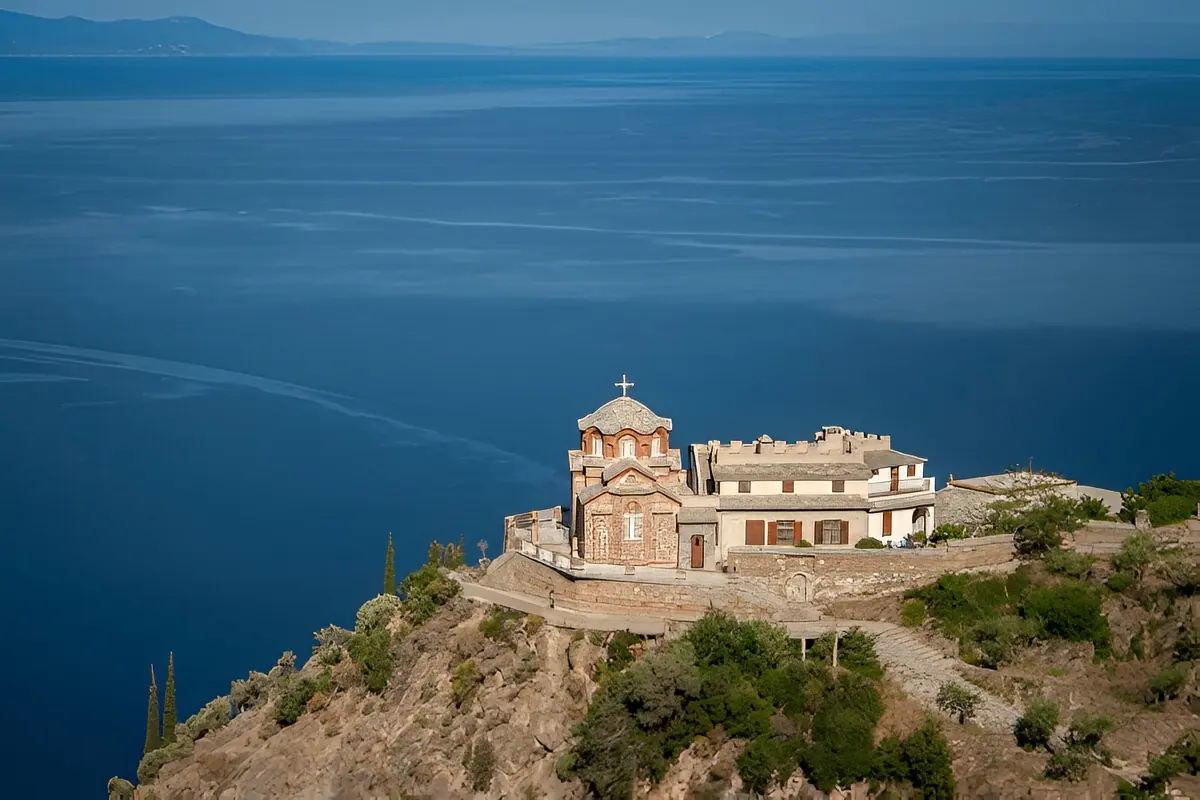
Hospitality without entitlement
How to Visit Monasteries and Spiritual Centres Respectfully
The best visit begins by recognising that a monastery is a home, workplace and place of worship before it is a destination.
There is no universal monastery etiquette: the host community’s instructions always outrank generic travel advice.
Monasteries, abbeys, ashrams, gompas, retreat houses and other spiritual centres can welcome outsiders with remarkable generosity. Some open a church or meditation hall for a few hours. Others operate guesthouses, organise retreats or invite visitors to share meals and daily work. That range is precisely why a single checklist of ‘monastery rules’ is unreliable. Practices differ across religions, countries, orders, communities and even neighbouring houses within the same tradition.
One principle does travel well: the visitor is entering someone else’s disciplined life. The buildings may be historic and the setting spectacular, but the community is not a performance arranged around tourist expectations. Bells mark prayer rather than a photo opportunity. Silence may be a spiritual practice rather than a ban on friendliness. A simple meal may express equality, fasting, generosity or practical economy. Clothing rules may reflect sacred-space norms, community identity, climate or all three.
Respect therefore begins before arrival. Read the host’s own website. Write a clear message if booking is required. Disclose dietary, mobility or medical needs honestly. Ask what participation is expected and what is optional. Do not assume that ‘open to all’ means open at every hour, that a donation purchases special access, or that attendance at worship permits a visitor to receive sacraments or imitate rituals they do not understand.
This guide offers a method rather than a universal code. It explains how to choose an appropriate place, make contact, prepare clothing and luggage, participate without pretending, handle meals and photography, and leave well. Specific examples show how dramatically policies can vary, from a Buddhist forest monastery with a fixed daily rhythm to Mount Athos with a formal permit system. The aim is not to flatten those traditions into interchangeable spirituality, but to help travellers approach each one with informed humility.
Before choosing a destination
Decide what kind of encounter you are actually seeking
A day visit, pilgrimage, retreat and residential stay are not interchangeable products.
Start with purpose. A traveller who wants to see architecture needs a different arrangement from someone seeking several days of silence, formal religious instruction or participation in a pilgrimage. Problems often begin when a visitor chooses a famous monastery for its appearance and then expects the atmosphere of a wellness retreat. The community may offer neither personal teaching nor unstructured quiet. It may be busy with worship, farming, education, conservation or large numbers of day visitors.
A day visit is usually the least demanding format. It may include public grounds, a church or temple, a museum, a shop and scheduled worship. Even then, ‘public’ does not mean every door is open. Cloisters, residential wings, kitchens, libraries and work areas may be private. Some places separate tourist hours from services; others allow visitors to attend prayer while restricting movement and photography. Check whether a guide is required and whether the sacred interior closes during ceremonies.
An overnight stay is a relationship, not merely budget accommodation. Rooms may be simple, bathrooms shared and arrival times strict. Guests may be expected to attend prayer, observe silence, help with chores, eat at fixed times or remain for a minimum number of nights. Abhayagiri, for example, describes limited capacity, advance contact and a structured stay. Other communities offer a guesthouse with more independence. Neither model should be assumed from the word ‘monastery.’
A retreat usually has a defined programme, teacher, practice and eligibility standard. It may require prior experience, an application, a fee or donation, and agreement to behavioural rules that are more demanding than those for ordinary guests. A pilgrimage may involve religious identity, permits, letters of introduction or access restrictions. Mount Athos is an exceptional case with a formal entry document and longstanding eligibility rules; it should never be presented as a casual extension of a Greek island holiday.
Read descriptions for what they actually promise. Phrases such as ‘spiritual atmosphere’ or ‘welcome to visitors’ are not evidence of private interviews with monks, English-language teaching or a flexible schedule. The right place is the one whose stated form matches the traveller’s purpose. Choosing accurately is the first act of respect because it reduces disappointment for the visitor and unnecessary negotiation for the host.
Four common formats
Day visit
Public spaces and scheduled services, usually without access to residential areas.
Pilgrimage
A religious journey that may involve credentials, permits, ritual goals or community sponsorship.
Guest stay
Simple accommodation within or beside a community, often linked to its daily rhythm.
Formal retreat
A structured programme with defined practice, teachers, dates, expectations and application rules.
Practical humility
Write clearly, book early and disclose what matters
A concise, honest request is kinder than a vague inquiry followed by last-minute surprises.
Use the contact channel the community specifies. Some monasteries have a guest master, hospitality office or retreat registrar; others rely on one resident handling messages around prayer and work. Sending the same request through email, social media and telephone can create confusion rather than urgency. If the website says replies may take time, plan accordingly. A monastery is not necessarily staffed like a hotel reception desk.
A useful message states the proposed dates, number and ages of guests, type of visit, religious or retreat experience if relevant, language needs and a reliable contact method. For an overnight stay, mention dietary restrictions, allergies, mobility needs, service animals, required medication storage and any condition that affects stairs, shared bathrooms, early rising or communal meals. This is not a demand for personal medical details; it is practical information that allows the host to say honestly whether the setting is suitable.
Ask direct questions rather than negotiating by implication. Is attendance at prayer expected? Are there periods of silence? What is the arrival window? Are linens provided? Is there secure storage? Can the community accommodate a child, a non-binary traveller, an unmarried couple or a guest of another faith? Policies may reflect theology, local law, architecture or limited rooms. A clear answer before travel is safer than confronting a community at the gate with a situation it has already said it cannot host.
Costs require equally careful language. Some communities charge a fixed guesthouse or retreat fee. Others request a suggested donation, accept offerings or provide hospitality without payment. ‘Donation’ does not mean the stay has no cost to the community, and it should not be used to pressure staff for upgrades or exceptions. Ask how and when contributions are made, whether cash is needed and what is included. Never assume that a large donation purchases access to private areas or senior religious figures.
Confirm the arrangement in writing and honour cancellation rules. Beds may be few, and a late cancellation can prevent another pilgrim from staying. If illness develops, contact the host rather than arriving and hoping the issue will be ignored. Communities include older residents and people with limited access to healthcare. Honest cancellation can be a more respectful offering than determination to complete a personal itinerary.
Read the official visitor page
Identify the exact visit type, eligibility, calendar and contact channel before writing.
Send a complete request
Include dates, party details, purpose, relevant experience and practical needs.
Receive explicit acceptance
Do not treat an unanswered message, social-media reaction or third-party listing as a confirmed stay.
Reconfirm before departure
Check arrival instructions, transport, payment or donation method, health rules and emergency contact details.
No universal etiquette sheet
Learn the community’s logic, not a costume of respect
Copying gestures from another tradition can be less respectful than standing quietly and asking what is appropriate.
Generic advice often fails because it confuses recurring patterns with universal laws. Quiet speech, modest clothing and permission before photography are broadly useful, but even these require context. Some communities welcome conversation in designated areas. Some expect head covering; others expect hats to be removed. Shoes may remain on in a church, be removed at a Buddhist hall or be handled differently in residential spaces. Walking clockwise around a stupa belongs to particular Buddhist contexts and should not be exported to every sacred site.
In Christian monasteries, public liturgy may be open while particular sacraments are governed by church law and local pastoral practice. A visitor can attend respectfully without assuming they should receive Communion, enter the sanctuary or copy every movement. In Orthodox settings, local customs around icons, candles, dress and gendered spaces can vary. The safest approach is to observe from an appropriate place, follow posted instructions and ask a designated host rather than interrupting worshippers.
Buddhist monasteries are equally diverse. Theravada forest communities, Tibetan gompas and Zen training temples have different schedules, lineages, forms of address, shrine etiquette and expectations for lay guests. Monastics may follow rules affecting physical contact, handling money, meal times and interaction across genders. Visitors do not need to master a legal code before arrival, but they should follow the host’s briefings and avoid placing a monastic in an awkward position through casual touch, private invitations or direct gifts that cannot be accepted.
Hindu, Jain, Sikh, Sufi and interfaith centres add further forms of practice. Food rules, head covering, ritual purity, participation and access to inner spaces may differ greatly. Even the term ‘ashram’ can describe anything from a small religious community to a large international institution with accommodation and organised programmes. Research the specific place rather than using cinematic or social-media images as a guide.
Genuine respect does not require theatrical imitation. A visitor who does not know a chant can remain silent. Someone unfamiliar with prostration can stand or sit where directed. A person of another faith need not make declarations they do not believe. Honest, quiet presence is usually preferable to performing borrowed gestures for approval. The host’s purpose is not to grade a tourist’s ability to look devout.
The body communicates
Dress for the place, the climate and the route
The goal is not to disguise identity but to avoid making the host negotiate basic boundaries at the entrance.
The most dependable wardrobe is simple, opaque, clean and adaptable. Shoulders and knees are commonly covered in many religious settings, but exact standards differ. A light long-sleeved layer, loose trousers or a longer skirt, socks and a scarf can solve several situations without filling a suitcase. Avoid slogans that could be offensive, excessively revealing sportswear and garments that become transparent in strong light or rain. At remote sites, modesty must also coexist with sun, cold, insects and difficult terrain.
Footwear deserves separate planning. Historic monasteries may involve polished stone, steep stairs, uneven courtyards, muddy paths or long approaches. Wear shoes that can be removed easily if required but remain stable enough for the route. Never assume that borrowed wraps or shoe covers will be available. If a community provides them, use them as directed and return them properly.
Body language becomes more visible in quiet environments. Public affection, sprawling across benches, pointing feet toward a shrine, stepping over thresholds or sacred objects, and turning one’s back in a restricted area can carry meanings a visitor does not intend. The solution is not anxiety. Move slowly, watch how designated hosts direct people and avoid occupying central ritual space. When in doubt, stand to the side rather than at the front.
Personal space rules can be shaped by monastic discipline. Handshakes, hugs and photographs beside a monk or nun may not be appropriate. Some monastics cannot accept direct physical contact or objects from certain people under their rules. Let the resident initiate any greeting and follow the method demonstrated. A bow, verbal greeting or hands held respectfully may be offered, but no gesture should be assumed universal.
Children should be prepared in concrete terms: where they may walk, when they need to be quiet, what they must not touch and how long the visit will last. A bored child is not a moral failure, but an unrealistic itinerary can place stress on everyone. Choose short public visits or family-friendly guest programmes rather than expecting a young child to tolerate an adult silence retreat. The same principle applies to groups: smaller numbers are easier for a community to receive and for a guide to supervise.
Inside the daily rhythm
Let the community’s time replace the tourist timetable
Prayer bells, meditation periods and liturgical hours are not scheduled around a visitor’s transport unless the host explicitly says so.
Arrive early enough to be shown where to sit or stand. Entering during a procession, reading, meditation instruction or period of silence draws attention and may disrupt the practice. If delayed, wait outside or follow an usher rather than pushing through. Turn the phone fully off; vibration can be surprisingly loud in a stone church or meditation hall. Smart watches, camera focus sounds and glowing screens deserve the same treatment.
Silence has more than one form. A community may maintain silence only at night, during meals, on retreat days or throughout residential areas. ‘Noble silence’ in a Buddhist retreat is not simply low-volume conversation, and a Christian great silence after evening prayer may include corridors and guest rooms. Learn where speech is allowed. Whispering can be more disruptive than stepping outside to speak normally.
During worship, take cues from the designated visitor area. Standing, sitting and kneeling patterns may change rapidly, and people with physical limitations should not endanger themselves to copy others. A respectful seated posture is preferable to a painful or unstable attempt at kneeling. If books are provided, use them gently and do not assume every text is meant to be taken away. Chants may be in an unfamiliar language; attentive silence is a complete form of participation.
Sacred objects require permission. Do not handle manuscripts, vessels, prayer beads, icons, statues, relic containers, lamps or offerings because another visitor does. Lighting a candle, making an offering or receiving a blessing can be meaningful, but the local method matters. Ask before placing money, food or personal items near a shrine. In traditions with formal lines for blessings or sacraments, joining without understanding can create confusion.
Personal spiritual experience should remain personal. A visitor may be moved, bored, confused or uncomfortable. None of those reactions authorises interrogation of residents immediately after worship. Use scheduled question periods, a guest master or a retreat teacher. Monastics are not permanently available counsellors, and a senior figure’s silence is not a personal rejection. The capacity to receive an experience without demanding instant explanation is part of the visit’s discipline.
A guest inside the system
Expect structure, limited privacy and shared responsibility
The monastery guesthouse is often designed to support the community’s life, not to reproduce hotel independence.
Arrival instructions may be precise because residents need to assign rooms, explain boundaries and return to prayer or work. Arriving hours late can require someone to abandon another duty. Plan transport with a margin, especially where the final road, ferry, path or gate closes early. If delay becomes unavoidable, use the emergency contact method provided rather than sending messages to multiple unrelated accounts.
Rooms may contain only a bed, desk, chair and washbasin. Heating or cooling can be limited, Wi-Fi absent and bathrooms shared. Bring only what the host recommends. A headlamp can be useful where corridors or outdoor paths are dark, but use it discreetly. Earplugs may help with bells or unfamiliar sounds, though guests should still wake for any required programme. Do not bring speakers, scented candles, alcohol or appliances without permission.
Work periods are not free labour disguised as hospitality when they are clearly disclosed and proportionate; they can be part of the community’s rhythm and a way guests contribute. Tasks may include washing dishes, gardening, sweeping, food preparation or maintenance. Ask for instruction, disclose physical limitations and complete simple tasks carefully. Do not turn work into a photo session or redesign the process because another method seems more efficient.
Privacy operates in both directions. Guests may share rooms or common spaces, yet residents’ quarters remain private. Do not wander through closed doors, follow a monastic hoping for conversation or enter workshops and libraries uninvited. Keep personal belongings contained and communal areas clean. The Abhayagiri etiquette guidance offers a useful practical principle: leave spaces at least as clean as they were found.
Rest is part of preparation. Early prayer is difficult after late conversation, alcohol or hours of screen use, and some communities prohibit these outright. Follow lights-out and silence periods even if the building seems empty. A monastery’s acoustic environment carries sound through stone corridors and courtyards. The respectful overnight guest becomes less noticeable over time, not more demanding.
Treat the stated arrival window as part of the booking, not a suggestion.
Expect limited furnishings and possibly shared facilities unless told otherwise.
Prayer, meals, work and silence may define the day.
Chores, cleaning and punctuality often matter as much as a financial offering.
At the common table
Learn the meal system before asking for exceptions
Food practices may express theology and discipline as well as budget, climate and local agriculture.
Meal times can be early, brief and fixed. Some communities eat in silence; others permit conversation or readings. In certain Buddhist monastic settings the main meal may be before noon, while Christian houses may alter menus and timing during fasting seasons. Vegetarian food is common in some traditions but not guaranteed everywhere, and ‘vegetarian’ does not automatically mean vegan, allergy-safe or free from alcohol used in cooking.
Disclose medically necessary restrictions before acceptance. A small kitchen serving residents and guests may not be able to prevent cross-contact or prepare multiple alternatives. This is not hostility. It is a capacity limit. Ask whether bringing sealed supplementary food is permitted and where it can be stored and eaten. Do not consume snacks secretly in sacred or silent areas; clarify the rule, especially if medication requires food.
At the table, wait for instruction about seating, prayer, serving order and clearing dishes. Take a modest first portion and return only if invited and food remains. Waste is particularly disrespectful where meals depend on donations or communal labour. If eating in silence, avoid noisy packaging and unnecessary movement. If a reading is given, listen rather than using the time to plan the afternoon.
Donations can support hospitality, conservation and community work, but the method varies. Some places have a box, office, online system or suggested amount. Others charge formal accommodation fees. Give discreetly through the designated channel. Pressing cash directly into a monastic’s hand may conflict with their discipline, and dramatic public giving can turn generosity into self-display.
Gifts should also be requested rather than improvised. Food, candles, books, toiletries or practical supplies may be welcome; perishable items, alcohol, expensive personal presents or objects with religious assumptions may not be. The most reliable gift is often accurate compliance with the community’s stated needs. A guest who arrives on time, eats what was agreed, helps with washing up and leaves a clean room has already reduced the cost of hospitality.
The camera changes the room
Treat consent as specific, revocable and contextual
Permission to photograph a building does not include residents, worship, private rooms or the right to publish everything captured.
Begin with the default that sacred interiors and people should not be photographed until permission is clear. Signs may distinguish between no photography, no flash, no video and no photography during services. A ticket seller’s general approval may not cover a retreat group or a resident in prayer. When rules are ambiguous, put the device away and ask a host at an appropriate time.
Consent from individuals must be specific. A monk who agrees to a portrait in a courtyard has not agreed to be filmed throughout the day, tagged on social media or used in advertising. Children, retreat participants and people receiving spiritual counsel require particular privacy. Avoid photographing personal prayer, confession, ritual vulnerability or grief even when the architecture would make a striking frame.
Tripods, drones, microphones and professional equipment create additional burdens. They can obstruct paths, trigger security concerns and require permits, insurance or institutional approval. Drones may be prohibited by aviation, heritage, protected-area and monastery rules simultaneously. Never launch one because no sign is visible. Written permission from the relevant authorities is the minimum starting point.
Digital behaviour continues after departure. Do not publish room codes, security procedures, private schedules or faces of residents who did not consent. Geotagging a fragile hermitage or restricted trail can increase pressure on places that lack visitor infrastructure. A balanced post explains rules and context rather than selling secret access. Avoid captions that exoticise residents as timeless, otherworldly or detached from modern life.
The simplest test is whether the image serves understanding or merely proves proximity. A photograph of a façade can support memory. A covert image inside a prohibited sanctuary demonstrates only that the visitor placed content above hospitality. Monasteries are unusually effective at revealing this distinction because the camera’s presence is so audible and visible in quiet space.
Read the posted rule
Check whether restrictions differ by building, event, equipment or time.
Ask the right person
Obtain permission from a host or communications office, not from an uninvolved visitor.
Ask the subject
Institutional permission does not replace individual consent for identifiable people.
Review before publishing
Remove sensitive details, respect revoked consent and avoid geotagging vulnerable locations.
Care is part of respect
Do not turn personal endurance into a burden for the host
Historic stairs, fasting schedules, altitude and isolation should be assessed before arrival, not discovered as a crisis.
Many monasteries occupy places chosen for seclusion, defence or pilgrimage rather than easy access. The final approach may involve steep steps, uneven rock, boats, high altitude or long distances from medical care. Historic buildings may have narrow doors and no lift. ‘Accessible’ can mean only the church courtyard, while the guest rooms or toilets remain difficult. Ask for measurements and route details when they matter; a generic accessibility icon may not answer the real question.
Travellers with mobility needs should describe the assistance required rather than asking only whether a site is wheelchair-friendly. Can a vehicle reach the entrance? Are there steps to the dining room? Is an accessible bathroom private or shared? Can a companion stay in the same building? Does the evacuation route work for the guest? A community that cannot safely accommodate someone should be able to say so without being accused of indifference, while public institutions should still be encouraged to improve access where possible.
Medication should remain in original packaging and be stored according to instructions. Ask about refrigeration, electricity and secure storage. Carry enough for delays, but follow border and customs rules. Fasting or restricted meal times may not be appropriate for every person; religious hospitality does not require a guest to endanger health. Discuss necessary food and medication timing before the stay.
Illness requires special responsibility in communal living. Shared dining, prayer and bathrooms can spread infection quickly. Follow the host’s current policy, cancel when needed and do not hide symptoms to protect a reservation. At the same time, avoid turning temporary outbreak rules from a past year into permanent advice. Health procedures must be checked close to travel.
Remote-site safety is ordinary travel safety intensified by limited infrastructure. Carry water, weather protection and a charged phone where allowed, but do not assume reception. Tell someone the route, use authorised transport and respect closures. A monastery’s spiritual reputation does not make cliffs, heat, snow, wildfire or political unrest less real. The host’s duty of care is shared by a visitor who prepares honestly.
Grace under friction
Ask, clarify, apologise and leave when necessary
Respect does not require tolerating danger or abuse, but ordinary disappointment should not become a public confrontation.
Small misunderstandings are best handled through the named guest contact. A room assignment, meal rule or schedule may have been explained poorly, especially across languages. State the problem without accusation and ask what is possible. If the answer is no, decide whether the condition was part of the accepted arrangement. A monastery cannot always reorganise its life around a preference that was never disclosed.
Apologise promptly for accidental mistakes. Entering the wrong door, forgetting to remove shoes or speaking during silence is usually repairable. Stop, follow the correction and avoid lengthy self-defence. Residents often care more about the next action than about a perfect explanation. Repeating the behaviour after correction is what turns ignorance into disrespect.
Safety, harassment and coercion are different. A spiritual setting does not remove the right to bodily autonomy, clear financial information or emergency help. If a visitor feels unsafe, leave if possible and contact appropriate local authorities, a trusted person or the organisation responsible for the community. Do not surrender passports, medication or unrestricted control of communication unless a lawful and clearly explained process requires temporary handling, such as secure device storage.
Cultural difference should not be used to excuse conduct that would be dangerous elsewhere, but neither should every unfamiliar rule be described as abuse. The useful questions are concrete: Was the rule disclosed? Can the guest withdraw? Are essential needs met? Is consent respected? Is there a route to raise concerns? These questions are more reliable than a traveller’s expectation that every spiritual centre will feel comforting.
If departure is necessary, communicate briefly and settle agreed costs or donations through the proper channel. Do not stage an argument in a place of worship. Later reviews should distinguish verified events from interpretation, protect private individuals and acknowledge any response. The purpose is to inform future visitors, not to punish a community for failing to match an imagined retreat.
The quiet departure
Return the room, the time and the story with care
A respectful visit is completed by how the guest leaves and how they describe the community afterward.
Follow the checkout process even if it seems informal. Strip bedding only if requested, return keys, clean shared spaces and report damage. Do not leave unwanted clothing, books or food as an improvised donation. Objects that appear useful can become disposal work. Ask before leaving anything behind.
Thank the appropriate person without demanding a final private audience. A short note can be more considerate than delaying a resident during prayer or work. Make any agreed payment or contribution through the designated method. If the community has asked for feedback, offer specific observations rather than judging the depth of its spirituality.
The story told afterward should preserve proportion. Monastics are individuals, not representatives of every person in their religion. A three-day stay does not make a visitor an authority on a centuries-old tradition. Describe what the host explicitly teaches, what was personally experienced and what remains uncertain. Avoid revealing private conversations or turning residents into characters in a self-transformation narrative without consent.
The lasting value of a monastery visit may be small and practical: learning to arrive on time, eat without waste, remain quiet without feeling erased, or accept hospitality without controlling it. Those habits matter more than claiming an exotic revelation. They are also portable. A traveller who learns to receive one community respectfully is better prepared to enter homes, sacred places and fragile heritage sites elsewhere.
Can a person of another faith visit a monastery?
Often yes, but access and participation are defined by the specific community. Check eligibility and worship rules before travelling.
Is an overnight monastery stay free?
Not necessarily. A house may charge a fee, request a suggested donation or offer hospitality under particular conditions. Ask how contributions work.
Must a visitor attend every service?
Some guest programmes require attendance; others make it optional. The booking information or guest master should clarify expectations.
Can visitors photograph monks or nuns?
Only with the relevant institutional permission and the individual’s clear consent. Worship, private areas and retreat participants may remain off limits.
The deeper courtesy
Enter as a guest, not as the main character.
Monastic hospitality can be generous precisely because it is bounded. The schedule, silence, dress, meals and private areas protect a life that continues after the visitor leaves. Respecting those limits does not make the encounter less authentic; it is what allows an encounter to happen without displacing the people who live there.
The best preparation is therefore not memorising a universal set of gestures. It is learning how to read a community’s instructions, ask honest questions and accept a clear answer. A traveller who can do that will be welcome in more places—and will leave fewer traces beyond gratitude, a fair contribution and a story told with care.