

Stages, cities and temporary worlds
15 Music Festivals That Define the Global Circuit
The world's great festivals are not interchangeable weekends with different logos. Each one is shaped by a site, an audience, a musical tradition and a distinct way of building community.
The profiles below preserve the source article's fifteen festivals while removing edition-specific lineups and dates that can age quickly.
A major music festival is a temporary city. It has transport systems, neighbourhoods, food economies, safety rules, visual landmarks and social customs that become intelligible only after arrival. The headline acts may sell the first ticket, but the atmosphere is usually created elsewhere: at a small stage discovered by accident, on a long walk between fields, beneath a sudden storm or during the hour when a crowd realises that it is hearing something exceptional together.
This guide spans electronic spectacles, multigenre city events, rock traditions, jazz institutions and destination festivals built into mountains, islands and deserts. Some are compact enough to navigate between sets; others demand planning on the scale of a short expedition. Several offer camping and all-night programming, while others are woven into urban hotels, public transport and late-night venues. Comparing them only by attendance or famous names would miss the point.
No static article can provide the final operational answer. Dates, stages, lineups, age rules, ticket systems, transport and weather protocols change by edition. The reliable method is to use editorial context to decide which festival suits the traveller, then complete every practical decision through the organiser's current website. Official resale channels are especially important because scarcity attracts fraud.
Beyond the headline poster
How to choose the right festival
The best choice balances music, scale, climate, sleep, travel friction and the kind of crowd experience a person actually enjoys.
The profiles describe enduring character; all edition-specific details require a live check.
Genre is an obvious starting point, but it is not enough. Tomorrowland, Ultra, EDC, Kappa FuturFestival, UNTOLD, Sunburn and Defqon.1 all foreground electronic music, yet their environments differ radically. A theatrical Belgian park, a waterfront Miami site, a speedway operating through the night and an industrial Turin park produce different emotional and physical experiences. The same distinction applies to broad-programme festivals: Coachella, Glastonbury, Lollapalooza, Primavera Sound, Rock in Rio, Sziget and Fuji Rock each arrange diversity according to their own history and geography.
Scale affects everything. Vast sites reward preparation but also create serendipity; a decision to cross the grounds may cost an entire set. Urban festivals can offer easier beds and restaurants, yet hotel demand and late-night transport become major constraints. Camping creates immersion and community but removes privacy, quiet and climate control. No format is inherently superior. The useful question is what degree of intensity remains enjoyable after three days rather than what looks most impressive in a promotional film.
Climate should shape both destination and wardrobe. Heat, dust, high humidity, cold nights, rain and mountain weather are not side issues. They determine hydration, footwear, sun protection, battery life and whether a carefully planned schedule remains realistic. Official safety guidance always outranks generic packing lists, particularly when organisers introduce heat measures, adjust opening times or restrict items.
Finally, the music itself deserves room. Scheduling every minute can turn a festival into a logistics exercise. A good plan identifies a few non-negotiable performances, marks likely conflicts and leaves gaps for food, movement and discovery. The memory that lasts is often not the most advertised set but the one encountered without expectation.
Choose by experience
Immersive spectacle
Tomorrowland and EDC build elaborate visual worlds around electronic music.
Cultural breadth
Glastonbury and Sziget extend far beyond stages into performance, debate and temporary-community life.
Urban intensity
Ultra, Lollapalooza, Primavera Sound, Montreux and Kappa connect festival days to city accommodation and nightlife.
Landscape as headliner
Fuji Rock's mountain setting and Coachella's desert environment are inseparable from their identity.
Boom · Belgium
Tomorrowland
Electronic music becomes storybook theatre in a park transformed by monumental stage design.
Best for: immersive production, dance-music breadth and visitors who enjoy a highly choreographed festival world

Why it stands apart
Electronic music becomes storybook theatre in a park transformed by monumental stage design.
Tomorrowland's defining achievement is not simply booking prominent electronic artists. It constructs a complete visual mythology around them. Stage façades, bridges, landscaping, costumes and recurring narrative themes make the site feel less like a collection of performance zones and more like a temporary realm with its own symbolism. The scale can be overwhelming, yet the production is designed to reward detail as well as spectacle.
Musically, the festival extends beyond the main-stage version of dance music. Different hosts and areas create spaces for house, techno, harder styles, bass music and more specialised scenes. That range matters because the most satisfying day often develops away from the largest crowd. Visitors who explore early can learn the site's geography and discover a stage whose audience feels more connected to a particular sound.
The difficult part is access and logistics. Demand, registration processes, travel packages and accommodation rules are edition-specific and must be followed through official channels. The park layout involves substantial walking, while weather can shift the experience from bright open-air celebration to wet endurance. Comfortable footwear and a realistic schedule are more useful than attempting to see every famous name.
Tomorrowland suits travellers who enjoy collective ritual and elaborate production. People seeking an informal, low-key weekend may find its intensity excessive. Those who enter the theatrical premise, protect time for smaller stages and plan transport carefully can understand why the festival has become a global reference point for electronic-event design.
Indio, California · United States
Coachella
A desert festival where music, contemporary culture, visual art and image-making converge.
Best for: cross-genre discovery, large art installations and travellers prepared for heat, distance and a highly visible social scene

Why it stands apart
A desert festival where music, contemporary culture, visual art and image-making converge.
Coachella occupies an unusual place between music festival and cultural barometer. Its programme can move quickly among pop, hip-hop, electronic music, indie, rock and global acts, allowing a single afternoon to cross scenes that would rarely share a conventional tour. The festival has also become a platform where reunion shows, ambitious production debuts and international artists can receive intense attention.
The landscape is part of the composition. Broad polo fields, palm trees and distant mountains create a clean horizon for monumental art and stages, but the beauty comes with physical demands. Daytime heat, dust, long walks and a significant temperature change after sunset affect clothing and energy. Shade, hydration and pacing are not optional comforts; they determine whether the later programme remains enjoyable.
Coachella's association with fashion and celebrity can distract from the music. Visitors who spend the day chasing photogenic locations may miss the festival's strongest quality: the density of contrasting performances. A useful strategy is to set a small number of priorities and use the remaining time to enter tents or stages without knowing exactly what will happen. The schedule almost guarantees conflicts, so accepting imperfect choices prevents frustration.
Accommodation, shuttle routes, parking and camping each create a different festival. Official transport planning should begin as soon as passes are secured, not after the lineup is studied. Coachella is best for travellers comfortable with a polished, commercial environment who can look beyond its public image and treat the fields as a serious programme of live music.
Pilton, Somerset · England
Glastonbury Festival
A vast farm becomes a temporary society of music, theatre, politics, craft and late-night invention.
Best for: cultural breadth, deep exploration and people willing to accept mud, walking and glorious unpredictability

Why it stands apart
A vast farm becomes a temporary society of music, theatre, politics, craft and late-night invention.
Glastonbury is too large and too varied to be understood as a sequence of headline concerts. The famous stages anchor the map, but the festival's identity emerges through theatre, circus, spoken word, political discussion, acoustic areas, dance fields, crafts, installations and spaces that become active long after the main programme ends. It functions as a temporary city whose neighbourhoods attract different rhythms and communities.
The farm setting is fundamental. Hills provide panoramic views, distances are deceptive and rain can transform movement. Mud is not a picturesque accessory when it adds effort to every crossing; dry weather brings its own needs for water and sun protection. The sensible visitor accepts that the site cannot be conquered. Choosing an area to explore deeply is often more rewarding than repeatedly walking between distant headline sets.
Ticketing has its own official procedure and demand is extreme. Registration, sale dates, coach packages and any authorised resale must be checked for the relevant edition. The festival also periodically takes planned fallow years, so an old annual assumption can be wrong. Once admitted, camping is usually part of the experience, making equipment, arrival strategy and a recognisable tent location important.
Glastonbury rewards curiosity and tolerance for disorder. It can be noisy, crowded, wet and emotionally expansive within the same hour. A rigid timetable will fail, but a few anchors combined with openness can produce a festival experience with unusual depth. Its greatness lies less in any single lineup than in the belief that a farm can briefly contain almost every form of public culture.
Miami, Florida · United States
Ultra Music Festival
Electronic music meets a dense downtown skyline in a compact, high-impact waterfront event.
Best for: main-stage energy, dance-music premieres and visitors who prefer city hotels to camping

Why it stands apart
Electronic music meets a dense downtown skyline in a compact, high-impact waterfront event.
Ultra's most distinctive feature is compression. Major electronic stages, large crowds and the Miami skyline occupy a relatively concentrated urban site, producing an intensity different from sprawling rural festivals. The city remains visibly present: towers rise behind the production, hotels and restaurants lie beyond the gates and the broader week fills clubs and venues with related events.
The programme commonly reflects multiple layers of electronic culture, from accessible main-stage sets to techno, house, live electronic performance and harder or bass-oriented areas. Because movement can still become congested, learning stage access points early helps. Sound bleed, dense crowds and rapid transitions are part of the experience, making it important to choose where to stand rather than assuming the centre is always best.
Miami weather adds volatility. Heat and humidity can be draining, while sudden heavy rain can change surfaces and operations. Official rules on hydration containers, bags and weather response should be checked immediately before attendance. City accommodation removes the burden of camping but introduces high demand, late-night transport decisions and the temptation to overextend into surrounding nightlife.
Ultra suits people who want electronic music in a visibly urban frame and can manage a tightly packed day. It is less suitable for those seeking quiet green space or leisurely movement. The strongest approach treats the festival and Miami Music Week as separate choices: enjoying the main event does not require attending every after-party, and rest can be the decision that protects the final day.
Chicago, Illinois · United States
Lollapalooza Chicago
A broad contemporary lineup fills a central park between the city skyline and Lake Michigan.
Best for: multigenre groups, easy urban accommodation and combining festival days with a major city

Why it stands apart
A broad contemporary lineup fills a central park between the city skyline and Lake Michigan.
Lollapalooza began as a touring alternative-music concept and evolved into a major festival brand with editions in several countries. This profile focuses on Chicago, where Grant Park gives the event a powerful geographical identity. The skyline forms a backdrop, Lake Michigan affects the weather and the surrounding transit network makes the festival feel integrated into the city rather than isolated from it.
The lineup is deliberately broad, often placing pop, hip-hop, rock, electronic music and emerging acts across several stages. That variety works well for groups whose tastes differ, although it also creates scheduling conflicts and long crossings between the largest stages. Smaller areas can provide the best discovery, particularly earlier in the day before the audience concentrates around evening performances.
An urban festival changes the preparation. There is no campsite to organise, but accommodation prices, entry queues and the journey back after closing require attention. Chicago summer conditions can range from intense heat to thunderstorms, and the open park offers limited relief when crowds are dense. Official weather, evacuation and bag policies should be reviewed rather than remembered from a previous edition.
Lollapalooza is a strong first major festival for travellers who value a real bed and clear city infrastructure. It still demands stamina, but restaurants, museums and neighbourhoods make it possible to build a wider trip around the event. Restraint is useful: a full day in Grant Park followed by ambitious nightlife can turn the final sessions into endurance rather than enjoyment.
Las Vegas, Nevada · United States
EDC Las Vegas
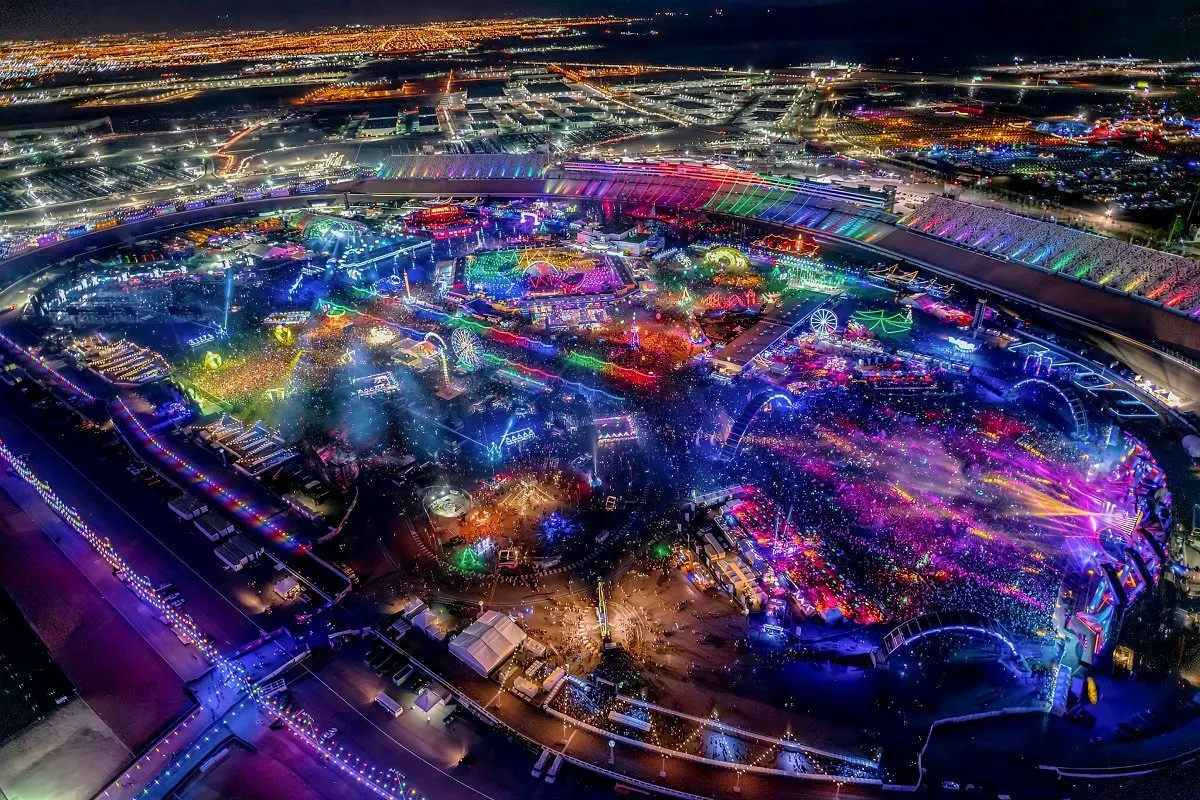
An all-night electronic carnival transforms a motor speedway into a field of light, rides and colossal stages.
Best for: nocturnal spectacle, dance-music variety and festivalgoers comfortable with crowds and very late hours
Why it stands apart
An all-night electronic carnival transforms a motor speedway into a field of light, rides and colossal stages.
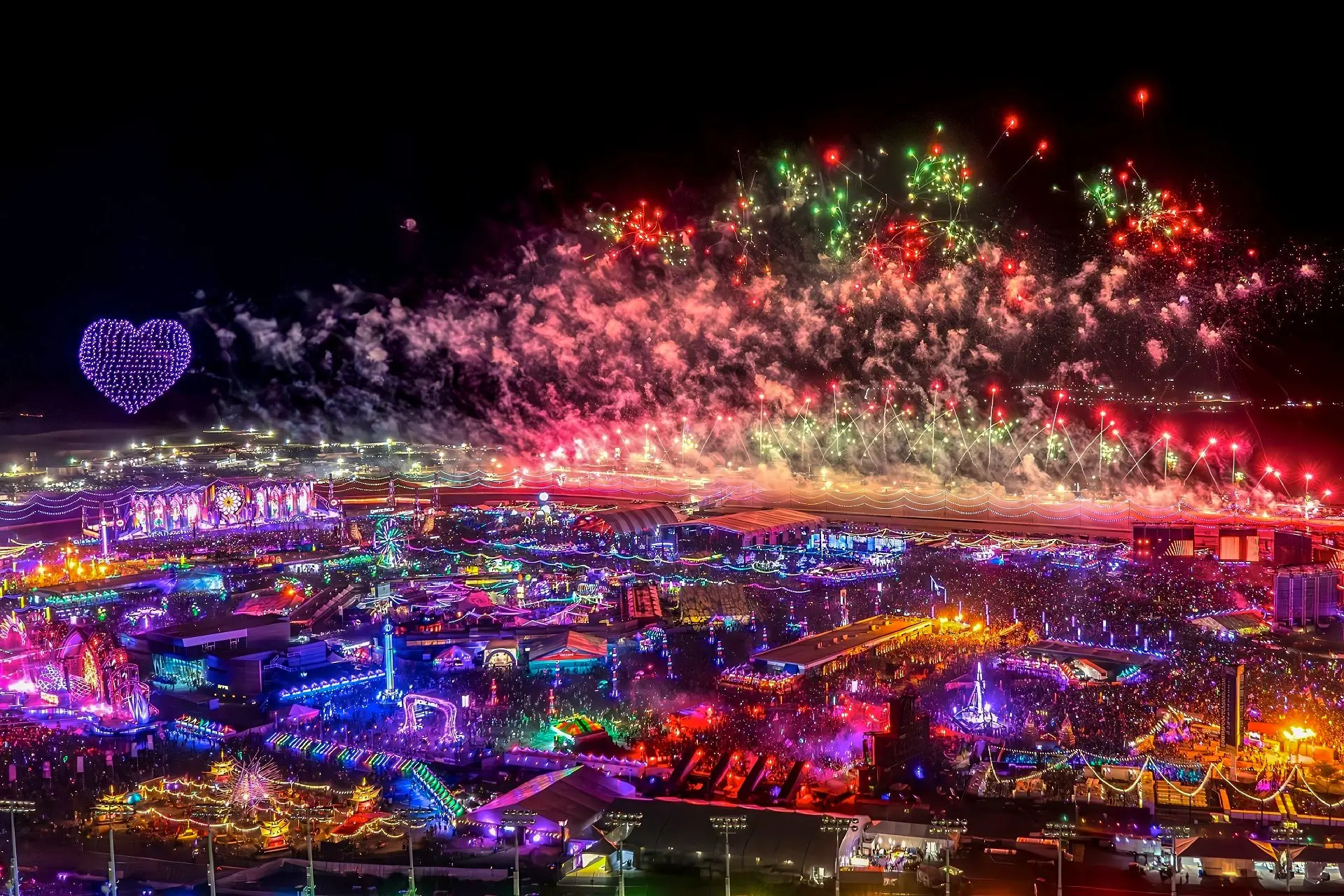
EDC Las Vegas reverses the normal festival day. The experience builds after dark and continues deep into the night, using lighting, fireworks, performers, rides and themed environments to turn the speedway into a luminous carnival. The scale is immediate, yet the event's identity also rests on the idea of moving among distinct electronic communities rather than remaining at a single main stage.
Different areas can foreground house, techno, trance, bass, harder styles and broad festival anthems. Production design helps audiences recognise each zone, but the site is large and crowd routes can be complex. A first circuit before priority sets is valuable. So is choosing meeting points that do not depend on perfect mobile service, because a group separated in a moving crowd can lose significant time.
Transport is one of the decisive planning questions. The speedway sits away from the central resort corridor, and official shuttles, camping or other approved arrangements should be secured according to current guidance. Driving after an overnight event is a serious safety concern. Sleep scheduling also deserves deliberate preparation; normal daytime sightseeing is difficult when the festival programme ends near morning.
Desert conditions remain relevant even at night. Air can be dry, temperatures can shift and long hours of dancing require hydration and food. EDC is most rewarding for visitors who embrace its communal, costumed and theatrical character while maintaining practical boundaries. The goal is not to survive every minute but to remain alert enough to appreciate the final sunrise.
Barcelona · Spain
Primavera Sound Barcelona
A discerning, city-connected programme gives equal weight to influential artists, new voices and genre collision.
Best for: adventurous listeners, strong curation and travellers who want a festival embedded in Barcelona

Why it stands apart
A discerning, city-connected programme gives equal weight to influential artists, new voices and genre collision.
Primavera Sound built its reputation through curation rather than a single genre label. Indie and alternative music remain part of its lineage, but the programme can move through experimental pop, electronic music, hip-hop, metal, singer-songwriters and artists whose work resists easy classification. The result attracts listeners who enjoy context and surprise as much as famous names.
The main Barcelona site has a hard-surfaced, waterfront character unlike a field festival. Distances can still be long, concrete is tiring underfoot and sea air can turn cool after a warm day. Sightlines and stage access vary, so footwear and a lightweight layer matter more than a conventional pastoral-festival wardrobe. The city component may also include related venue programming, depending on the edition.
Primavera's schedule often creates difficult choices because critically significant artists overlap. Rather than treating conflicts as failures, it helps to identify which performances are genuinely rare. A short set from an artist likely to tour again may be less important than a collaboration or appearance difficult to reproduce. Arriving early can also reveal developing acts before the site becomes dense.
Barcelona makes accommodation and meals easier in principle, but demand and late finishes complicate transport. Official access information should guide the route home. Primavera best suits independent listeners who are willing to research the undercard and accept that the festival's value lies in the programme as a whole, not only in the names printed largest.
Rio de Janeiro · Brazil
Rock in Rio
A mass-audience celebration combines stadium-scale music with the emotional force of a festival born in Rio.
Best for: major international acts, Brazilian audience energy and travellers who enjoy large entertainment districts

Why it stands apart
A mass-audience celebration combines stadium-scale music with the emotional force of a festival born in Rio.
Rock in Rio's name preserves its rock origins, but the festival has long worked at a broader popular scale. Its programmes can encompass rock, pop, Brazilian music, metal and other major-audience sounds, with separate festival days developing distinct personalities. The Rio edition carries historical weight because the event's identity was formed there and because Brazilian crowds contribute an unusually vocal, participatory atmosphere.
The site is conceived as an entertainment city rather than a minimal concert field. Large stages, branded areas, rides and attractions distribute attention, although headline movement can create intense crowd pressure. The best experience often begins before nightfall, when there is time to understand distances and see how secondary stages differ from the main programme.
Rio adds both opportunity and complexity. A festival trip can include beaches, museums, food and neighbourhood culture, but transport to the event site must be planned through official systems. Informal assumptions about taxis or last-minute routes are risky when tens of thousands leave together. Heat, rain and long standing periods also require practical preparation.
Rock in Rio suits travellers drawn to collective scale and familiar songs delivered with maximum production. It may feel too commercial for those who prefer intimate curation. Yet its significance lies precisely in its ability to turn mainstream music into a public celebration with a Brazilian emotional register that cannot be reproduced by exporting the brand alone.
Budapest · Hungary
Sziget Festival
An island in the Danube becomes a week-scale cultural settlement with music, performance and international community.
Best for: long-form festival immersion, broad programmes and travellers who enjoy camping within a temporary city

Why it stands apart
An island in the Danube becomes a week-scale cultural settlement with music, performance and international community.
Sziget's island setting gives it a clear boundary and a powerful metaphor: crossing from Budapest into a temporary international settlement. Music is central, but the programme historically extends into theatre, circus, art, discussion and participatory spaces. The festival's duration encourages routines to form. People identify favourite paths, food areas and meeting points, making the island feel progressively less like a venue and more like a neighbourhood.
The musical offer is broad enough that genre labels provide little guidance. Large pop and rock performances coexist with electronic stages, world music and smaller discoveries. That variety is an advantage for mixed groups, but the site's scale rewards advance orientation. A day with one distant conflict can involve substantial walking, so a balanced schedule groups performances geographically when possible.
Camping deepens immersion but exposes visitors to heat, dust, rain and continuous sound. Upgraded camping or city accommodation may provide more recovery, each with different access implications. The Danube location and Budapest's public transport create options, yet the exact entry routes, wristband procedures and late-night services must be confirmed for the current edition.
Sziget is ideal for travellers who want more than a sequence of concerts and are comfortable joining an international, high-density community. It is less suited to anyone requiring predictable quiet. Leaving time to explore Budapest before or after the festival prevents the island from becoming the only memory of a remarkable city.
Naeba, Niigata · Japan
Fuji Rock Festival
Mountain weather, forest paths and carefully managed stages make nature an active part of the musical experience.
Best for: scenic immersion, respectful festival culture and travellers prepared for rain and complex transport

Why it stands apart
Mountain weather, forest paths and carefully managed stages make nature an active part of the musical experience.
Despite the name, Fuji Rock is associated with the Naeba mountain resort rather than a continuing site at Mount Fuji. That distinction matters because the festival's identity comes from this specific landscape: green slopes, forested routes, rivers, changing elevation and weather that can move quickly through the valley. Stages feel separated by terrain, making the journey between them part of the day.
The programme is international and multigenre, often balancing rock, electronic music, soul, jazz, experimental work and Japanese artists. Sound and atmosphere vary sharply by area. A performance reached after a forest walk can feel more intimate than its audience size suggests, while the largest field creates a broad communal scene against the mountains.
Rain preparation is essential even when the forecast appears favourable. Waterproof outer layers, suitable footwear and protection for electronics are more useful than umbrellas in dense crowds, subject to current event rules. The environmental ethos also shapes behaviour: waste sorting, respect for the site and orderly movement are not decorative messages but part of festival culture.
Transport and accommodation require early study. Naeba is a resort area, and official buses, rail connections, camping and lodgings operate according to edition-specific systems. Fuji Rock rewards patient travellers who accept weather and movement as part of the experience. Its beauty is not a guarantee of comfort; it is the result of holding a major event without pretending the mountain is merely scenery.
Montreux · Switzerland
Montreux Jazz Festival
A lakeside music institution treats jazz as a foundation for an expansive conversation across genres.
Best for: musical history, attentive listening and travellers who prefer a town-based festival to camping

Why it stands apart
A lakeside music institution treats jazz as a foundation for an expansive conversation across genres.
Montreux Jazz Festival began with jazz at its centre and developed into an institution whose archive documents encounters across blues, soul, rock, pop, Brazilian music and experimental forms. The word 'jazz' remains meaningful not because every performance fits the genre, but because improvisation, musicianship and cross-pollination continue to inform the festival's identity.
Unlike a remote camping event, Montreux unfolds through a lakeside town and its venues. That structure permits proper beds, restaurants and daytime walks, while also making accommodation demand a major issue. Indoor rooms can create a listening intensity that broad outdoor fields rarely match. Free or public areas, when included in a given edition, broaden the atmosphere beyond ticketed headline concerts.
The festival rewards programme reading. A famous artist may be appealing, but a smaller collaboration, tribute or late-night session can reveal more of the Montreux tradition. Venue capacity and reserved or standing arrangements differ, so official ticket details should be studied before assuming that a single pass offers unrestricted movement.
Montreux suits travellers who value musical lineage and a civilised urban base without expecting the weekend to be physically effortless. Prices in the region, late finishes and transport along the lake still require planning. The lasting appeal is the sense that performances join a recorded history rather than vanish when the stage is dismantled.
Cluj-Napoca · Romania
UNTOLD
A city stadium and surrounding park become an electronic spectacle with a strong regional sense of occasion.
Best for: large dance performances, late-night energy and combining a festival with a Transylvanian city break

Why it stands apart
A city stadium and surrounding park become an electronic spectacle with a strong regional sense of occasion.
UNTOLD helped place Cluj-Napoca firmly on the international electronic-festival map. Its centrepiece is stadium-scale production, but surrounding areas expand the programme into different electronic styles and selected live acts. The event carries the excitement of a regional flagship: the audience is not merely consuming a touring format but participating in a festival closely associated with the city's contemporary identity.
The urban setting offers advantages. Accommodation, restaurants and daytime cultural visits are possible without a rural campsite, and the central location keeps Cluj visible around the event. It also concentrates pressure. Hotels sell early, streets and transport become busy and late-night sound extends the festival's influence beyond the gates.
Long operating hours require more discipline than the spectacular visuals suggest. Eating before peak crowd periods, arranging a meeting point and protecting sleep can determine whether the later nights remain enjoyable. Local summer weather may be hot or stormy, so official guidance on water, bags and emergency procedures deserves attention.
UNTOLD is a compelling choice for dance-music travellers curious about Romania and comfortable with high production. A wider stay can include Cluj's architecture, cafés and museums, or additional travel in Transylvania. Treating the city as more than a bed for the festival creates a fuller journey and distributes economic attention beyond the event site.
Turin · Italy
Kappa FuturFestival
Techno and house occupy a monumental post-industrial park under the summer sun.
Best for: focused electronic programming, industrial architecture and experienced daytime dancers

Why it stands apart
Techno and house occupy a monumental post-industrial park under the summer sun.
Kappa FuturFestival's identity is inseparable from Parco Dora, where remnants of Turin's industrial landscape form a severe, monumental frame for electronic music. Concrete, steel and open sky create a visual language well suited to house and techno. The setting is not a decorative warehouse theme; it is part of a wider urban regeneration landscape with genuine industrial history.
The programme is more focused than that of broad multigenre festivals. Listeners who follow DJs, labels and styles can move among sets with a sense of continuity, while newcomers may discover that subtle differences in rhythm and atmosphere matter over a long day. Strong sound systems and daytime performance create a direct relationship between crowd, architecture and heat.
Exposure is the central practical issue. Shade can be limited, hard surfaces reflect warmth and hours of dancing accumulate quickly. Water access, sun protection, breaks and comfortable footwear are essential, always within current entry rules. Because the festival ends into a functioning city, the route back should be planned before fatigue and crowd movement peak.
Kappa suits travellers who want an electronic festival with a clear curatorial and architectural identity rather than a fantasy environment. Turin adds food, museums and elegant streets to the trip, offering a striking contrast to the raw park. Scheduling a quieter day before or after helps the body recover and gives the city proper attention.
India · Edition-specific venue
Sunburn Festival
A major Indian dance-music brand connects international electronic production with a rapidly changing domestic festival scene.
Best for: electronic-music travellers interested in India, provided they verify the exact venue and edition format before booking

Why it stands apart
A major Indian dance-music brand connects international electronic production with a rapidly changing domestic festival scene.
Sunburn is best understood as a festival brand whose location and format require a current check, not as an event that can be permanently attached to one destination. It played a prominent role in expanding large-scale electronic festivals in India, combining international DJs, domestic performers and the visual vocabulary of global dance events for a rapidly growing audience.
The surrounding travel experience depends entirely on the announced venue. Climate, accommodation, local transport and cultural context can change substantially between coastal, urban and other settings. Any guide that repeats an old location without verification risks sending travellers toward the wrong infrastructure. The official edition page must therefore be the first planning source.
India's heat, crowd density and long travel distances require measured preparation. Entry identification, age policy, alcohol rules, prohibited items and transport arrangements should never be assumed from another country or a previous edition. Hydration and sun protection are central, while respectful clothing and behaviour should reflect the local setting beyond the festival gates.
Sunburn can offer an energetic introduction to India's electronic audience, but it should be integrated into a carefully planned trip rather than treated as a self-contained resort weekend. Allowing time for arrival, local orientation and recovery reduces risk. The festival's significance lies in the way it localised a global event form, not in imitating a European or American model.
Biddinghuizen · Netherlands
Defqon.1
Harder dance styles are presented as a complete culture of colour codes, rituals and overwhelming sound.
Best for: committed hardstyle listeners, camping immersion and audiences who want a genre community rather than a mixed programme

Why it stands apart
Harder dance styles are presented as a complete culture of colour codes, rituals and overwhelming sound.
Defqon.1 is unusually coherent. Rather than adding a hardstyle stage to a broad programme, it builds an entire festival around harder dance music and the communities within it. Colour-coded areas, visual symbols and recurring ceremonies help listeners navigate stylistic differences while reinforcing a shared identity. For dedicated fans, that concentration is the point.
The production is monumental, but the emotional centre often lies in collective rituals: large groups moving to precise drops, anthem moments and final shows that summarise the weekend. Newcomers should understand the physical intensity of sustained high-volume, high-tempo music. Hearing protection is essential at any loud event and especially sensible when several days are devoted to powerful sound systems.
Camping and transport are edition-specific and should be arranged through official guidance. Dutch weather can move from sun to heavy rain, while open sites offer limited comfort when conditions become extreme. Heat procedures, programme changes or emergency decisions must be taken seriously; historic expectations never override live organiser instructions.
Defqon.1 is not the natural choice for a group seeking musical compromise. It is designed for people who care about harder styles and want to inhabit that culture completely. Those visitors may find an exceptional sense of belonging. Others should listen widely before buying a pass rather than relying on the spectacle alone.
Tickets are only the beginning
Planning a festival trip without turning it into an ordeal
Transport, sleep, climate and recovery determine how much of the music a traveller can actually absorb.
Operational details must be taken from the current organiser, not copied from previous editions.
The full cost should be calculated before the ticket becomes emotionally non-refundable. Passes, service charges, transport, accommodation, food, lockers, camping equipment and an extra night can transform an apparently affordable weekend. International travellers also need insurance terms that cover event cancellation, medical needs and disrupted transport. A budget with a contingency is more honest than assuming every day will unfold perfectly.
Accommodation changes the rhythm. Camping maximises immersion but can reduce sleep; a hotel provides recovery but may require long, crowded journeys. At urban festivals, the nearest room is not always the easiest if road closures isolate it. At destination sites, official shuttles can be more reliable than improvised taxi plans. Every route should be tested against the final set ending, not only the afternoon arrival.
Health preparation is ordinary rather than dramatic: weather-appropriate clothing, hearing protection, necessary medication in permitted packaging, food at sensible intervals and water according to site rules. Friends should share emergency contacts and choose a meeting point. Anyone using alcohol should understand that heat, exertion and sleep loss change its effects. No performance is worth ignoring signs of illness or unsafe crowd conditions.
A successful schedule has blank space. It allows a late meal, a long queue, a storm delay or a performance discovered by accident. The festival industry sells fear of missing out, but the event itself is more enjoyable once missing some things is accepted. Attention is finite; preserving it is the most practical form of luxury.
Confirm the official edition
Check dates, city, venue and status on the organiser's own website before making any non-refundable booking.
Map the entire journey
Plan airport or rail arrival, accommodation access, gate transport and the route home after the final programme.
Read policies in full
Verify identification, age rules, bag size, medication, water containers, camping equipment and authorised resale.
Build a humane schedule
Choose priority sets, add meal and rest windows, and leave room for discovery.
Recheck the week of travel
Review weather, transport notices, mobile tickets and emergency guidance immediately before departure.
Which festival is best for a first international trip?
There is no universal answer. An urban event such as Lollapalooza Chicago, Primavera Sound or Montreux can simplify sleeping arrangements, while a camping festival may provide deeper immersion. The best first choice matches the traveller's music and tolerance for heat, walking, crowds and sleep disruption.
Are VIP tickets always worth the premium?
No. Benefits vary widely and may focus on viewing areas, entrances, toilets, lounges or hospitality rather than better sound. Read the exact current inclusions and decide whether they solve a real problem for the trip.
How many headline sets should be treated as essential?
A small number. Overcommitting creates cross-site sprints and disappointment when schedules change. Two or three priorities per day, depending on site scale, usually leave healthier room for meals and discovery.
Is buying from an unofficial reseller safe?
It carries significant risk. Use the festival's authorised ticket platform and official resale process. Screenshots, transferred accounts and plausible-looking confirmations can be fraudulent or invalid under event rules.
After the final encore
The best festival is the one whose world you genuinely want to inhabit.
Tomorrowland's theatre, Glastonbury's temporary society, Coachella's desert culture, Montreux's musical archive and Fuji Rock's mountain paths cannot be reduced to a single hierarchy. Each asks a different kind of participation. Even festivals that share genres diverge in architecture, climate, audience customs and the balance between spectacle and listening.
A wise choice begins with honest preferences and ends with current official information. Once the pass is secured, the real preparation is to protect enough energy and curiosity to hear what was not already expected. Festivals are temporary by design, but the strongest ones leave a durable map in memory: a stage reached through rain, a chorus carried by strangers or a city seen differently after the music stopped.