

A more thoughtful travel shortlist
10 Remarkable Destinations Beyond the Usual Travel Shortlist
The most rewarding alternative to a famous place is not necessarily an empty one, but a destination whose character still rewards patience, curiosity and local engagement.
Ten independent profiles spanning Southeast Asia, the Mediterranean, the Caucasus, the Caribbean, Africa and the United States.
Travel lists often use the word underrated as if popularity could be measured with a single number. In reality, a place may be famous in its own region yet remain overlooked by long-haul visitors, or it may receive large seasonal crowds while quieter districts and landscapes nearby remain poorly understood. The ten destinations in this guide are therefore not presented as secret discoveries. Luang Prabang, Sardinia and Kotor are internationally recognised; Madagascar and Baja California are established nature destinations; Albania and Georgia have been rising rapidly in global awareness. What links them is something more useful than obscurity: each can offer a layered trip that is richer than a quick photograph and more varied than its best-known image suggests.
Choosing a less conventional route also creates responsibilities. Smaller heritage centres, fragile islands and protected wildlife areas can be affected quickly by poorly managed growth. A visitor who arrives outside the busiest weeks, stays for several nights, uses licensed guides, respects water and waste constraints, and spends money with locally rooted businesses contributes differently from someone racing through a checklist. The profiles below focus on the qualities that justify a journey, the trade-offs that should shape expectations, and the practical questions that deserve fresh checking before departure. They are starting points for informed planning rather than promises that any destination will remain uncrowded.
Before choosing a place
Underrated is a relationship, not a permanent label
A destination can be overlooked by one audience, overvisited by another and still contain experiences that are barely noticed.
The useful question is not whether a place is unknown, but whether its real depth is understood.
The language of hidden gems can create the very problem it claims to solve. Once a village, island or viewpoint is framed as the next undiscovered place, visitors may arrive with an expectation of exclusivity rather than an interest in local life. That expectation can be unfair to residents and damaging to landscapes that have limited water, transport or waste capacity. A better approach is to identify destinations with multiple centres of interest, then plan in a way that distributes attention. In Sardinia, that means balancing celebrated beaches with inland archaeology and village culture. In Georgia, it means recognising that Tbilisi, Kakheti and the high Caucasus are not interchangeable stops. On Isla Holbox, it means understanding the island as part of a protected coastal system rather than simply a car-free backdrop.
Seasonality matters just as much as headline visitor totals. Kotor can feel compressed when cruise arrivals overlap, yet the bay changes character in quieter hours and shoulder months. Luang Prabang's historic core is small, but a longer stay creates room for museums, river landscapes, craft traditions and day trips that are missed on a hurried circuit. Madagascar presents the opposite challenge: distances, road conditions and regional weather mean that trying to see everything can reduce both safety and depth. The most satisfying itinerary is often the one that selects fewer places, accepts logistical limits and leaves enough time for weather, conversation and unplanned discovery.
Finally, alternative travel should not be confused with low-impact travel. A long flight to a remote ecosystem, an off-road excursion or an unregulated wildlife encounter can carry significant costs even when the setting looks pristine. The responsible choice is destination-specific: use established trails in protected areas, avoid disturbing animals for photographs, follow local water restrictions, and prefer guides whose work depends on conservation rather than spectacle. The following profiles make those differences explicit so that the idea of going somewhere less obvious becomes a method of travelling better, not merely a race to arrive first.
Four filters for a better choice
Depth
Is there enough history, landscape and local culture to justify several days?
Capacity
Can the place absorb visitors without severe pressure on housing, water or habitats?
Access
Does the itinerary respect realistic transport, weather and road conditions?
Reciprocity
Will spending reach local guides, producers, restaurants and family-run accommodation?
Luang Prabang · Laos
Luang Prabang
A compact royal city where Buddhist institutions, timber houses, colonial-era streets and two great rivers create a rare sense of continuity.
Best for travellers who value early mornings, architectural detail, craft traditions and an unhurried pace.

Why it rewards time
The city is more than its sunrise ritual
Luang Prabang sits on a peninsula between the Mekong and Nam Khan rivers, and its scale is central to its appeal. Monasteries, former royal buildings, shopfronts and residential lanes are close enough to explore on foot, yet the town reveals itself gradually. The most valuable hours are often not attached to a major sight: temple roofs catching low light, schoolchildren crossing a quiet lane, a boat moving along the Mekong, or residents preparing food before the heat builds. UNESCO recognises the town for the distinctive fusion of traditional Lao urban fabric and architecture introduced during the colonial period, but the heritage value is not limited to façades. Monasteries remain active religious communities, and ordinary behaviour around them matters.
The morning alms procession is the clearest test of visitor conduct. It is a religious practice, not a performance staged for cameras, so travellers should observe at a respectful distance, avoid blocking participants and follow local guidance if they intend to offer food. A longer stay also makes it possible to look beyond the familiar circuit of Mount Phousi, the night market and the principal temples. Museums, textile workshops, river excursions and nearby rural communities add context, while the slower rhythm allows visitors to spread their spending across several days. Seasonal haze, heat, river conditions and regional transport can change the experience substantially, so current advice should shape the timing rather than a generic promise of perfect weather.
Sardinia · Italy
Sardinia
Turquoise coves draw the first attention, but nuragic archaeology, mountain villages, pastoral foodways and distinct local identities make the island a complete journey.
Best for road trips that balance coast, interior, archaeology and regional cooking.

Why it is underestimated
The interior changes the meaning of the coast
Sardinia is often reduced to a portfolio of beaches, particularly the polished resorts and coves of the northeast. Those landscapes deserve their reputation, yet an itinerary built only around famous sand misses the island's most distinctive contrast. Inland, granite massifs, cork oak country, high plateaus and agricultural valleys lead to communities with their own festivals, breads, cheeses, pasta traditions and historical memory. Thousands of prehistoric nuraghi and associated settlements make the island one of the Mediterranean's most compelling archaeological landscapes, while Catalan influence in Alghero, mining heritage in the southwest and the dense urban history of Cagliari prevent any single regional stereotype from holding.
A car is usually the most flexible way to connect these layers, but distances and road character should be treated realistically. A week divided among too many corners can become a sequence of long drives and brief swims. It is usually better to choose one or two regions, then combine coastal time with at least one inland route and a major archaeological site. Summer brings heat, high demand and pressure on parking and sensitive beaches; shoulder periods can provide a calmer journey, although sea conditions and seasonal businesses vary. Visitors should follow local access controls, avoid walking on dunes and seagrass, and use marked paths rather than creating shortcuts. The island is not a single resort zone but a collection of cultural landscapes, and it rewards the traveller who plans accordingly.
Baja California Peninsula · Mexico
Baja California Peninsula
A long, arid peninsula where cacti, mountains, Pacific surf and wildlife-rich seas meet across enormous distances.
Best for travellers comfortable with long drives, sparse services and nature experiences governed by season and regulation.

Why it feels different
The scale is part of the experience
Baja California is not a compact beach escape. The peninsula extends for more than a thousand kilometres, and its most memorable places are separated by long stretches of desert, mountain and coastline. Northern wine country, surf towns, remote missions, cactus plains, fishing communities and the resorts of the far south belong to different travel rhythms. The strongest itineraries therefore define a region rather than attempting the whole peninsula at once. Road conditions, fuel range, mobile coverage and extreme heat are practical considerations, not minor inconveniences, and travellers leaving the principal highways should obtain current local advice.
Wildlife is a central reason to go, especially the seasonal presence of gray whales in the lagoons of Baja California Sur. UNESCO identifies the lagoons of Ojo de Liebre and San Ignacio within the Whale Sanctuary of El Vizcaíno as important breeding and wintering sites. Encounters should be booked with authorised operators who follow approach limits and animal-welfare rules; the quality of an excursion lies in patient observation rather than forcing proximity. Elsewhere, kayaking, snorkelling and boat trips reveal marine ecosystems that can be equally sensitive. Wind, swell and water temperature vary, and desert sun can be severe even when the air feels cool. Baja rewards preparation, restraint and a willingness to let weather and wildlife determine the day.
Madagascar · Indian Ocean
Madagascar
An island-continent of endemic wildlife, dramatic forests, highlands and coasts that asks travellers to exchange speed for depth.
Best for carefully planned nature travel with experienced local operators and realistic regional focus.

Why planning matters
Distance on the map is not the same as travel time
Madagascar's isolation produced extraordinary levels of endemism, and its lemurs, chameleons, baobabs and birdlife are the usual starting point for a journey. Yet the island cannot be understood as one continuous wildlife park. Eastern rainforests, western dry forests, southern spiny landscapes, central highlands and offshore marine environments have different seasons, access patterns and conservation pressures. A successful trip identifies a limited number of ecosystems and builds enough time around them. Domestic flights can change, roads may be slow or weather-affected, and ambitious overland plans can consume days that looked short on a map.
Local guiding is especially valuable because wildlife observation depends on knowledge of habitat, season and animal behaviour. In national parks and community-managed areas, visitors should remain on established routes, keep noise low, avoid feeding animals and follow the rules governing night walks and photography. Madagascar National Parks links tourism with protected-area management, but the conservation context is complex and individual destinations vary. Travellers should research who manages each site and how fees support conservation and nearby communities. Comfort standards may differ from those in more established safari destinations, while health preparation and transport contingencies require serious attention. The reward is not a rapid collection of species but a deeper appreciation of ecological variation and the people whose livelihoods are connected to it.
Albania · Balkans
Albania
A compact country whose beaches, Ottoman-era towns, high mountain valleys and fast-changing cities demand more than a single Riviera itinerary.
Best for travellers who combine cultural towns, mountain or lake landscapes and a carefully paced coastal segment.

Why it resists a simple label
Rapid change has not erased regional variety
Albania's international profile has risen quickly, driven largely by images of the Ionian coast. The sea is an important part of the appeal, but the country becomes more coherent when coast, interior and history are considered together. Berat and Gjirokastër reveal different expressions of Ottoman-era urban form; Shkodër is a gateway to northern mountains and lake country; Tirana offers the energy and contradictions of a capital transformed within a generation. In the north, the valleys around Theth and Valbona require serious attention to weather, transport and trail conditions rather than casual assumptions based on social-media photographs.
The Lake Koman ferry route is often described as a highlight because steep slopes narrow around the water and create a dramatic passage. It is also a working transport link whose schedules, operators and onward connections should be checked carefully. On the coast, high summer demand can place visible pressure on roads, parking, water and waste systems. Travelling in shoulder periods, staying longer in fewer bases and supporting locally operated accommodation can improve both the experience and its local value. Drivers should expect varying road character and avoid building an itinerary around optimistic travel times. Albania is rewarding not because it is untouched, but because its regions remain distinct and its contemporary transformation can be read alongside much older cultural landscapes.
Georgia · South Caucasus
Georgia
A country of qvevri wine, polyphonic traditions, mountain communities and a capital whose architecture records repeated layers of change.
Best for travellers willing to choose between very different regions rather than compressing the country into a short circuit.

Why it needs regional focus
Tbilisi, Kakheti and the high Caucasus are different journeys
Georgia is often introduced through a compact set of symbols: sulphur baths and balconies in Tbilisi, clay-vessel wine in Kakheti, stone towers in Svaneti and the mountain silhouette of Kazbegi. Each is compelling, but combining them without enough time can turn a textured country into a succession of transfers. Tbilisi deserves attention as a city of courtyards, religious buildings, nineteenth- and twentieth-century architecture, contemporary culture and visible redevelopment. Kakheti moves at a different speed, with vineyards, monasteries and small towns linked to a winemaking tradition in which the qvevri remains culturally important.
The high mountain regions require another planning logic. Svaneti, Tusheti and Kazbegi differ in access, infrastructure and seasonal risk. Roads can be affected by snow, rain or landslides, and remote walks should be matched to experience, weather forecasts and local advice. Hospitality is a defining part of many visits, yet travellers should not treat private homes or religious spaces as open stages. Ask before photographing people, learn basic table etiquette and avoid romanticising difficult rural livelihoods. Georgia's appeal comes from the conversation between landscape and culture, and that conversation becomes clearer when the itinerary allows for regional depth rather than a race across the map.
Kotor · Montenegro
Kotor
Medieval lanes, maritime monuments and steep limestone slopes form one of the Adriatic's most concentrated cultural landscapes.
Best for travellers who can stay beyond the busiest cruise hours and explore the wider bay with care.

Why timing changes everything
The old town has a different rhythm after day visitors leave
Kotor's old town occupies a small area beneath steep slopes, which gives its streets a theatrical intensity. Churches, palaces, squares and defensive works reflect centuries of maritime connections across the Adriatic. UNESCO's wider property is important because the value does not stop at the city gate: settlements, palaces, monastic ensembles and cultivated slopes are integrated with the enclosed bays. A visitor who treats Kotor only as a quick walled-city stop misses that regional relationship and adds to the pressure concentrated into a few central streets.
Cruise schedules can transform the atmosphere within minutes. Staying overnight creates opportunities to walk early or late, when deliveries, school routines and local life become more visible. The climb above the town offers powerful views, but heat, exposure, surface conditions and access arrangements should be checked before setting out. Around the bay, public buses, boats and road traffic each involve trade-offs, and the narrow shoreline can become congested. Heritage conservation is an active concern, so visitors should respect restricted areas, avoid loud behaviour in residential lanes and choose accommodation and excursions that comply with local rules. Kotor is already popular; the underrated element is the depth of its bay-wide cultural landscape and the value of experiencing it at a humane pace.
Brașov · Romania
Brașov
A walkable historic centre, Saxon heritage and immediate mountain access make Brașov a strong base rather than merely a stop on a castle route.
Best for travellers combining urban history, regional rail journeys and carefully planned outdoor excursions.

Why it deserves its own stay
Brașov is more than the gateway to Bran
Brașov is often folded into an itinerary built around Bran Castle and Dracula associations, but the city has enough architectural and cultural substance to stand independently. Council Square, the Black Church, surviving fortifications and lanes beneath Mount Tâmpa reveal the history of a major Transylvanian trading centre shaped by Saxon, Romanian and Hungarian communities. The old town is compact, yet its story is not simple, and a guided walk or well-chosen museum can add far more than a series of exterior photographs.
The city's transport connections make it a useful base for the wider region, although day trips should be chosen selectively. Mountain weather can change quickly, wildlife is genuinely wild, and hiking routes require current information rather than assumptions based on proximity to town. In winter, snow and ski traffic affect movement; in summer and autumn, popular trails and viewpoints can be busy. Brașov itself rewards evenings after excursion groups depart, when restaurants, cultural venues and residential streets regain a more local rhythm. Travellers should separate documented history from commercial legends, particularly when visiting sites marketed through the Dracula story. The result is a more interesting destination: a living Carpathian city whose real past is richer than its most exportable myth.
Isla Holbox · Mexico
Isla Holbox
Sand streets and shallow Caribbean water create an easy visual charm, but mangroves, dunes and wildlife habitats define the island's real limits.
Best for travellers who accept simple infrastructure, seasonal weather and strict respect for protected environments.

Why limits matter
Island atmosphere depends on fragile systems
Holbox is frequently described through its absence of conventional cars, its sandy streets and its shallow, luminous water. Those qualities create a relaxed first impression, but the island lies within the Yum Balam Wildlife Protection Area, where mangroves, dunes, wetlands and marine habitats are ecologically connected. Rain can flood unpaved streets, insects can be intense, ferry and boat conditions are weather-dependent, and rapid development has created pressure on waste, water and habitat. A responsible visit begins by accepting those realities rather than expecting resort infrastructure without environmental consequences.
Seasonal whale-shark excursions are a major draw, but they must be treated as regulated wildlife experiences rather than guaranteed attractions. Operator credentials, group sizes and current rules should be checked, and visitors should never support touching, crowding or chasing animals. Flamingos and other birds also require distance; drones and close approaches can cause disturbance. On land, staying within established areas protects dunes and vegetation, while reducing single-use plastic and using water carefully helps address practical constraints. Holbox is no longer unknown, especially in peak periods. Its remaining sense of difference will depend less on marketing and more on whether tourism respects the capacity of the island and the protected area around it.
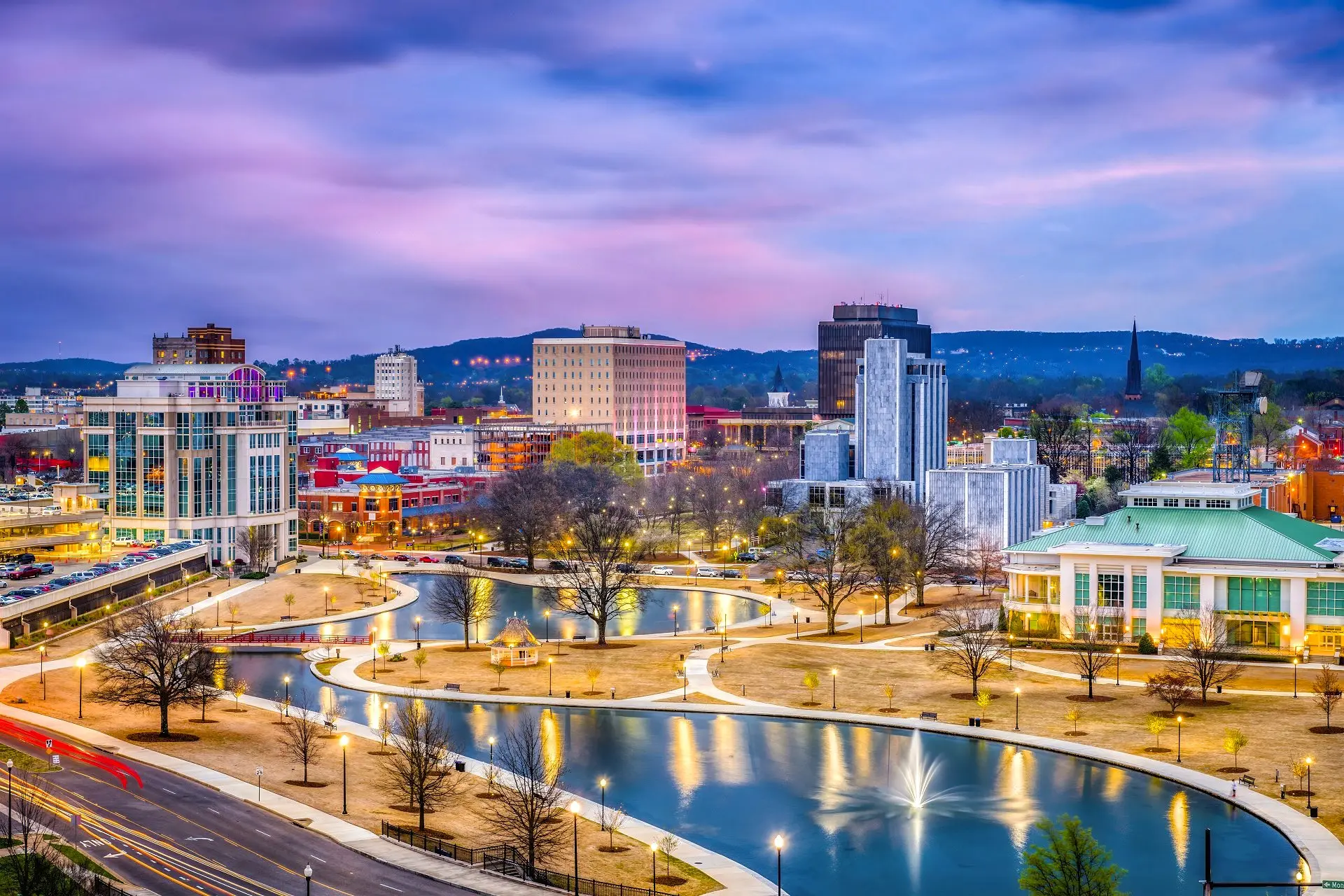
Huntsville · Alabama, United States
Huntsville
A city whose identity is shaped by rocketry and research, balanced by historic districts, museums, arts and the foothills of northern Alabama.
Best for science-minded travellers, families and road trips through the American South.

Why it surprises
The space story is substantial, not a roadside novelty
Huntsville's strongest claim to a place on this list is unusually specific. NASA's Marshall Space Flight Center has played a central role in American propulsion, launch vehicles and space systems, and its official visitor centre is the U.S. Space & Rocket Center. The museum's large-scale hardware and Saturn V display give the city's space identity physical weight, while Space Camp has made Huntsville familiar to generations of young science enthusiasts. Some tours and access arrangements involve identification, citizenship or security requirements, so visitors should rely on current official instructions rather than older travel descriptions.
The city is not only a museum stop. Historic districts, a growing arts and food scene, botanical attractions and nearby outdoor areas broaden a stay, while the continuing presence of engineering and aerospace work distinguishes Huntsville from places that present technology only as history. A car remains useful for many itineraries, and summer heat and storms can affect outdoor plans. Travellers interested in the civil-rights history and broader culture of Alabama should also place Huntsville within a regional route rather than treating it as an isolated themed destination. Its appeal lies in the coexistence of Southern urban history, contemporary research and an unusually accessible public account of the technologies that made spaceflight possible.
From inspiration to itinerary
The right destination is the one whose trade-offs suit you
Remote nature, small heritage towns and island life each impose different limits; none should be hidden behind a beautiful photograph.
Use the comparison as a planning prompt, then verify the live details that matter to your dates.
Travellers who want a compact cultural stay may find Luang Prabang, Kotor or Brașov easier to shape than Madagascar or Baja California, where transport and weather dominate the plan. Sardinia and Albania work well for road trips, but only when the number of bases remains realistic. Georgia can combine city, wine and mountains, yet highland access makes season decisive. Holbox appears simple because the transfer is short, but island infrastructure and protected-area rules require flexibility. Huntsville is the outlier: a destination with conventional urban access whose distinctive value comes from science and technology rather than remoteness.
Budget should be assessed through the whole trip rather than daily prices alone. A country with inexpensive meals can still require costly internal flights, private transfers or specialist guides. Conversely, a well-connected city may support a deeper stay without constant movement. The environmental cost of transport also matters. Staying longer, travelling overland where practical and avoiding unnecessary domestic hops can make an itinerary both calmer and more efficient. Most importantly, do not select a place merely because a list predicts that it will become popular. Choose it because its culture, landscape and practical demands match the way you genuinely want to travel.
| Destination | Strongest fit | Main planning constraint |
|---|---|---|
| Luang Prabang | Living heritage and slow city travel | Religious etiquette, heat and regional transport |
| Sardinia | Coast-and-interior road trip | Summer demand and long island distances |
| Baja California | Desert, sea and wildlife | Scale, road preparation and seasonal conditions |
| Madagascar | Endemic nature and guided exploration | Slow logistics, health planning and weather |
| Albania | Balkan coast, towns and mountains | Rapid development and variable road access |
| Georgia | Food, wine, cities and highlands | Mountain access and overambitious itineraries |
| Kotor | Maritime heritage and bay scenery | Cruise congestion and summer heat |
| Brașov | Historic city with mountain access | Seasonal outdoor conditions and day-trip crowds |
| Isla Holbox | Low-key island and coastal nature | Fragile infrastructure and regulated wildlife |
| Huntsville | Space history and family learning | Car-oriented movement and access rules for tours |
The wider view
There is no prize for arriving before everyone else
The best reason to visit any of these destinations is not the fear that a window is closing. Places are never frozen, and tourism is only one force among economic change, conservation, migration and local ambition. A thoughtful traveller pays attention to that change without treating residents as guardians of a private discovery. Go because Luang Prabang's urban fabric rewards quiet observation, because Sardinia's interior reframes its coast, because Baja and Madagascar reveal ecological scale, or because Huntsville tells an unexpectedly important technological story. Then travel slowly enough to understand what you came to see.
Popularity will continue to shift, and some places on this list are already busy. The practical answer is not an endless search for emptiness but better timing, wider distribution of spending, respect for protected environments and an honest acceptance of limits. When those habits guide the itinerary, a destination does not need to be secret to feel revelatory.