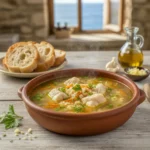
Along the Dalmatian coast, where fishing boats still set out at first light and family kitchens lean on what the day’s catch brings in, buzara stands as one of the most characteristic ways to cook shellfish. In Croatian cooking, this approach typically means a quick pan of seafood simmered with olive oil, garlic, white wine, and fresh herbs, sometimes with a little breadcrumb to catch the juices. When mussels take the lead role in that pan, the result is à moi et à Buzaru ou mušule na buzaru—a dish that feels very close to the rhythm of everyday coastal life.
In Dalmatia, mussels na buzaru often appears in simple konobas (traditional taverns) and home kitchens rather than on formal tasting menus. Fishers, home cooks, and small seaside restaurants rely on this method because it respects the shellfish: strong enough in flavor to be satisfying, yet restrained so the taste of the sea remains in front. A typical white buzara (na bijelo) builds a base of olive oil, garlic, and parsley, moistened with white wine; breadcrumbs are added towards the end to give the liquid more body. Tomato and onion create a red version (na crveno), but mussels more often arrive in the white style, which suits their gentle sweetness.
The flavor profile of mussels na buzaru is straightforward and layered at once. The mussels bring brine, a natural sweetness, and a tender, just-bouncy texture. The cooking liquid starts thin and winey, then softens as the mussel juices mingle with olive oil and garlic. Breadcrumbs help suspend that fat and liquid, turning it into a light, spoonable sauce that clings to each shell and begs for bread or polenta on the side. A handful of chopped parsley cuts through the richness with a green, aromatic edge, while optional tomato adds a faint fruitiness without pushing the dish toward a heavy stew.
Nutrition-wise, mussels offer lean protein, notable minerals, and B vitamins, with relatively modest calories compared with many meat dishes. Olive oil forms the main fat in this preparation, aligning the dish with broader Mediterranean patterns of eating, where seafood and plant fats take center stage. The overall result sits comfortably between rustic and light: satisfying enough for a main course, yet not overly heavy, especially when paired with a simple salad or grilled vegetables.
This version of mussels na buzaru follows Dalmatian practice by keeping the ingredient list short and technique-driven. It favors a white buzara base, with optional tomato for cooks who enjoy a slightly richer sauce yet still want the mussels to stay at the center. The method relies on careful timing: the garlic must soften without browning, the wine needs a brief simmer, and the mussels require firm heat and a tight lid so that they open quickly rather than simmer for too long.
For a home cook, mussels na buzaru offers several advantages. It cooks in one pot, within minutes, and adapts well to both casual weeknight meals and relaxed gatherings where a large pot can land on the table for everyone to share. The same technique works for clams or mixed shellfish, so once the basic method is familiar, it becomes a flexible template for coastal-style seafood cooking. When served with bread that can soak up the sauce and a glass of crisp Croatian white wine such as Pošip, Malvasia, or Graševina, it delivers a clear sense of Dalmatian shorelines without demanding elaborate preparation.