

Sant Miquel de la Mosquera is a small historic church in the La Mosquera quarter of Encamp, set on Placeta de Sant Miquel rather than in an isolated mountain location. It is especially interesting for travellers who want to look beyond Andorra’s best-known Romanesque churches and see how religious architecture continued to evolve in the sixteenth, seventeenth and eighteenth centuries. The chapel is compact, partly built into the rock and closely tied to the old neighbourhood around it. The main practical limitation is clear in the official museum information: access is not adapted for people with reduced mobility, and regular visitor hours are not published online, so anyone who needs to see the interior should check with Encamp tourism before going.
The church is first documented in 1611, although official heritage information indicates that it was probably built toward the end of the sixteenth century. It later underwent enlargement and reform in the eighteenth century, including work dated to 1769. Those phases give Sant Miquel a different character from a twelfth-century Romanesque chapel. Instead of a monument dominated by one medieval campaign, it reflects the devotional life of a settled neighbourhood over several centuries.
Its architecture is simple but adapted closely to the site. The Andorran heritage register describes a rectangular plan and notes that part of the southern side is excavated into the rock. Stone walls, a timber-and-slate roof and a small bell gable give the exterior the restrained appearance common to rural and neighbourhood churches in the country. One façade was cut back to leave more room for the street, a small detail that makes sense only when the building is seen in its compact urban setting. Sant Miquel is therefore worth approaching on foot through La Mosquera rather than treating it as an object detached from its surroundings.
Inside, the most important surviving elements are later than the probable construction date. The main altar retains a retable dedicated to Saint Michael the Archangel and Saint John the Baptist. Nineteenth-century mural decoration by Josep Oromí adds another layer, painted in tempera on plaster and integrated around the Baroque altar. The official heritage description notes the use of ochre tones and a composition designed to create a unified scenic effect. These paintings were restored in 2006, while the roof had already been renewed in 1974.
That sequence—probable late-sixteenth-century origin, seventeenth-century documentation, eighteenth-century enlargement and nineteenth-century painting—makes the church useful for understanding Andorran heritage beyond the Romanesque label that dominates many itineraries. It also explains why a short visit benefits from reading before arrival. From outside, Sant Miquel may look like a very modest stone chapel. Knowing what survives inside gives the building more significance and helps distinguish it from a purely picturesque stop.
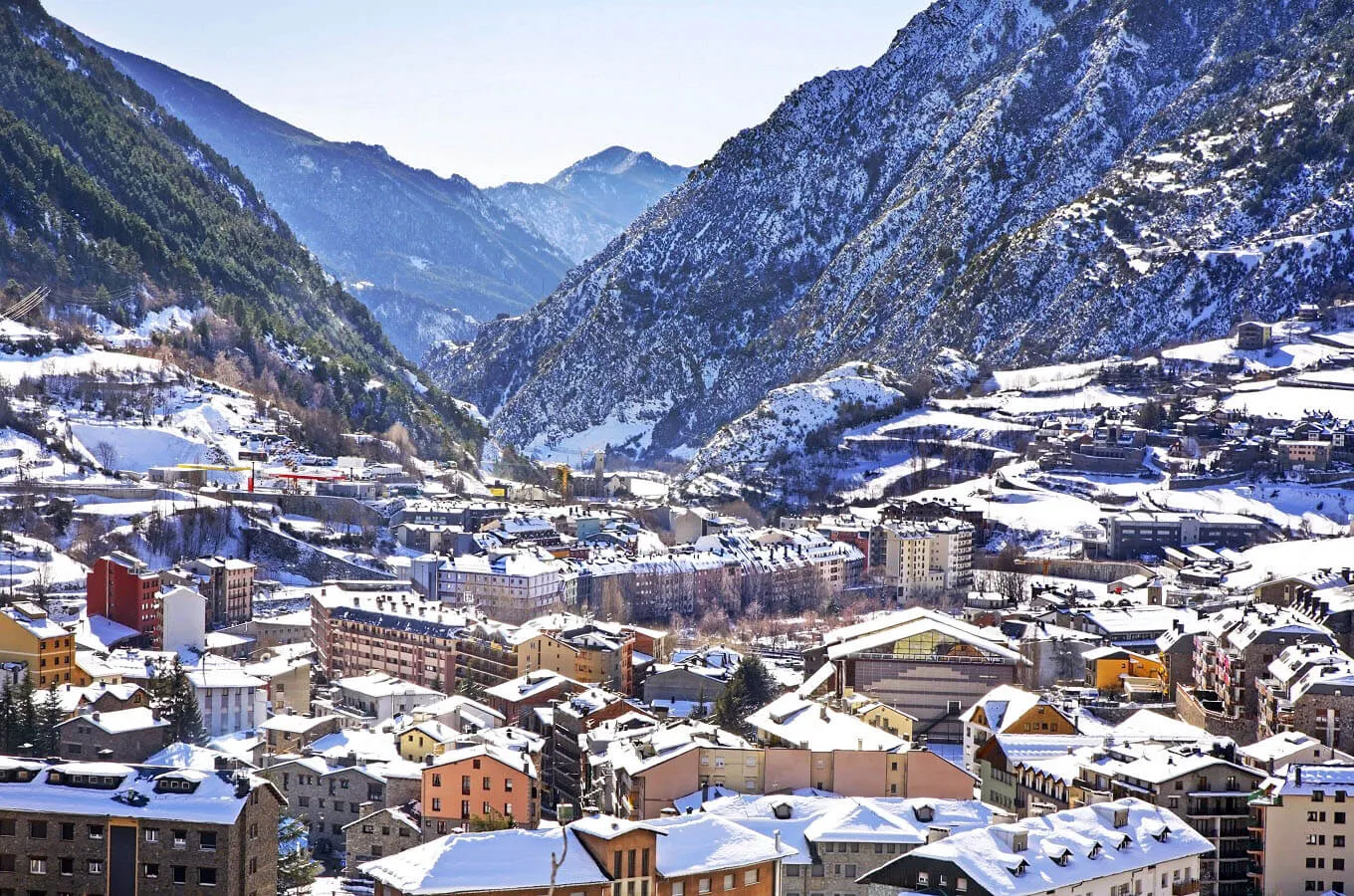
The setting is easy to combine with central Encamp. The church belongs to the La Mosquera and El Tremat historic area, where official cultural-route material points visitors toward old houses, ironwork and other traces of the parish’s built history. Santa Eulàlia d’Encamp is another useful religious stop nearby in the broader town. A walking route linking these places offers more context than driving to the chapel, taking a photograph and leaving immediately.
Visitor logistics require some flexibility. The official museum page does not publish fixed opening times or a standard admission price; instead, it directs visitors to Promoció i Turisme d’Encamp. The same page lists the L2 Encamp and L4 Pas de la Casa bus lines for reaching the area. Because the church remains an active religious building and the official description calls it the most active church in the parish, access can depend on worship and local use as well as tourism. Do not assume that an unlocked interior is available throughout the day.
Accessibility is the clearest constraint. The government museum service explicitly states that access is not adapted for people with reduced mobility. The surrounding older streets may also be less predictable than the modern commercial centre, so visitors who need step-free access should contact the tourist office for current advice. The surrounding old quarter is also worth ten or fifteen minutes of unhurried walking before or after the chapel. For everyone else, allow roughly twenty to forty minutes if the interior is open, or less for an exterior stop within a wider walk around La Mosquera and Encamp.
Sant Miquel de la Mosquera is not a headline attraction built around crowds, ticketing or a large interpretation centre. Its value is quieter: it shows how a small parish church absorbed changes in architecture, devotion and painting while remaining part of everyday Encamp. Travellers who already plan to see the major Romanesque monuments will find it a useful contrast, while those staying in Encamp can include it naturally in a local heritage walk. Check access first, then approach it as a neighbourhood monument whose scale is part of its historical meaning.
.webp)
.webp)
.webp)
.webp)
.webp)
Community Ratings & Reviews
No traveller ratings yet
Traveller reviews
0 published reviews
No reviews yet. You can be the first to share a helpful experience.