
Croatia National Food
Šporki Makaruli: Dubrovnik’s “Dirty Macaroni” Beef Ragù

Last updated: 2026-02-28 13:39:49
Recipe at a glance
Šporki Makaruli: Dubrovnik’s “Dirty Macaroni” Beef Ragù
Key recipe details from the source.
- Servings
- 6
- Preparation
- 25 minutes
- Cooking
- 150 minutes
- Calories
- 430 kcal
Croatian recipe
Šporki Makaruli: Dubrovnik’s “Dirty Macaroni” Beef Ragù
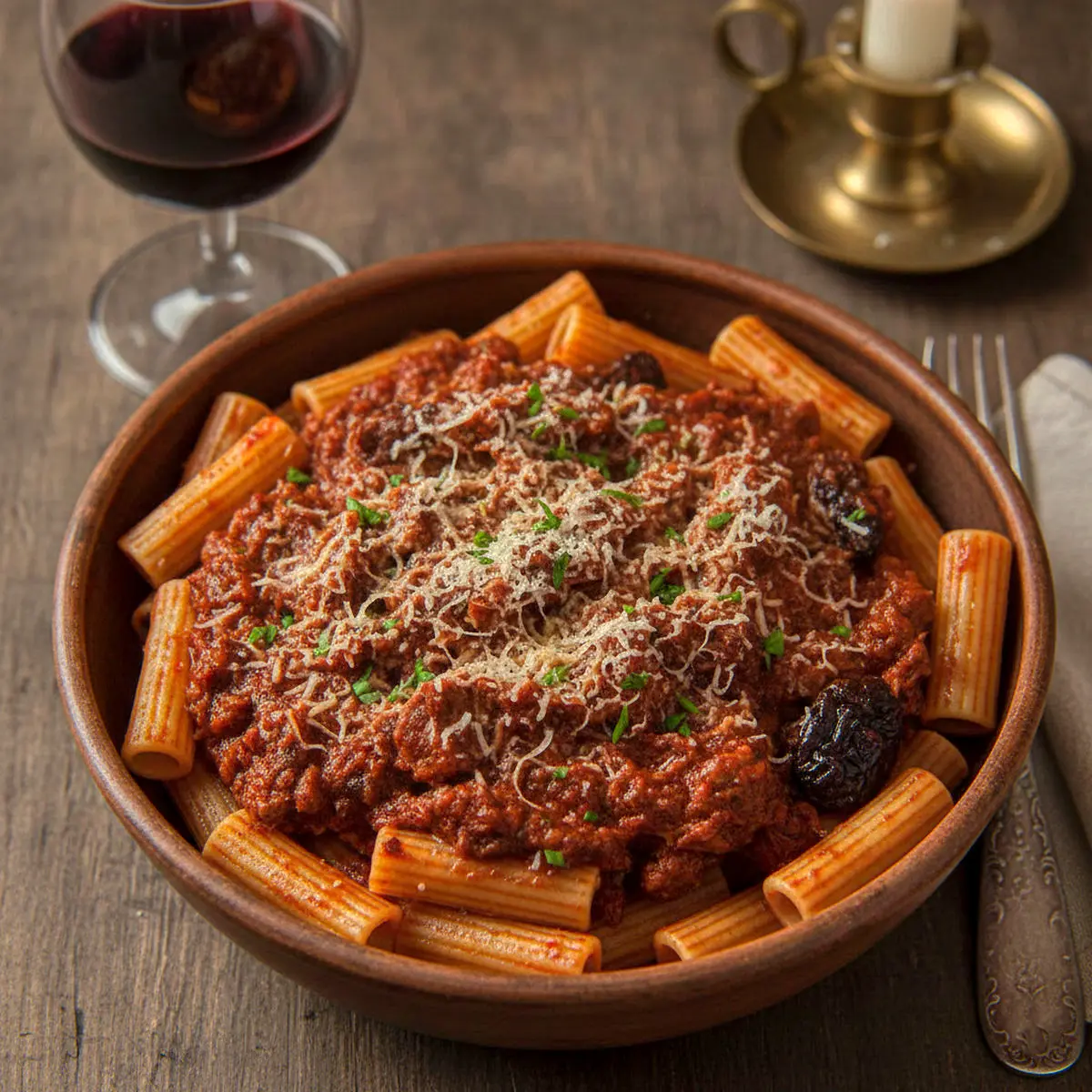
Šporki makaruli is a festive Dubrovnik pasta dish: slow-simmered beef shank in a spiced red wine ragù served over tubular pasta and topped with grated sheep’s cheese. Beef cubes cook gently with onions, garlic, tomato concentrate, grape molasses, prunes, and a blend of clove, nutmeg, and cinnamon, echoing the official recipe from Dubrovnik’s tourist board while staying practical for a home kitchen. A long, covered simmer yields tender beef and a glossy sauce that clings to the pasta, giving it the characteristic “dirty” appearance. The finished plate feels hearty, aromatic, and slightly sweet-savoury, ideal for winter gatherings or a weekend meal rich in local history.

01 · Overview
Overview
Šporki makaruli, often translated as “dirty macaroni,” carries a name that sounds playful, yet the dish tells a precise story about Dubrovnik’s social customs, feast days, and careful thrift in the kitchen. In the old Republic of Ragusa, households prepared a generous meat ragù for the Feast of St. Blaise, the city’s patron saint. The finest cuts went on platters for aristocrats and honoured guests; at the end of the celebrations, what remained was the deeply flavoured sauce, streaked with tiny morsels of meat. That sauce met makaruli, tubular pasta in the local dialect, leaving the pasta stained or “dirty” with meat juices.
The modern version served in homes and restaurants in Dubrovnik no longer feels like a leftover dish. It sits proudly on winter menus and feast tables as a complete plate: generous pieces of beef shank simmered with onions, garlic, tomato, warm spices, and red wine, spooned over pasta and finished with a firm local sheep’s cheese. Writers and local guides describe it as one of Dubrovnik’s defining dishes, closely linked to the festivities of St. Blaise and to the colder months, when a heavy, fragrant sauce feels exactly right.
At the core lies beef, usually shank or another collagen-rich cut that rewards slow cooking. The official recipe from the Dubrovnik tourist board leans on lard or olive oil, a large quantity of onion, tomato concentrate, grape molasses, prunes, and a trio of spices—clove, nutmeg, and cinnamon—combined with red wine and parsley. This combination gives the ragù a layered character: savoury depth from the beef and onions, gentle sweetness from dried fruit and grape molasses, and aromatic warmth from the spices. The sweetness needs balance; careful seasoning and a patient simmer keep the sauce rounded rather than sugary.
That spice profile sets šporki makaruli apart from a standard Italian ragù. Clove, cinnamon, and nutmeg hint at older trade routes and shared Mediterranean influences, where cooks folded spices from distant markets into local meat dishes. TasteAtlas lists these same ingredients among the characteristic elements of the dish, alongside makaruli pasta, pork fat, garlic, bay leaves, and red wine. The resulting sauce feels familiar to anyone who loves long-simmered meat and pasta, yet distinctly Dubrovnik in its details.
Texturally, the dish sits between a stew and a ragù. Beef shank, cut into cubes rather than minced, softens over nearly two hours until the fibres relax and the connective tissue melts into the sauce. Onions almost disappear, carrying flavour rather than texture, while prunes and grape molasses melt into the background, lending colour and a faint fruity note. The sauce clings to the pasta rather than drowning it; the pasta should appear streaked and speckled, not buried under a thick blanket. That “dirty” look is part of the character.
For a home cook, šporki makaruli rewards patience more than technical bravado. Once the onions sweat gently without browning and the meat sears lightly, the rest of the dish involves steady, low simmering and occasional stirring. The spices benefit from restraint—too much cinnamon or clove can push the dish toward dessert territory—so this version stays close to measured amounts in local sources. A small quantity of prunes introduces depth without drawing attention to itself; grape molasses, or a careful substitute, contributes a rounded sweetness and deeper colour.
Served in warm bowls with plenty of grated hard sheep’s cheese, šporki makaruli works as a complete meal. It suits a winter Sunday, a feast in honour of Dubrovnik, or any evening when a pan of slow-cooked meat feels right. This recipe follows the structure of the official Dubrovnik tourist board version, with modest adjustments for modern kitchens and clear measurement guidelines, aimed at cooks who want to reproduce the dish with confidence far from the city walls.
02 · Ingredients
Ingredients
- Main Ragù
- 2 tbsp lard or 4 tbsp olive oil Traditional fat; lard adds depth, olive oil keeps the dish lighter.
- 1 kg beef shank , cut into 2–3 cm cubes Collagen-rich cut that softens during a long simmer.
- 3 medium yellow onions , finely chopped Forms the bulk of the sauce base; they melt during cooking.
- 4 garlic cloves , finely chopped
- 1 tbsp tomato concentrate (tomato paste) Provides colour and a concentrated tomato note.
- 50 ml grape molasses Traditional sweetener; adds caramel depth and a faint fruity tone.
- 3–4 pitted prunes , chopped Supports the gentle sweetness and deep colour without dominating.
- 150 ml dry red wine Adds acidity and complexity; choose a medium-bodied wine you enjoy.
- 1 small bunch flat-leaf parsley (leaves only) , finely chopped (about ½ cup packed)
- ½ tsp ground cloves
- ½ tsp ground nutmeg
- 1 tsp ground cinnamon Warm spice trio characteristic of Dubrovnik versions.
- 2–3 bay leaves Common in many local descriptions; adds herbal length.
- 1½–2 tsp fine sea salt , plus more to taste
- ½–1 tsp freshly ground black pepper , to taste
- 150–200 ml water , divided Used to loosen tomato concentrate and adjust consistency during cooking.
- Pasta & Finishing
- 500 g dried ziti, penne, or other tubular pasta Makaruli in Dubrovnik refers to tube-shaped pasta.
- Salt for pasta water
- 60–80 g hard sheep’s cheese , finely grated Use Paški sir or a firm aged sheep’s cheese; pecorino can stand in.
- Substitutions & Allergy Notes
- Beef shank Beef chuck or similar stewing beef works well if shank is difficult to find.
- Grape molasses Mix 3 tbsp dark grape juice with 1 tbsp honey or use pomegranate molasses in equal volume for a slightly sharper note.
- Prunes Dried figs or a small handful of raisins can stand in, though the flavour leans differently.
- Dairy-free Skip the cheese or replace with a savoury plant-based hard cheese.
- Gluten-free Use a sturdy gluten-free short pasta; keep an eye on cooking time as gluten-free shapes soften faster.
03 · Directions
Directions
Directions
Prepare the Ragù
Warm the fat (5 minutes).
Heat a large heavy-based pot over medium heat and add lard or olive oil; warm until fluid and shimmering but not smoking.
Sweat the onions (12–15 minutes).
Add chopped onions and a pinch of salt; cook over medium-low heat, stirring frequently, until soft and translucent, with no browning.
Add garlic and briefly cook (1 minute).
Stir in garlic and cook just until fragrant; keep the heat moderate to prevent it from colouring.
Sear the beef (6–8 minutes).
Increase the heat to medium-high, add beef cubes in an even layer, and stir occasionally until the surfaces lose their raw look and take on light colour; do not aim for deep browning.
Season and add prunes (2 minutes).
Sprinkle in salt, black pepper, and chopped prunes; stir so prunes distribute through the onion and meat mixture.
Cover and let the meat release juices (15–20 minutes).
Cover the pot, lower the heat to low, and cook until the beef releases liquid and steams in its own juices, stirring once or twice.
Add tomato concentrate and water (3–5 minutes).
In a small bowl, loosen tomato concentrate with about 50 ml water, then pour into the pot; stir well and cook uncovered for a few minutes until the raw tomato scent softens.
Stir in grape molasses (2 minutes).
Add grape molasses, stir until it dissolves into the sauce, and keep the heat low so sugars do not catch on the bottom.
Add wine, parsley, and spices (3–5 minutes).
Pour in red wine, then add chopped parsley, cloves, nutmeg, cinnamon, and bay leaves; bring to a gentle simmer and cook a few minutes so the alcohol cooks off.
Slow-simmer the ragù (90–110 minutes).
Lower the heat to the barest simmer, cover the pot, and cook 1½–2 hours, stirring every 20 minutes and adding small splashes of water if the sauce thickens too much. The beef should become tender enough to break with a spoon, and the sauce should look glossy and cling lightly to the meat.
Taste and adjust seasoning (2–3 minutes).
Check salt, pepper, and overall balance; if the sauce feels too sweet, add a small pinch of salt and a spoonful of wine or a squeeze of lemon to sharpen.
Cook the Pasta and Finish
Boil the pasta (8–11 minutes).
Bring a large pot of well-salted water to a rolling boil; add the pasta and cook until al dente, following package times.
Reserve cooking water and drain (2 minutes).
Scoop out ½ cup pasta water, then drain the pasta, leaving it just slightly damp to help the sauce cling.
Combine pasta and sauce (2–4 minutes).
Add drained pasta to the ragù pot over low heat, tossing gently until each piece carries a thin coat of sauce; add a splash of pasta water if the mixture looks tight. The pasta should appear streaked with meat and sauce rather than fully submerged.
Serve with cheese (2 minutes).
Divide the pasta and ragù among warm bowls and shower each portion with grated hard sheep’s cheese; serve immediately.
04 · Nutrition
Nutrition
- Calories
- 430 kcal