
Croatia National Food
Croatian Strudel: Apple or Cheese Savijača

Last updated: 2026-02-28 13:44:25
Recipe at a glance
Croatian Strudel: Apple or Cheese Savijača
Key recipe details from the source.
- Servings
- 10
- Preparation
- 45 minutes
- Cooking
- 40 minutes
- Calories
- 280 kcal
Croatian recipe
Croatian Strudel: Apple or Cheese Savijača
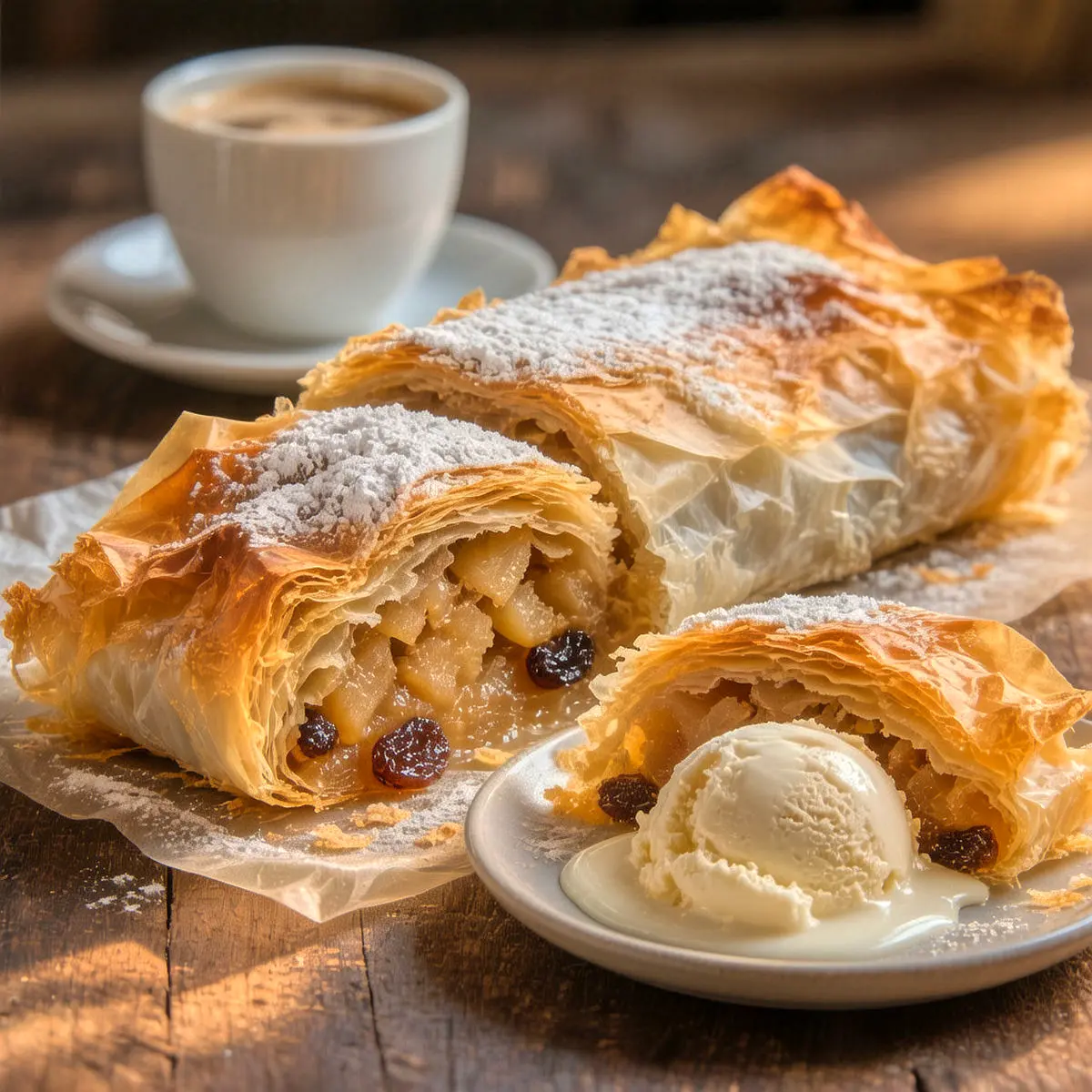
This Croatian strudel (savijača / štrudla) pairs a traditional hand-stretched dough with a choice of two classic fillings: spiced apple or creamy fresh cheese. A simple flour-and-water dough is kneaded, rested, and stretched until thin enough to read through, then brushed with butter and rolled around the filling. The apple version brings tart fruit, cinnamon, and optional raisins and walnuts; the cheese version relies on farmer’s cheese or ricotta, sour cream, eggs, and lemon zest for a gentle tang. Baked until deeply golden and crisp, the strudel slices cleanly and serves 10. The method works in a home kitchen with basic equipment, and a note explains how to substitute store-bought phyllo when time or experience with hand-stretching is limited.

01 · Overview
Overview
In many Croatian kitchens, a tray of strudel signals that something more than a routine afternoon has taken shape. The dough, stretched thin enough to show the pattern of the tablecloth underneath, carries a sense of pride that reaches back through generations. Under names like savijača and štrudla , this rolled pastry holds some of the country’s clearest food memories: a rustle of crisp crust, the scent of baked apples or fresh cheese, and a table briefly quiet as everyone takes the first bite.
Strudel in Croatia shares roots with the broad Austro-Hungarian tradition, yet it has its own character. Local cooks adapted the idea to regional produce and habits: backyard apples that keep through winter, fresh cheeses from small dairies, walnuts from family trees. In Slavonia, apple strudel might lean heavily on tart fruit and ground walnuts; along the coast, a lemon-scented cheese version appears beside coffee when guests drop in. What stays consistent is the principle of frugality and care: a modest set of ingredients turned into something that feels grand enough for holidays yet relaxed enough for a Sunday visit.
The dough itself sets Croatian strudel apart. Rather than relying on store-bought pastry, many home bakers still prepare a simple flour-and-water dough, knead it well, then rest it until the gluten softens and the surface turns silky. After that rest, the dough is stretched by hand over a large table, easing it thinner and thinner until it forms a sheer, flexible sheet. This method requires attention rather than special equipment, and it rewards patience with a crust that bakes into delicate, irregular layers, crisp at the edges and tender where it wraps around the filling.
The fillings tell two intertwined stories. Apple strudel ( savijača od jabuka ) carries the fragrance of grated or sliced apples, cinnamon, and sometimes raisins and walnuts. The fruit softens in the oven, but still keeps enough structure to contrast with the crackling crust. Cheese strudel ( štrudla sa sirom or savijača sa sirom ) offers a different pleasure: a barely sweet, tangy filling made from farmer’s cheese, sour cream, and eggs, perfumed with lemon zest and vanilla. When baked, the cheese turns lush and just-set, forming creamy slices that sit neatly on a plate while still tasting rich and soft.
In Croatian homes, the choice between apple and cheese strudel often reflects the occasion and the season. Autumn and winter lean toward apple versions, particularly when stored apples and walnuts need to be used wisely. Warmer months and feast days might bring cheese strudel to the table, sometimes dusted with powdered sugar, sometimes left bare and glossy from butter brushed on top. Both versions travel well, so they appear in school snacks, workplace break rooms, and long-distance train rides, wrapped in paper towels or tucked into plastic boxes.
The recipe that follows respects these traditions while fitting a modern kitchen. The dough has been tested with all-purpose flour common in North American pantries, the filling quantities suit a standard oven tray, and the instructions walk through hand-stretching in clear stages. There is room for adaptation—store-bought phyllo for busy days, a nut-free filling when needed, or a fully apple-based strudel for those who lean toward fruit. Still, the heart of the dish remains: a single, generous roll of pastry, sliced into spiraled pieces that reveal either spiced apples or tender cheese within, carrying the quiet authority of a dessert that has earned its place over time.
02 · Ingredients
Ingredients
- Strudel Dough (for 1 large roll)
- 2 cups (260 g) all-purpose flour Provides structure and elasticity for hand-stretching.
- 1/2 teaspoon fine sea salt Balances flavor and strengthens the dough network.
- 2/3 cup (160 ml) lukewarm water Hydrates the flour; warmth helps the dough relax.
- 2 tablespoons neutral oil (sunflower or canola) Adds suppleness and helps the crust bake crisp rather than tough.
- 1 teaspoon white vinegar Slight acidity encourages a more tender bite.
- Extra flour, for dusting Prevents sticking during stretching.
- Extra neutral oil, for coating dough and tablecloth Keeps the dough from drying and aids in rolling.
- Apple Filling (choose this OR the cheese filling)
- 6 medium tart apples (about 900 g), peeled and coarsely grated or thinly sliced Granny Smith, Jonathan, or other tart varieties hold shape and provide bright flavor.
- 1/2 cup (100 g) granulated sugar Sweetens the fruit and encourages light caramelization.
- 1 teaspoon ground cinnamon Lends warmth and a familiar Central European aroma.
- 1 tablespoon fresh lemon juice Keeps the apples from browning and sharpens the flavor.
- 1/2 cup (60 g) raisins, optional Adds sweetness and chewy texture.
- 1/2 cup (50 g) ground or finely chopped walnuts, optional Contributes richness and a faint bitterness that balances the sugar.
- 1/2 cup (50 g) plain dry breadcrumbs Absorbs apple juices and prevents a soggy base.
- 4 tablespoons (60 g) unsalted butter, melted, divided Two tablespoons for toasting the breadcrumbs; two for brushing the dough.
- Pinch of salt Lifts the flavor of the fruit and spice.
- Cheese Filling (choose this OR the apple filling)
- 2 cups (450 g) full-fat farmer’s cheese, ricotta, or well-drained cottage cheese Forms a gently tangy, creamy base; drain well for a firm slice.
- 1/2 cup (120 ml) sour cream Adds richness and soft acidity.
- 2 large eggs Bind the filling so it sets cleanly when baked.
- 1/3 cup (65 g) granulated sugar Lightly sweetens without turning the filling cloying.
- 2 tablespoons (20 g) fine semolina or plain breadcrumbs Soaks up excess moisture and helps the filling hold shape.
- 1 teaspoon vanilla extract Brings a soft, rounded aroma.
- Zest of 1 lemon (finely grated) Brightens the cheese and cuts through the richness.
- Pinch of salt Keeps the filling from tasting flat.
- 2 tablespoons (30 g) unsalted butter, melted For brushing over the stretched dough before adding the cheese filling.
- To Finish
- 2–3 tablespoons neutral oil or melted butter For brushing the top of the strudel so the crust turns deep golden.
- Powdered sugar, for dusting (optional) Classic finish for serving once the pastry cools slightly.
03 · Directions
Directions
Directions
Make the Strudel Dough
Combine dry ingredients
Whisk flour and salt in a medium bowl until evenly mixed (2 minutes).
Add liquids and form dough
Pour in lukewarm water, oil, and vinegar, then stir with a spoon until a rough dough forms and no dry flour remains (3–4 minutes).
Knead until smooth
Turn the dough onto a lightly floured surface and knead until it feels elastic and the surface turns smooth and slightly shiny (8–10 minutes).
Rest the dough
Shape the dough into a ball, coat lightly with oil, place in a covered bowl, and let it rest at room temperature until supple, about 30 minutes.
Prepare the Apple Filling (if using)
Toast breadcrumbs
Warm 2 tablespoons melted butter in a skillet over medium heat, add breadcrumbs, and stir until golden and fragrant, then cool slightly (5–7 minutes).
Season the apples
Combine grated or sliced apples with sugar, cinnamon, lemon juice, raisins, walnuts, and a pinch of salt; toss until evenly coated (5 minutes).
Prepare the Cheese Filling (if using)
Mix cheese base
Stir farmer’s cheese, sour cream, sugar, semolina or breadcrumbs, vanilla, lemon zest, and salt in a bowl until smooth and evenly blended (5 minutes).
Add eggs
Beat in eggs until the mixture looks creamy and pourable yet still thick enough to mound slightly on a spoon (3 minutes).
Stretch, Fill, and Roll
Prepare the work surface
Cover a large table or counter with a clean cotton tablecloth, sprinkle it lightly with flour, and place the rested dough ball in the center (3 minutes).
Flatten the dough
Roll the dough with a floured rolling pin into a rectangle about 12 x 16 inches (30 x 40 cm), then switch to using the backs of the hands to stretch from the center outward (5–7 minutes).
Stretch paper-thin
Continue stretching gently until the dough becomes very thin and nearly transparent, trimming away any thick edges with a knife if needed (5–8 minutes).
Brush with fat
Brush the entire surface lightly with melted butter (for apple or cheese) or neutral oil, keeping the edges slightly drier so they seal more easily (2–3 minutes).
Add filling
For apple strudel, scatter toasted breadcrumbs over the lower third of the dough, then spoon the apple mixture on top in an even log; for cheese strudel, spread the cheese filling in a band along the lower third, leaving a 1-inch (2.5 cm) border at the sides (5–7 minutes).
Roll up the strudel
Fold the short side edges over the filling, then lift the tablecloth from the filling side so the dough rolls over itself, forming a tight log with the seam ending on the bottom (3–4 minutes).
Transfer to pan
Grease a large baking sheet or line it with parchment, then lift the strudel gently—using the tablecloth as a sling if helpful—and place it seam-side down, curving it slightly if needed to fit (3 minutes).
Brush and vent
Brush the top with oil or melted butter and prick the top in several spots with a toothpick or tip of a sharp knife to allow steam to escape (3 minutes).
Bake
Bake the strudel
Heat the oven to 375°F (190°C) and bake the strudel on the middle rack until deep golden brown and crisp, 35–40 minutes.
Cool and serve
Rest the baked strudel on a rack for at least 20 minutes so the filling sets, then dust with powdered sugar if desired and slice into 10 pieces with a sharp serrated knife (25 minutes including cooling).
04 · Nutrition
Nutrition
- Calories
- 280 kcal