In the fertile plains of eastern Croatia, where the Danube and Drava rivers carve through oak forests and golden wheat fields, a centuries-old tradition of pork curing reaches its apex in a single, magnificent preparation: kulen. This spicy dry sausage, pronounced “KOO-len,” represents far more than a preserved meat product. It stands as a defining emblem of Slavonian identity, a marker of family heritage, and one of the most technically demanding cured sausages in all of European charcuterie.
The origins of kulen trace back several hundred years, rooted in the practical necessity of preserving pork through the long winter months. Slavonian farmers, blessed with excellent swine raised on acorns from the region’s expansive oak groves, developed a method of grinding select cuts, seasoning them generously with locally grown paprika and garlic, then smoking and drying the mixture in natural casings. What began as rural sustenance became, over generations, an art form passed from parent to child, each family guarding its particular ratios and smoking techniques with quiet pride.
The paprika deserves special attention here. Croatia’s Slavonia and Baranja regions produce their own strains of ground red pepper, ranging from sweet and mild to intensely fiery. A proper kulen demands a careful balance of these varieties—enough heat to create a pleasant burn on the palate, sufficient sweetness to round the flavor, and a depth of color that gives the finished sausage its characteristic deep crimson interior. This paprika-forward character distinguishes kulen from its relatives in Hungary, Serbia, and elsewhere in the Balkans, where similar preparations exist but with different spice profiles and curing methods.
The texture of a well-made kulen reveals the patience required to produce it. After months of slow drying in cool, ventilated spaces—traditionally the attics and sheds of Slavonian farmhouses—the sausage develops a firm yet yielding consistency. Sliced thinly, it should offer slight resistance to the knife before yielding cleanly. The fat, marbled throughout the lean meat, appears as small white specks against the red backdrop, contributing a silky richness that coats the tongue. The smoke flavor, acquired during the initial weeks of cold smoking over beechwood or fruit tree branches, remains present but never overpowering, a subtle undercurrent beneath the paprika’s dominance.
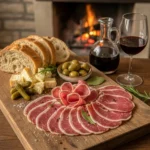
Eating kulen is a ritual in Slavonia. It appears on tables during celebrations, holidays, and gatherings of family and friends. Thin slices rest on wooden boards alongside crusty bread, pickled vegetables, and perhaps a wedge of fresh cheese. A glass of graševina, the region’s signature white wine, or a robust local red provides the customary accompaniment. The sausage is never cooked further; it arrives at the table ready to consume, its months of preparation having rendered it safe, flavorful, and deeply satisfying.
What makes kulen special extends beyond its taste. The European Union granted Slavonski kulen Protected Geographical Indication (PGI) status in 2015, recognizing that authentic versions must come from specific Croatian counties and adhere to traditional methods. This protection acknowledges what Slavonians have long known: true kulen cannot be replicated elsewhere. The climate, the pigs, the paprika, and the accumulated wisdom of generations all contribute to a product that transcends its humble ingredients.
For the ambitious home cook, making kulen represents a serious undertaking. The process demands quality pork, proper casings, careful temperature control, and above all, patience measured in months rather than hours. Yet the reward—a handmade sausage of remarkable depth, one that carries echoes of a proud culinary tradition—proves worth the extended effort.