En omvisning i mikronasjoner

Rundtur i mikronasjoner: Sealand, Liberland og mer

Micronations are self-declared “do-it-yourself” countries that mimic real states but lack international recognition. Famous examples include Sealand (a WWII sea fort off the UK) and Liberland (a 7 km² Danube island between Croatia and Serbia). Neither is a true country by law. Sealand was founded in 1967 by pirate-radio enthusiast Paddy Roy Bates; Liberland by libertarian politician Vít Jedlička in 2015. Both issue passports and stamps, but these hold no legal power. They have become travel curiosities rather than real nations. Visitors interested in the quirky world of micronations will learn their histories, current status, and how to explore those open to the public.

Imagine standing on a pier at dawn in Harwich, England, watching a lone boat prepare to cross seven choppy miles of the North Sea. On board is a fortnight’s worth of supplies – lumber, food, water – headed for an improbable destination: a rusting World War II fortress called Roughs Tower. In 1967, a British pirate-radio entrepreneur, Major Paddy Roy Bates, declared this offshore tower to be an independent “Principality of Sealand”. Almost half a world away on the Danube River, Czech activist Vít Jedlička claimed a 7 km² wooded floodplain called Gornja Siga between Croatia and Serbia as the “Free Republic of Liberland” in 2015. Neither is recognized by any government, yet both capture headlines – and travelers’ imaginations.

What is a micronation?

A micronation is essentially a do-it-yourself country: an entity that claims independence and often mimics the trappings of a state, but lacks any legal recognition from established nations or international bodies. In practical terms, a micronation is “an aspirant state that claims independence but lacks legal recognition” under international law. They typically have no seat at the United Nations and no control over internationally-recognized territory. Nevertheless, micronations go to great lengths to imitate sovereign nations: they create constitutions, flags, national anthems, currency, passports, stamps and bureaucracies as if they were real countries.

Micronations are diverse in purpose. Some are novelty projects or hobbies, created by enthusiasts who enjoy designing a miniature culture and government (for example, the “Republic of Molossia” in Nevada or the artist-driven Republic of Uzupis in Lithuania). Others are political statements or protests, like the former Principality of Hutt River in Australia (protesting wheat quotas) or climate-focused entities like the “Grand Duchy of Flandrensis” (citing environmental issues). Still others aim for tourism or publicity. For instance, the Italian village of Seborga styles itself a principality largely as a tourist attraction, and the Conch Republic (Key West, Florida) was born as a tongue-in-cheek breakaway that is now a local marketing icon. In short, people found micronations for myriad reasons – protest, satire, ideological vision or even just for fun.

By definition, a micronation is not a sovereign state under international law. The classic Montevideo Convention of 1933 lays out criteria for statehood: a permanent population, a defined territory, a government, and capacity to enter relations with other states. Almost all micronations fail to meet these standards. They usually have tiny or no permanent populations. Sealand, for example, has only a few residents (often one or two caretakers). Liberland has had no sustained population at all, since its “founding” attempts were blocked by Croatian authorities. Most micronations hold no de facto government power on recognized territory. And crucially, no established country acknowledges them as states. Thus micronations exist in a grey zone – they call themselves countries, but no one else agrees to treat them that way.

How many micronations are out there? Estimates vary, because by some counts hundreds of self-declared micros exist, often briefly or virtually. One recent survey notes “over fifty” active micronations in 2023, with some hobbyist lists naming up to a few hundred in total. By comparison, there are 195 UN-recognized countries. In practice, only a few dozen micronations are well-known enough to merit mention or tourism, like Sealand, Liberland, Molossia (USA), Seborga (Italy), and the Conch Republic (USA). Many others never rise above local curiosity. In all cases, the defining point is that a micronation’s claims are not backed by international recognition or enforcement.

Montevideo Convention & Statehood Basics

To understand micronations, it helps to review the legal yardstick for countries. The Montevideo Convention (1933) – though technically a regional treaty – is often cited internationally as the classic definition of a “state” under public law. It requires four elements: (1) a permanent population, (2) a defined territory, (3) a functioning government, and (4) the capacity to enter into relations with other states. In principle, this means an entity must have people who live there year-round, clear borders, some governing authority, and some ability to engage diplomatically or commercially internationally.

In practice, however, satisfying Montevideo alone does not create a real country. Even if a micronation claims all four, it still needs other states to acknowledge it. “Recognition” by established governments is what gives a fledgling state access to international law, treaties, travel documents, etc. MontanaroLegal notes that Montevideo’s criteria are necessary but “not, in themselves, a sufficient condition” for membership in the international community. States can and do look at many factors (strategic, political, historical) before extending recognition.

Micronations almost never meet Montevideo requirements in full. Befolkning: Most claimants have very few residents. Sealand is typically home to only the Bates family’s caretakers – “normally like two people” according to Michael Bates. Liberland’s nominal citizenship is in the thousands, but ingen lives on its claimed ground, since Croatia forbids settlement. Territory: A fixed territory is key, but micronations often occupy disputed or tiny plots. Sealand’s only land is the concrete platform of Roughs Tower (about 550 m²). Liberland claims 7 km² but it’s a river island claimed by Serbia and Croatia’s border claims. Other micros are entirely symbolic (for example, the Republic of Utah tried to claim an underwater mountain, Bir Tawil is sometimes cited as the only true “terra nullius” on Earth at ~2,060 km² of Sahara that neither Egypt nor Sudan claims). Even if a micronation has land, the host country normally contests it.

Regjering: Some micronations create elaborate governments (prime ministers, parliaments, etc.), but these have no real enforcement power. Sealand has a hereditary “royal family” with a minister of state, but British law still applies (Sealand is de facto treated as UK territory after 1987, see below). International capacity: None of them can sign treaties or join the UN. Without diplomatic ties, a micronation cannot do things ordinary countries do. As analysts note, entities like Liberland and others remain “curious cases” that cannot evolve into normal states without acceptance by their neighbors.

Beyond Montevideo, other rules restrict micronations. The UN Charter and most national constitutions generally forbid unilateral secession and emphasize existing sovereignty. For instance, even if Liberia’s Jedlička were in the right historically (a big “if”), Croatia and Serbia both declare Liberland an illegal provocation. The UK simply updated its laws to treat Sealand as part of British waters (see below), nullifying Sealand’s claim. In short, international law offers no easy loophole for do-it-yourself countries. Micronations usually exist in a kind of legal no-man’s-land: they have identity and enthusiasm, but no legal personality in the eyes of others.

The Story of Sealand

Sealand - A Tour of Micro-Nations Sealand, Liberland, and Beyond

Where is Sealand located?

Sealand’s entire “country” sits atop a rusting concrete platform in the North Sea, about 11–13 km off England’s east coast. The structure, called HM Fort Roughs or Roughs Tower, was one of several anti-aircraft forts built by Britain during WWII. It’s basically two huge cylindrical towers embedded in the seabed, supporting a steel deck with cabins and battlements. Its official coordinates put it in international waters (before 1987) roughly between Suffolk and Essex. By comparison, this is far outside any harbor – a fisherman has to sail more than an hour just to get there.

The journey to Sealand is itself an adventure. There is no regular ferry or tour; the only way on is by private boat. In recent years, Sealand pays off-duty fishermen to serve as caretakers and transporters. Journalist Aaron Tlusty describes one such voyage vividly. In March 2019, caretaker Joe Hamill loaded up a “fortnight’s worth of victuals and clothes” onto a small fishing boat at Harwich harbor. By daybreak he was standing at the pier with crates, as the fishing skiff chugged out toward the horizon. From the wheelhouse, the two-tower silhouette of Sealand remained in sight for the entire 7-mile ride – “tiny and gigantic at the same time” as Hamill put it. It was a grey morning, but through the cabin windows the squat fortress came into view, the North Sea infinite around it.

Who founded Sealand and why?

Sealand began life in 1967 as a defiant gambit by Major Paddy Roy “Roy” Bates, a former British Army officer and pirate-radio enthusiast. At the time, Roughs Tower was abandoned and unoccupied. Britain’s war-time 3-mile territorial waters meant the platform lay just outside UK jurisdiction. Bates initially grabbed it to host Radio Essex, a business venture to broadcast pop music offshore. On 2 September 1967, Bates formally seized Roughs Tower from a rival pirate group and proclaimed the “Principality of Sealand”, declaring himself “Prince Roy”. His aim was to leverage the ambiguity of international waters to operate outside broadcasting laws – but he soon embraced the joke of statehood too, publishing a constitution, stamps, and passports for this new micronation.

Bates made Sealand’s family its first citizens. He created a flag and national anthem and initially installed his wife, son Michael, and daughter Penny as ministers of state in the tiny community. Although it began as pirate radio PR, Sealand evolved into a lifelong project. The Bates family treated the operation seriously: Roy styled himself a prince, his wife Queen Joan, and Michael was named Prince Regent in 1999. After Roy’s death in 2012, Michael (b. 1952) formally became “Head of State and Government”, though he remains the de facto ruler as Prince Michael. Today Michael lives on the mainland (in Suffolk) and directs Sealand from afar, while two appointed caretakers (like Joe Hamill and Mike Barrington) share on-site duties to keep the fortress habitable.

The 1978 attack and legal milestones

Sealand’s brief history includes a genuine armed incident. In August 1978, a German lawyer named Alexander Achenbach – who had been granted a Sealand passport – tried to seize the “principality”. Achenbach invited Roy Bates to Austria to discuss buying Sealand, then hired mercenaries to occupy the fort while Bates was away. The intruders reportedly took Prince Michael (Roy’s son) hostage and held him for ransom. However, Michael Bates managed to reclaim the fort by force, capturing the mercenaries. When Achenbach refused to pay, Bates held him and one accomplice. The incident ended when a German diplomat intervened: after negotiations, Achenbach was freed, and Bates claimed the envoy’s visit as a de facto recognition of Sealand by Germany. In reality, Germany and the UK never formally recognized Sealand.

Another milestone came a few years later in 1987, when the British government changed the law. The UK extended its territorial waters from 3 to 12 nautical miles (22 km). This expansion by statute meant that Roughs Tower now fell inside British waters. From that point on, legally Sealand was beneath the jurisdiction of the United Kingdom. A British judge had earlier dismissed a 1968 Crown prosecution (for firearms possession) on technical grounds that the fort was outside UK waters. The 1987 change retroactively placed Sealand inside UK territory, though no new trial occurred. Legal experts observed that this move effectively prevented any legal recognition of Sealand as independent – after all, a platform “erected by man” and lying within UK waters could not qualify as a sovereign state.

Despite Sealand’s bold claims, no nation has ever formally recognized it. The Bates family claims it has “diplomatic recognition” by Germany and (by treaty) by the Principality of Sealand’s own government, but internationally no country gives Sealand any standing. Even the EU declared Sealand passports to be “fantasy” documents with no real validity. In Guinness World Records it is noted only as “the smallest area to lay claim to nation status.” In effect, Sealand remains a curiosity: outside legal waters it once claimed independence, but in the eyes of every government it is simply a bizarre offshore structure in the sea.

Passports, currency, stamps – souvenirs or real?

Like many micros, Sealand made its own currency and passport early on. In 1975 Roy Bates introduced a constitution for Sealand, and soon afterward issued a national flag, an anthem, a currency and passports. He envisioned an economy around these symbols. In practice, Sealand passports – serial-numbered booklets – were treated as novelty items. The EU eventually branded them “fantasy passports,” and in 1997 the Bates family revoked the passport program after a money-laundering scandal involving fake Sealand IDs in Hong Kong. Stamps and coins were sold as collector’s items. Today, Sealand’s banknotes and stamp issues are still printed for aficionados, but none are accepted in any actual mail or as legal tender outside the principality.

So what is valid in Sealand? Very little. The tiny coinages, rubber-stamped visas, and laminated ID cards it issues carry no weight in international law. One can technically call oneself a “Sealand citizen” by paying a fee, but this status has no effect. For instance, Sealand’s postal stamps might raise money from collectors, but British or European mail service will not treat them as postage. On their website, the Bateses sell “noble titles” in Sealand to tourists – such as making someone a “Baron” – but again these are symbolic. In short, these trappings of a country are mostly souvenirs and branding rather than any enforceable authority.

Can you visit Sealand?

In theory, yes – but only with special permission. Sealand has never been open to the public like a museum; it does not offer regular tours or a visitor center. The only people who go there are the caretakers and occasional guests approved by the “government.” Its official policy states that visits are by invitation only, requiring advance clearance from Sealand’s Bureau of Internal Affairs. In practice, most “visitors” have been journalists, researchers or enthusiasts who have lobbied hard to get on the itinerary.

Safety is mixed. Physically, the concrete platform is solid, and tour accounts describe it as weathered but habitable. However, reaching it safely requires experience at sea. The rocky North Sea can be unpredictable – the same fishing boats that supply Sealand are small vessels navigating rough waters. (There have been no widely reported serious accidents at Sealand, but skippers and caretakers must be vigilant, especially in stormy weather.) Legally, visitors must also follow UK law: once the 12-mile rule changed, anyone on Sealand is technically on British territory. So in theory UK laws about trespassing or immigration could apply – although no one has ever tried to enforce that rigorously for Sealand.

  • Komme dit: As noted, there is no ferry. Private charters must be arranged. Some adventurous travelers have chartered fishing or pleasure boats from Essex to view the platform at a distance. A few stories exist of hopeful tourists teaming up with local fishermen to see Sealand. As one account describes, Joe Hamill simply “hailed” his regular captains in Harwich for a ride, carrying crates by hand onto their boat. In short, visiting Sealand is possible for the determined, but you cannot just show up. You need permission and a willing captain.
  • Who lives there now? Today the platform usually houses exactly two people at a time: the caretakers serve alternate two-week shifts. They cook, clean, run generators, and keep the radio and weather instruments going. Occasionally the Bates family or official visitors come for short stays. Outside these caretakers, Sealand has no other permanent residents. Michael Bates lives in England and runs the micronation by remote control. There is no school, store or even full-time ‘citizen’ living on the fort.

Current status: caretakers and leadership

After Roy Bates died in 2012, his son Michael (Prince Michael of Sealand) took over as ruler. Michael, who had been on the island and trained from age 14, now manages operations from land. Under him, Sealand remains very much the Bates family’s project: they pay the caretakers’ salaries, and the ministry (in name) runs correspondence from England. In essence, Sealand operates like a family-run estate with a naval theme.

The caretakers are real employees of the Principality. One AtlAstral profile calls them “the world’s only full-time royal guards,” whose duty is literally to live on the fort. As Joe Hamill explains, he flies a Sealand flag every morning and stays completely off-grid; his only email is from Sealand’s official address, sending him instructions or equipment lists. At night, the fishermen who brought him drop him off and go back to port; two weeks later they pick him up again. The caretakers even have their own rotation and standard operating procedures.

In day-to-day business, Sealand issues any press inquiries or media releases through its official website (SealandGov.org). It claims a small roster of land: the platform plus the airspace and seabed beneath it. It insists its own “border” extends 2 km around the structure – though that is purely claimed and not recognized by anyone. As of now, Sealand’s population is essentially the caretaker duo; there are no new citizenship applications processed unless to appoint more royals.

The Story of Liberland

The Story of Liberland - A Tour of Micro-Nations Sealand, Liberland, and Beyond

Where is Liberland (Gornja Siga) and why was it chosen?

Liberland’s claimed territory lies on a bend of the Danube River, on the Croatian side of the river, near a village called Mali Zdenci. The specific parcel is known as Gornja Siga (Croatian for “Upper Sandbank” or “Upper Tufa”). It is a 7 km² (700 hectare) island-like strip of floodplain covered in low woods and brush. Its strategic interest comes from a long-standing Croatia–Serbia border dispute: under one interpretation of old maps, Croatia claims more of the river’s meandering path, which would have left a patch like Gornja Siga on Serbia’s side. But Serbia used a different boundary line, which would put Gornja Siga in Croatia. In this mapping glitch, neither state claims Gornja Siga officially – it became, in Jedlička’s words, a tiny “terra nullius” (land belonging to no one).

Legend of location: The nearest recognizable town is Mali Zdenci, Croatia, but in reality there is no port or infrastructure on Gornja Siga at all. A satellite image shows the long, narrow forested sand spit, wrapped by a U-shaped bend of the Danube. In 2007 an astronaut on the ISS photographed Gornja Siga; the image (right) confirms that it is heavily wooded and completely undeveloped. The Danube flows along its eastern edge, with muddy bars and a few creek channels. To the southeast across the Danube lies Serbian territory. The “official” border is moot because of the dispute. In short, Liberland’s founders picked Gornja Siga because it appeared to be legally unclaimed floodplain large enough to register as a state.

Who founded Liberland and what is its ideology?

The Free Republic of Liberland was declared on April 13, 2015 by Vít Jedlička, a Czech libertarian politician and activist. Jedlička had campaigned on classical liberal ideas and saw an opportunity in Gornja Siga. He believed that under the principle of terra nullius (no man’s land), he could claim it legitimately, since neither Croatia nor Serbia had actual sovereignty over it.

Jedlička cast Liberland as a minimalist, free-market paradise. Inspired by thinkers like Ludwig von Mises and Ayn Rand, his vision was of a country with “laissez-faire capitalism, minimal government, and an economy based on cryptocurrency”. From the start, Liberland’s official literature emphasized low taxes, individual freedoms, and a blockchain-driven currency. In practice, Jedlička set up an online framework: people could apply for citizenship or buy a Liberland passport through the official website.

Jedlička quickly appointed a provisional government: himself as president, and friends as ministers of finance, foreign affairs, etc., announced later in 2015. The fledgling ideology blended hard libertarianism with a dose of crypto-utopianism. For example, Liberland started minting its own tokens (so-called “Merit” tokens) and planned its own digital identification systems. It even held a blockchain-based election for a “parliament” in October 2024 – the first government vote in Liberland history. However, all of this remained virtual because nobody actually lived on the claimed territory.

Is Liberland recognized by any country?

No. Liberland has received zero recognition from any UN member state. Both neighboring countries in the immediate area immediately rejected the project. Croatia labelled Liberland “provocative” and has made clear it will never cede the land. Serbia dismissed it as a non-issue, saying the territory in question is irrelevant to Serbia’s interests (in fact, Serbia officially does not claim that small island). In statements, Croatia’s government called Liberland “a circus” of pointless legalism.

Several other national foreign ministries publicly ridiculed Liberland or cautioned their citizens. The Czech Republic (Jedlička’s homeland) even explicitly advised citizens to respect the law and wait for official transfers of territory – effectively saying Croat law applies here. In the eyes of international law, Gornja Siga remains under the provisional administration of Croatia (as part of the war-era border definition), so Croatia enforces its law there. Thus Liberland’s declaration had no backing. No country in the world treats Liberland passports as legitimate travel documents, and international agencies officially ignore the claim.

In short: while Jedlička publicly floated the idea of Liberland as a country, governments treated it as an eccentric hobby. For now, Liberland is purely de jure – a legal fiction with no actual external relations.

How to become a Liberland citizen

Liberland opened an online application portal from the very beginning. In practice, anyone can apply for Liberland citizenship through its website. Jedlička and his team initially promoted Liberland as welcoming to entrepreneurs, libertarians and crypto fans worldwide. They set up a registration system that collected information and, for a fee, could issue Liberland passports (honestly called “Liberland Republic passport cards”) to those who applied.

By 2024, roughly 735,000 people had registered interest in Liberland citizenship. Of those, about 1,200 had paid fees to become “official” Liberland citizens with passport cards. Initially the fee was a modest donation (around $20). Over time, as Liberland’s government in exile invested in “state building,” they raised fees for passport issuance – by late 2023 they were charging up to $10,000 for a VIP government passport.

It’s important to note that all these citizenships and passports are purely symbolic. No country’s immigration office accepts them. However, Liberland does distinguish between “citizens” and ordinary applicants: apparently those who do visit the actual territory (even though illegally) can earn citizenship without paying. For instance, Jedlička once said that anyone who physically spent one week in the claimed Liberland land could petition for free citizenship.

In short: becoming a Liberland citizen means signing up on their website, meeting certain conditions (be of good character, not a criminal, etc.), and paying the requested fee. These are marketing documents, not legal documents recognized abroad. In theory, Liberland even sold land plots and offered small tax-free business zones, but these are not enforceable in any country’s eyes – more like pledges of intent.

Can you visit Liberland? Who controls access?

This is the tricky part. Gornja Siga is on the ground in Croatia’s de facto control (Croatia enforces law there), though Serbia’s claims have put it in dispute. As a result, anyone trying to visit Liberland’s claimed territory is entering the Croatian border region (or the river itself) without permission. In practice, that has meant Croatian police have repeatedly blocked access and even arrested people attempting to set foot on the land.

For example, in 2015 co-founder Vít Jedlička himself and an associate were detained overnight by Croatian authorities after trying to cross into the area by bicycle. They were fined for illegal border crossing under Croatian law. Since then, Croatian border guards patrol the riverbank and have refused passage. A few journalists and visitors in mid-2023 briefly sneaked in by boat, but Croatian police soon demolished their makeshift camp.

In effect, Croatia controls entry (and Serbia likewise denies any official passage from its side). There are no ports or official crossing points for Liberland. To visit, one would have to cross Croatian land or water illegally. This is strongly discouraged. Not only could you be turned back, but you risk being charged under Croatian or Serbian law for illegal entry. There have been arrests of individuals from Ireland, Denmark and other countries for such attempts.

So the bottom line: normally you cannot legally visit Liberland. If you are caught trying, you will face real-world legal consequences. Some activists have gone by jet ski or kayak, but these are minor stunts rather than tourist options. The safest way to experience Liberland is remotely – e.g. by joining online communities, buying a souvenir Liberland coin or discussing it in a meeting – not by physically going there.

Recent developments

After the splashy declaration in 2015, Liberland became largely a digital project. The president and government remained mostly online for years. In 2024, Liberland’s team began promoting some results: they reported having over one million USD in donations and tax revenue for that year, with reserves held almost entirely in cryptocurrency (primarily Bitcoin). They claimed about $1.5 million in income as of 2023, highlighting cryptocurrency involvement and some minimalist tax scheme (though these figures are self-reported and not audited by outsiders).

Politically, Liberland has sought attention through high-profile associations. In late 2023 it connected with Argentina’s new libertarian government (under President Javier Milei) and hinted at mutual support. Jedlička even visited Argentina to explore business ties and to launch a pilot “birth tourism” program there (whereby children born in Argentina could claim Liberland citizenship). Back home, Liberland held a novelty election in October 2024 using blockchain voting, as part of showing how such technology might run a future state.

However, despite these initiatives, Liberland is still far from reality. Its declared “government” has never administered any population on the ground. Its proposals (e.g. cryptocurrencies, e-residency, tax haven legislation) remain largely theoretical. The only confirmed outcomes are statistical: thousands of internet “citizens” and media mentions. The Croatian police and courts continue to view Liberland’s activities as void. In fact, by late 2023 Jedlička himself was banned from Croatia for five years for “extremist activities” related to Liberland. Recently (November 2023) some die-hard supporters re-crossed in small numbers and set up a camping spot, but Croatian authorities demolished that encampment on September 21, 2023.

Current population: Officially, Liberland’s permanent on-site population is zero. The territory has no homes or services – at best a few crude wooden huts built by activists before being torn down. Any “citizens” of Liberland all live elsewhere. Thus the only human presence is whoever the next would-be visitor or caretaker happens to be – which for now is none.

Visitability: Micronations You Can Actually Visit

Micronations You Can Actually Visit - A Tour of Micro-Nations Sealand, Liberland, and Beyond

Although many micronations exist only on paper, a surprising number are open to tourists. Some, like Sealand and Liberland, are extremely hard or risky to reach. But others are easily visited alongside a normal trip to their region. Here are a dozen notable examples:

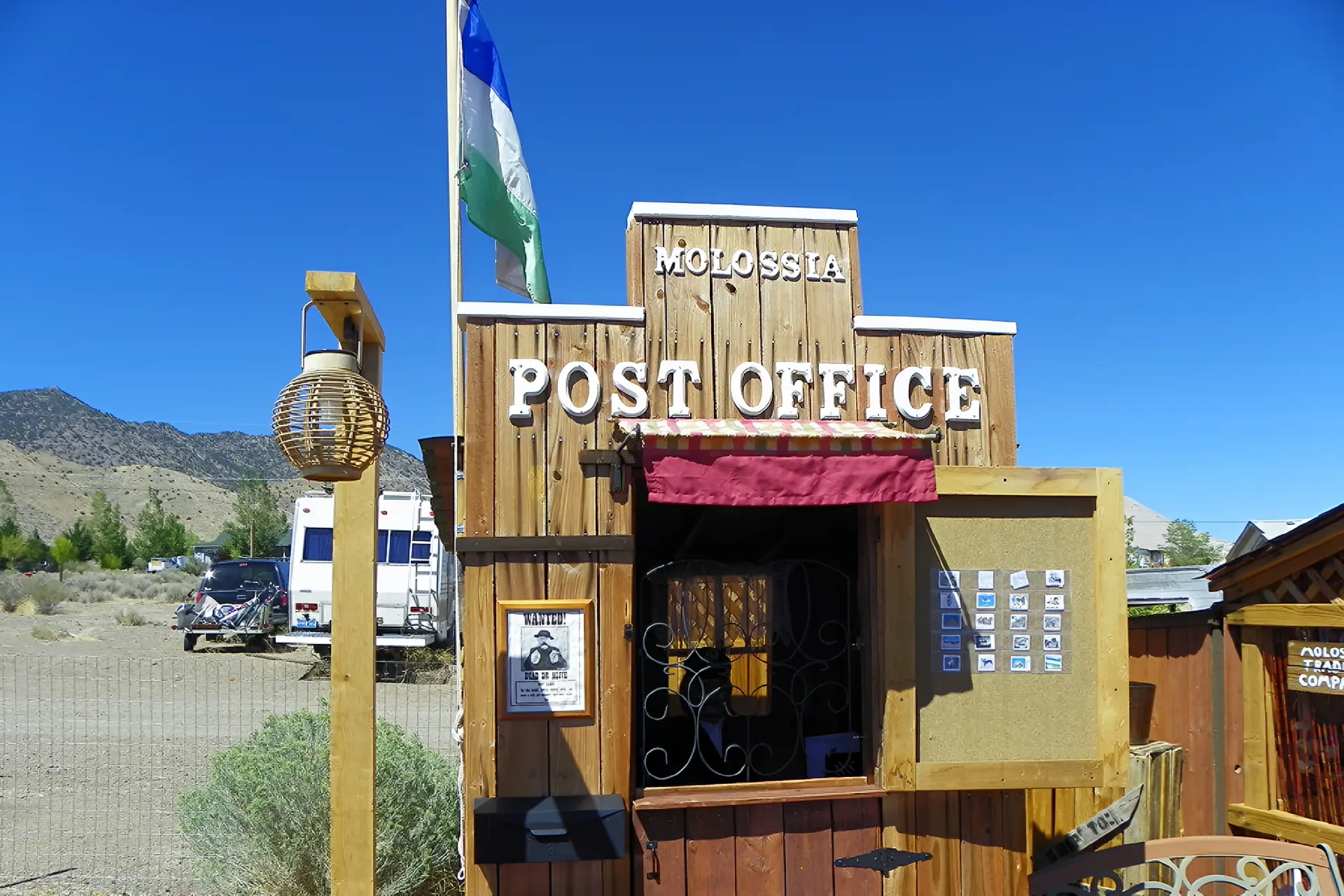
  • Republic of Molossia (Nevada, USA): Possibly the most famous tourist-friendly micronation. Molossia occupies the small home and backyard of a couple near Reno, NV. The ‘President’ Kevin Baugh personally conducts tours (by appointment only) through the house, museum, and palace, complete with ceremonial broomball games and flag-raising. Visits must be scheduled via email, but once approved you can roam Molossia’s half-acre “land” for an hour or so. Foreign visitors can stay up to three hours as tourists. Molossia also sells souvenirs like stamps, banknotes and “war bonds” on-site. Touring Molossia is safe and fun, as long as you follow the appointment rules.
  • Principality of Seborga (Liguria, Italy): Seborga is a hilltop village near the French border that adopted a whimsical claim of independence decades ago. It has its own prince, currency, and a Saturday flag ceremony, but in reality it’s just a quaint Italian town. Tourists can wander freely like anywhere in Italy: buy souvenirs labeled “Seborga,” attend the weekly change of guard, and drink cappuccinos in its charming piazza. (No passport or visa is needed beyond Italy’s.) Because Seborga’s micronation status was mainly created for tourism, visiting is essentially the same as visiting Seborga itself. The local government even encourages tourism: the micronation’s currency coins are sold in shops and the story is a point of local pride.
  • Conch Republic (Key West, Florida, USA): Technically an unrecognized breakaway, Key West declared itself the Conch Republic in 1982 as a protest against a US Border Patrol roadblock. Today it’s a tourism brand: you’ll see “Welcome to the Conch Republic” signs at the Key West airport and T-shirts everywhere. To visit, just vacation in Key West. There’s no entry fee or border formalities. The Conch Republic isn’t a sovereign place with physical borders, just a playful local identity. Fun fact: Key West even once appointed an “Ambassador” to get press attention. In practice, visiting the Conch Republic means eating conch fritters, taking selfies with the tourism ambassador, and enjoying Florida Keys nightlife – all perfectly legal under U.S. law.
  • Republic of Užupis (Vilnius, Lithuania): Užupis is a bohemian neighborhood in Vilnius that unilaterally “declared independence” on April Fools’ Day 1997. It has a whimsical constitution posted on a wall, its own flag and even a president. In reality it functions like any arts district of Vilnius. Tourists can stroll into Užupis at will (the “border” crossings are just friendly archways), read quirky art installations, and perhaps cast a coin in its angel fountain for good luck. The self-proclaimed republic often hosts street festivals. No special permits are needed since Lithuania fully governs the area.
  • Principality of Pontinha (Madeira, Portugal): Pontinha is a tiny island (actually a rock) near the city of Funchal in Madeira. In 1903 a local newspaper proclaimed it a “principality” when some Portuguese officers settled there. Today it has a small club and flagpole, but no residents. You can visit by boat from Funchal: local tour boats include it as a curious sight. There’s no official entry fee or customs, and the “princess” sometimes appears to give out stickers to curious visitors. (Image: an Atlas Obscura list entry calls it “a micronation on a small islet”.) Essentially, Pontinha is just a maritime oddity: anyone can sail or kayak there.
  • Kingdom of Piel Island (Cumbria, England): This tidal island in Morecambe Bay calls itself a “kingdom.” In the 1920s a local pub owner held a ceremony crowning himself king of Piel to attract visitors. Every summer a cross-cultural pageant crowns a “King of Piel” with a symbolic corroboree. Tourists typically come to Piel by foot or boat from nearby Walney Island. The low-tide walk takes 2–3 hours each way. Entrance to Piel (and to claim your crown) is free, but you do need stamina and a tide chart. (Safety tip: always check the tides, as the sands can be deadly.)
  • Naminara Republic (South Korea): Nami Island is a popular park (also famous from a K-drama filming). Since 2006, park management has styled it the “Naminara Republic” to amuse tourists. It issues novelty passports, stamps, and has a “president,” but it’s simply a resort attraction. Visitors pass through a check-in kiosk where you can get a souvenir passport stamp. The island has no border guards – you access it via a short ferry from Gapyeong. Koreans and foreigners alike visit by default; passports are souvenir merchandise only.
  • Principality of Sealand (on site) og Liberland (no visit) – As detailed above, Sealand and Liberland themselves are technically visitable but effectively off-limits: Sealand only if you find a fisherman crew and permission, and Liberland only by defying border security. We do not recommend trying either without serious planning (or legal headaches).
  • Republic of Westarctica (Marie Byrd Land, Antarctica): Westarctica claims a huge part of unclaimed Antarctica and raises awareness of climate issues. It has no citizens living there year-round. Tourists can visit Antarctica on expeditions (e.g. cruise ships) but would need to make a special stop to land on “Westarctic” territory (which is currently forbidden by treaty anyway). This is more a theoretical destination for now.
  • Grand Duchy of Flandrensis (Antarctica): Another environmental micronation, originating as an art project in 2008. Similar situation: you could theoretically trek to its claimed islands in the Antarctic Peninsula, but in practice you’d just join a scientific cruise or climate tour.

Beyond these, nearly every country has one or two visitors where people claim micronation status. For example, the Piel Island example above; the “Asgaard – a City on the Seabed” (so-called sunken city in the Black Sea, a hoax tourist dive); or the Ladonia sculpture park in Sweden (artist Lars Vilks declared his statue site independent in protest). While you can physically travel to these spots (Vilks’s park is just a nature reserve you can hike through), none require entry fees or passports beyond normal tourism protocols.

Planning tips for a micronation trip

When visiting any self-proclaimed micronation, use common sense:

  • Tillatelser: Check in advance if you need to notify the founder or caretaker. For places like Molossia, you email the president to arrange your visit. For others like Pontinha or Naminara, no permission is needed beyond normal tickets or reservations. Always err on the side of coordinating rather than sneaking in.
  • Travel Logistics: Many micro-states are on remote islands or disputed land. Ensure you have sturdy boats if needed, and travel with locals. For instance, reach Sealand via an experienced Harwich fisherman, not by jumping onto any random vessel. If crossing an international border (even to reach a micro), carry your passports and visas. In Liberland’s case, you’d technically be crossing either Croatian or Serbian territory illegally, which can lead to fines or jail.
  • Legal Status: Even if a place advertises itself as independent, remember whose rules actually apply. Sealand is in British waters – so treat it like part of the UK. Molossia is on Nevada ranch land – local law reigns supreme. Know that your homeland and any international treaties (like the Antarctic Treaty) still bind you. If in doubt, assume you need to follow the laws of the surrounding country.
  • Sikkerhet: Many micro-nations have no emergency services. The lone caretaker or a friendly fisherman is not a lifeguard or doctor. If you hike on Principality of Piel, watch for quicksand. If you climb in Užupis, watch out for pickpockets (it’s still urban). Always plan for weather, know exit routes, and inform someone else of your itinerary.
  • Etikette: Micronational founders tend to be very proud of their projects. Treat their symbols (flags, monuments, passports, etc.) with respect, even if unofficial. If taking photos, check if they mind. Most owners are happy to answer questions, especially about tours or parades. Buy some souvenirs or send a thank-you to support them – after all, these places are real hobbies for their citizens.

Top micronations to visit (extra examples)

Aside from the ones already mentioned, here are a few more intriguing micros where visitors can go without trouble:

  • Republic of Saugeais (France): A small region in eastern France around Montbenoît declared itself a “republic” in 1947. It has a president who appears at annual local festivals. Tourists can visit the village of Saugeais like any French town and even get a passport stamp in the town hall for fun. It’s more of a humorous village tradition than an actual challenge to France.
  • Free Republic of Liberland’s Neighbors (by river): If you’re fascinated by Liberland, consider visiting the nearby real places: cross into Croatian towns like Batina and tour the Danube, or travel to Serbia’s side at Bezdan and see the locks. Both side countries are accessible by normal European travel, and you can reflect on the microborder dispute safely from those tours.
  • Other Oceanic Fibers (Nov 17 trip): The island micronation of Hutt River (Australia) existed for decades but ended in 2020. It was a popular roadside attraction in Western Australia; travelers could stop by the former king’s farm which had a museum of secession artifacts. Although it is no longer independent, the site remains a quirky photo-op.
  • City of Christiania (Copenhagen, Denmark): This self-governing neighborhood (sometimes called Freetown Christiania) is famous for its alternative culture and has been called a micro-society. It’s a Copenhagen district open to the public: visitors can wander its streets, galleries, and organic cafes. It has its own local rules (biking speeds, no photos of cannabis stalls) but otherwise any tourist can walk in and out freely. While not a “micronation” by strict definition (Denmark never left), Christiania is often of interest to micronation fans for its unique community.
  • Ladonia (Kullaberg, Sweden): The sculpture park at Kullaberg Marine Nature Reserve in southern Sweden was “declared independent” by artist Lars Vilks in 1996 after authorities opposed his art installations. It has about 100,000 registered “citizens” online, but on site it’s just a protected nature area with two controversial sculptures (“Nimis” and “Arx”). Hikers can visit and see the sculptures, and a small structure called the Government (these are legal gray areas), but in practice it’s simply a walk in a national park. No visas or fees are involved beyond park regulations.

The key pattern: most of the top “tourable” micronations are either intentional tourist draws (Molossia, Saugeais, Seborga) or harmless local fancies (Conch Republic, Užupis, Christiania). Visiting them is safe and legal as long as you follow the normal travel rules of the host country. Sealand and Liberland remain notable exceptions that are not open to casual tourism.

Economics & Revenue Models

Economics & Revenue Models - A Tour of Micro-Nations Sealand, Liberland, and Beyond

How do micronations pay the bills? Interestingly, many fund themselves through sales and tourism rather than taxes:

  • Souvenirs and collectibles: Stamps, coins, banknotes, passports and T-shirts are popular. For example, Molossia operates a “bank” that sells colorful banknotes and a postal service that sells stamps and postcards. People buy these as novelties or investments, and the money goes to upkeep. Liberland has sold coins and special edition stamps and even NFTs (digital art tokens) to supporters. Sealand famously sold “nobility titles” and knighthoods as tourism items.
  • Tourism and Donations: Micronations often rely on tourist fees or donations. Seborga sells coin replicas of its lira. Molossia’s tours encourage visitors to shop at its weird gift shop. Hutt River used to sell admission stickers and stamps until 2020. Some micros host conventions or competitions (e.g. Conch Republic Days festival). Liberland calls what it raises “Donations & taxation” – largely voluntary contributions from citizens – and reported about \$1.5 million in 2023 income from such sources.
  • Digital and Crypto: A few micros have experimented with blockchain. Liberland puts nearly 99% of its bank in Bitcoin and has its own cryptocurrency projects. The Kingdom of North Sudan (an internet micronation) once issued a crypto token. These are niche, but they reflect libertarian founders’ ideals.
  • Business and Registration Fees: Some micronations leverage real-world business structures. For example, Sealand companies marketed downloadable stock, licences and data hosting (Sealand attempted to become an offshore data haven). While this hasn’t turned Sealand into a tech hub, some micros register themselves as nonprofits or companies in an official country for administrative purposes (e.g. the Principality of Freedonia listed as an NGO in Malaysia). In general though, elaborate international operations rarely pan out.
  • Arrangementer: A few charge for big events. Molossia holds a “Nuptial of the Century” wedding package. Piel Island has an annual world’s shortest flight from Kirkby Lonsdale to celebrate the “king” inauguration. These are fun gimmicks, but modest revenue sources.

Overall, the economics of micronations is small-scale and often symbolic. Most of the founds come from the personal wealth of the founders or volunteers. For example, Roy Bates personally funded Sealand’s operations and houses. Jedlička used social media and a network of libertarians to get initial capital for Liberland. Micronation founders often view their enterprises as hobbies or political causes, so they subsidize them out of pocket or community goodwill. The products (stamps, coins, passports) are usually priced as collector items rather than official utility.

Cultural Life Inside Micronations

Cultural Life Inside Micronations - A Tour of Micro-Nations Sealand, Liberland, and Beyond

Despite their small size, micronations often cultivate a surprising degree of cultural identity. The “citizens” of these tiny polities range from a just few actual residents to thousands of online supporters. Here are some common cultural features:

  • Populations and Citizenship: In most cases, actual permanent residents are very few. Sealand has at most a couple of caretakers living on the tower. Molossia’s population is essentially the founder and his family. Hutt River was just one family farm in Australia. Liberland currently has zero real residents (since Croatia denies settlement). However, these micronations often have wholesale citizenships. Molossia, Seborga, or the Conch Republic have both citizens and tourists numbering in the thousands – but these people mostly live in other countries. For example, Molossia’s “Ministry of Foreign Affairs” website lists over a thousand honorary citizens from around the world who registered as Molossians (usually just by filling a form). These extra-national citizens have no voting rights locally, but they pay dues or buy merchandise to support the micronation.
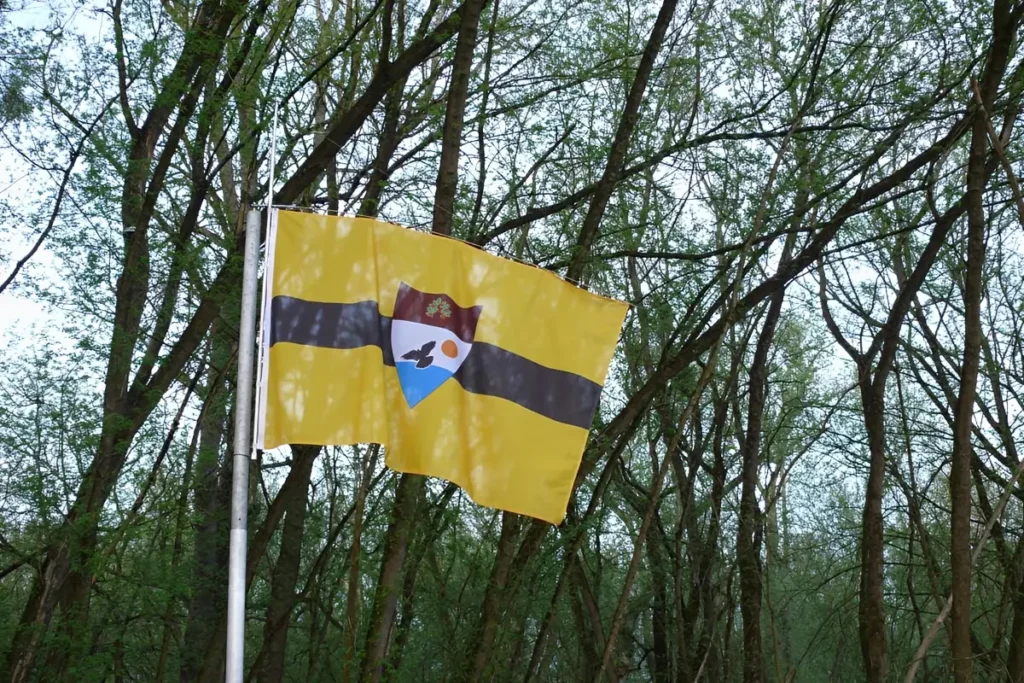
  • National symbols: Nearly every micronation creates a flag, coat of arms, currency, and stamps. Sealand famously has its flag (a red and black square) and even a national motto. Liberland has a green-white-yellow tricolor and issues a national anthem on YouTube. Many have created coats of arms that appear on passports and coins. Molossia has its own currency (the “Valora”) pegged humorously to the US dollar. Commemorative coins are minted by some – e.g. Liberland’s “Merit” tokens, or the bronze crowns of Gyal.
  • Anthems, Holidays and Sports: Some micronations invent national days or sports. Molossia has an empire-wide holiday called “Molossian New Year” in August, and its own informal sport of “broomball” on a basketball court. Christiania holds music festivals. Seborga has the Feast of Saint Bernard (their patron) with parades. The Principality of Sealand once “granted” ducal titles and even stamps that featured saints and royals. These traditions create a community feeling: an online forum or an annual gathering where people wear flags and sing songs.
  • Institutions and Events: Micronations sometimes stage elections (even if meaningless). Liberland has held public plebiscites on basic laws via online voting. Some have arranged marriages of state (the “Wedding of the Century” in Molossia, or Sealand’s 1999 marriage of Prince Michael to his princess). Clubs, newspapers, and websites serve as their “media” channels. In the case of aktiv micros (Molossia, Conch Republic), people actually participate: you might cast a symbolic vote or represent them at a convention.

Are they “real citizens”? Mostly not in any legal sense. Citizens of micronations generally remain citizens of their true countries. Being a Liberland “citizen” means you got a stamped booklet from Prague or a crypto pass, not a visa. There is no international legal system behind it. However, within the micronation’s community, these citizens might be treated with honors (titles, official duties). It can be fun for participants – in Molossia you can become an officer of the government or get an honorary badge. Sealand famously knighted people (to sell “knighthoods”).

The value of flags, anthems, and stamps is primarily symbolic or collectible. The stamps of Sealand or Hutt River may show up on envelopes to friends or on eBay, fetching a few dollars. The Liberlandian passport is printed on plastic card stock, but except as art it won’t get you anywhere physically. These items do have a subculture value: collectors will pay for unique micronation memorabilia. But they hold no currency value outside that niche. In fact, some countries warn that using a micronation’s passport on official travel documents can get you in trouble (you should always use your normal national passport).

Micronations in Media, Art & Activism

The phenomenon of micronations often blurs into art projects, activism, and satire. Many micronations began not as practical attempts at nationhood but as vehicles of protest or performance:

  • Satire and Protest: The Principality of Hutt River, for example, was essentially a protest against Australian wheat laws. The founder styled himself a prince to use medieval law loopholes. It generated publicity rather than real independence. Likewise, Sealand’s pirate radio origins were partly protest against broadcasting monopolies. Artistic projects like Ladonia in Sweden (created by artist Lars Vilks) are satire – Ladonia’s claim to independence followed a local fight over the artist’s sculptures in a nature reserve.
  • Environment & Climate Activism: Some micronations are explicitly about drawing attention to global issues. The Grand Duchy of Flandrensis and the Republic of Westarctica claim bits of Antarctica to protest climate change. The Polish Glacier Republic (a Greenpeace initiative) declared parts of Chilean Patagonia off-limits in solidarity with indigenous rights and environmental causes. These micronations often issue statements like real countries, using the symbolism of statehood to advocate policy. They sometimes hold international “meetings” or issue UN-style resolutions to add theatrical weight to their causes.
  • Virtual/Cyber Nations: In the internet era, some micronations are entirely online. Examples include Bitnation, a blockchain-based “constellation of network states,” and various online presidential elections for micronations with no land at all. While these rarely come with physical territory, they help manifest idealistic communities. Even Wikipedia has called Asgardia (a claimed “space nation” launched on a satellite) a “cyber-micronation”.
  • Media portrayal: Mainstream media often treats micronations as amusing oddities. Business and travel outlets have featured them as travel curiosities or human-interest stories. For example, Condé Nast Traveler profiled Liberland as a fun journalism piece (focusing on Jedlička’s personality) but had no follow-up on legalities. Podcasts and documentaries have examined Sealand’s owners or Liberland’s birth. The overall tone is usually light and marveling at ingenuity. Policy analysts tend to dismiss micronations as having minimal real-world effect. A Stratfor commentary called Liberland “a curious case” with negligible consequences, noting that conventional statecraft still dominates geopolitics.

In popular culture, micronations also pop up as metaphors. Science fiction or political theater will reference them as examples of extreme libertarian projects or satirical micro-states. They inspire debates about sovereignty, identity and the nature of statehood, even if no serious scholar predicts an actual breakaway success. Ethically, these micros raise questions: as micronations grow (especially virtual ones), what if they challenge established borders or attract displaced people? Some view them as laboratories of governance – for better or worse. Others see them as escapist fancies or protest theater.

Recognition Case Studies & Legal Analysis

Recognition Case Studies & Legal Analysis - A Tour of Micro-Nations Sealand, Liberland, and Beyond

Why does recognition matter? In international law, being a recognized state confers rights: joining treaties, establishing embassies, using the international court, etc. Micronations have none of these privileges. Their claims remain only moral or symbolic.

Take Sealand: Roy Bates once pointed to a German diplomat’s 1978 visit as a de facto recognition, but legally, Germany (and every other country) never formally acknowledged Sealand. Sealand even appears in Guinness records, but not in the U.N. ledger. Similarly, Liberland’s government keeps touting ongoing discussions and theoretical accords, but to date not a single country has signed a recognition statement. When studies on Liberland appeared in law journals, authors uniformly note that its de jure status is nil: it fulfills almost none of Montevideo’s criteria, and its contacts with outside governments have produced zero treaties.

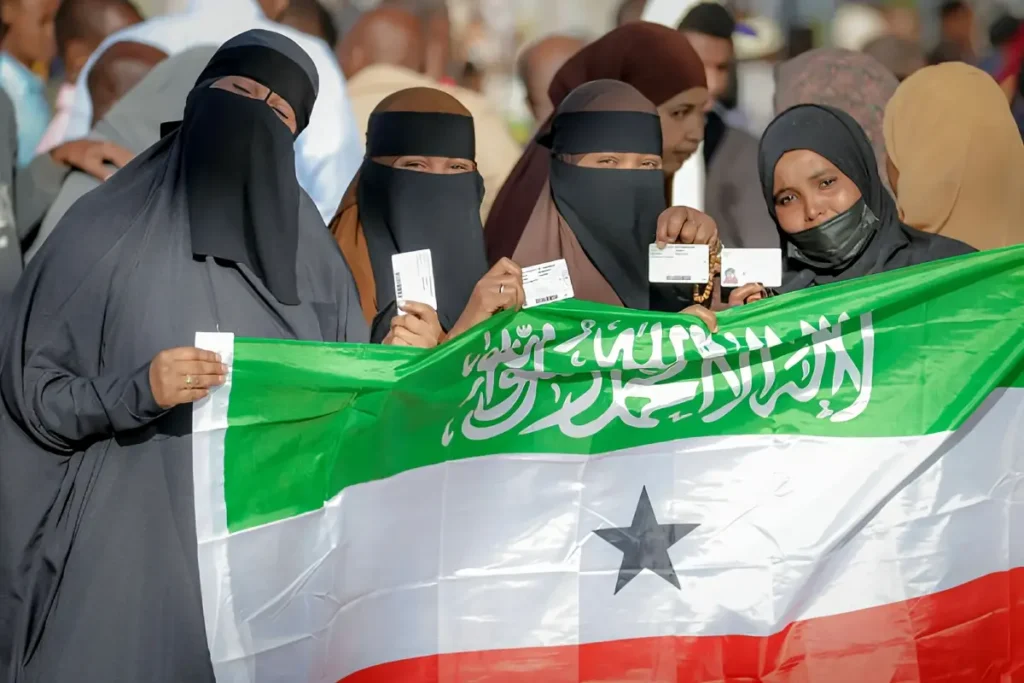
Contrast with unusual cases: Somaliland declared independence from Somalia in 1991, has its own functioning government and population, but it still lacks formal recognition (though a few countries have informal ties). That’s the high end of a “self-declared state” short of full recognition. Micronations are usually far weaker claims. (Interestingly, Bir Tawil remains one of the few true terra nullius today, but no one has successfully established a lasting state there either. Various individuals declared it the Kingdom of Bir Tawil, but these did not last – illustrating how remote and hostile territories are not a shortcut to a country.)

No precedent exists for a micronation turning into a fully recognized country. The closest analog might be historical secessions: e.g. Bangladesh split from Pakistan after war (with massive international involvement), or Eastern Europe’s many changes post-USSR. But none of those was a grass-roots solo project. The one case of a state evolving into full membership against odds was Israel (post-WWII conflict, huge geopolitics, not a tiny fort or block of woods). Every example of new successful statehood has been through big political movements or UN-backed processes.

Thus, the legal consensus is that micronations remain unrecognized. They might achieve limited engagements – e.g. Liberland talking with Mr. Milei’s Argentina – but without formal treaty, none are actual states. They can purchase mutual recognition among each other (Sealand and dozens of others sometimes exchange “ambassadors”), but that is more private club than international law. As one law review bluntly concludes: No recognized country will lose its sovereignty by letting a micronation exist on its watch.

Ethics & International Implications

Ethics & International Implications - A Tour of Micro-Nations Sealand, Liberland, and Beyond

What if hundreds of micronations claimed land tomorrow? The general view is that it wouldn’t upend the world order. Most micronations either vanish or remain tourist curiosities. But there are some ethical and policy questions worth pondering:

  • Citizen obligations vs. rights: Suppose a micronation gained more citizens (even virtual ones). Do those “citizens” owe anything to the real country? Usually not: membership is voluntary, so one could renounce it anytime. On the flip side, if a citizen of a micro commits a crime on the territory of a real country (or vice versa), the local courts typically still apply. Micronations cannot offer asylum or passports that let one bypass real immigration. This raises questions of human rights: could someone claim micronational citizenship to flee their country? In practice no, because the host country will treat them according to national law.
  • Borders and refugees: Micros almost never involve transfer of territory. They typically pick places that others neglect. One extreme example was the “Kingdom of Cardinalia,” a fictitious micronation that claimed British overseas territories as a form of protest; it gained no legal traction. If a micro started to attract a real population (say climate refugees), it might raise humanitarian questions. Could an offshore platform resettle people? Likely only if a larger state agreed to let it. So far no micronation has challenged refugee or citizenship law to a meaningful extent.
  • Climate and new states: A theme that sometimes appears is micronations asserting rights due to climate change. For example, some Pacific islanders theorize forming a micronation on coastal higher ground to preserve sovereignty if their home sinks. International law isn’t prepared for submerged states, but micronations might point out the contradictions (if territorial waters disappear, what happens?). These are more thought experiments than actual proposals, but they illustrate how micronations can spotlight edge cases in policy.
  • Cyberspace sovereignty: With virtual communities and digital currency, micronations raise metaphors about online “sovereignty.” Projects like Bitnation claim to use blockchain for borderless governance. While currently such things aren’t recognized by governments, the underlying tension is real: how do we treat virtual entities? Technically they remain under the jurisdictions where the servers or organizers are. But it’s a space to watch, as technology changes our notions of citizenship.

Overall, the ethical dimension is minimal under current international norms: no micronation is threatening statehood issues or refugee crises. If anything, they can have positive educational value: by playing at statehood, their founders and followers learn about geography, law, and government. They remind us how arbitrary borders can be, and how much of statehood is performative. Ethically, most micronation activity seems benign (or at worst, childish). The situation to watch would be if a micro became a haven for illegal activities (money laundering, unauthorized data hosting, etc.), in which case host countries could crack down as they did with Sealand passports.

In the end, micronations generally remain charming oddities that highlight the complexity of borders and nationhood in the modern era. Their “future” will likely continue as mostly symbolic gestures with small communities, unless an unprecedented political development elevates one into real statehood (which seems highly unlikely).

Q&A

What is a micronation vs. a country? A micronation is a self-declared entity that mimics a country but has no official recognition or sovereignty over internationally-acknowledged territory. A sovereign country is recognized by other states and typically meets criteria like a permanent population and effective government. Micronations may issue passports and hold “elections,” but none of these actions carry legal force beyond the micronation itself.

How many micronations exist? Estimates vary. By some counts, over 50 active micronations exist today, possibly up to a few hundred if one includes very minor claims. However, most are very small or short-lived. The better-known ones (Sealand, Liberland, Molossia, etc.) number only in the dozens.

Montevideo Convention – does it apply? The Montevideo Convention’s four criteria (people, territory, government, diplomatic capacity) describe a state. Micronations usually fail at least one: e.g. Sealand has almost no population, and Liberland has no governance power on its land. Even if a micronation hypothetically met those criteria, the Convention itself does not compel other states to grant recognition. In fact, many legal experts say satisfying Montevideo would still be insufficient without political acceptance.

Where exactly is Sealand? Off the east coast of England, 11–13 km out to sea. It’s at Roughs Tower, an old wartime fort. The nearest land is Suffolk/Essex, but you have to take a boat to get there.

Who founded Sealand and why? Major Paddy Roy Bates, a pirate-radio entrepreneur, founded it in 1967. He wanted to broadcast radio outside UK regulations. When a rival pirate group tried to take over the fort, Bates physically ousted them and declared the Principality of Sealand on September 2, 1967.

Is Sealand a real country? Recognized? No. Sealand is not recognized by any UN member state. It called itself a country, but legally it’s just an offshore platform. The UK later extended its territorial waters to include it, so Britain considers it UK territory. (Germany sent a diplomat there in 1978, but that was not a formal recognition.)

Can you visit Sealand? Only with permission. There is no public ferry. Visits are arranged via Sealand’s government on a case-by-case basis. In practice, people have reached Sealand by hiring local fishermen (like Joe Hamill’s voyages). Safety-wise, it’s generally safe but remote; risk comes mainly from boat travel. You definitely need official approval to step on the fort.

Does Sealand issue passports, currency, stamps? Are they valid? Yes, but not valid internationally. Sealand issued its own passports, stamps, and even a currency. However, these are souvenirs. The EU called Sealand passports “fantasy passports” and Sealand withdrew them in 1997 amid scandal. Its coins and stamps exist only as collectibles. None has any legal standing for travel or commerce in the real world.

What happened in the 1978 Sealand attack? In 1978, a German man (Alexander Achenbach) who had a Sealand passport tried to buy Sealand and then used mercenaries to attack it while Roy Bates was abroad. Michael Bates, Roy’s son, was taken hostage briefly, but he overpowered the invaders and captured them. The situation was resolved after a German diplomatic mission negotiated their release. Bates then claimed the German envoy’s visit as recognition, but Germany did not officially recognize Sealand.

What is Sealand’s legal status after UK waters extension? When the UK extended its territorial waters to 12 nautical miles in 1987, Sealand fell inside UK sovereignty. Legally this means British law applies. Some analysts note that because Sealand is a man-made platform (not natural land), it probably wouldn’t meet even British legal definitions of statehood. Today, Sealand exists more as a legacy claim: the Bates family owns and inhabits the structure, but the UK could in theory require them to follow its laws on the platform.

Who owns and runs Sealand now? After Roy Bates died in 2012, his son Michael took over. Michael is recognized internally (by fans and caretakers) as “Prince Michael.” He oversees everything from England. On the platform itself, two appointed caretakers live on-site on rotating shifts. Roy’s grandson occasionally visits. In sum, Sealand is still run by the Bates family as a sort of hereditary principality, but with a staff doing the maintenance.

Where exactly is Liberland (Gornja Siga)? Liberland’s territory is a 7 km² stretch of floodplain along the Danube River. It lies on the kroatisk side of the river, adjacent to the village of Mali Zdenci. The area is mostly woodland and sandbars. It’s essentially a strip of land that Croatia and Serbia disputed in their 1947 border agreement – neither country considered it theirs, leading Jedlička to claim it.

Who founded Liberland and why? Vít Jedlička, a Czech libertarian activist, founded Liberland in April 2015. He chose the spot believing it was unclaimed (terra nullius). Jedlička was motivated by his ideology of minimal state and personal freedom. He envisioned Liberland as a tax-haven for entrepreneurs with a crypto-based economy. In short, he wanted to start a country reflecting libertarian ideals on land he thought nobody owned.

Is Liberland recognized by any country? No. Zero countries formally recognize Liberland. Both Croatia and Serbia have dismissed it: Croatia called it “provocative” and arrests anyone trying to enter, and Serbia called the claim trivial. Even Czech authorities warned citizens not to travel there. Liberland has not achieved diplomatic relations with any UN country. In practice, the Croatian government still administers the land it claims there, and will enforce its own laws, ignoring Liberland’s existence.

How can I become a citizen of Liberland? You can apply online at the Liberland website. Anyone meeting their conditions (generally no criminal record, agree to their minimal-government principles) can apply. As of 2024, about 1,200 people have registered and paid for citizenship passports. Jedlička offered citizenship to anyone who physically stayed in Gornja Siga for a week as well. But remember, Liberland citizenship is symbolic: it does not replace your real nationality and carries no legal rights.

Can you visit Liberland? Who controls access? In practice, ingen, at least not legally. Croatia controls the land and will not let people through. They have frequently blocked access and detained those who try to enter the territory. Even entering by river boat can get you arrested, as some did in 2015 and beyond. Croatia treats any entry as an illegal border crossing under its law. Serbia likewise has jurisdiction on the opposite bank, so neither side allows the claim. Thus you cannot legitimately visit Liberland without breaking the law of Croatia (and/or Serbia).

What is Liberland’s political and economic model? Officially, Liberland is a self-described libertarian state. Jedlička and his provisional government promote minimal government, flat or no taxes, and voluntary, digital-era governance. They aimed to use cryptocurrencies, issuing their own tokens (“Merit”), and accepting Bitcoin donations. Economically, Liberland’s “government” says it funds itself via voluntary taxation of investors and donors. By 2023 it reported about \$1.5 million in revenue (primarily from donations) and virtually all reserves in Bitcoin. There’s no real economy on Gornja Siga (no agriculture, no industry) – the model relies entirely on digital and remote activities.

What legal challenges or border disputes affect Liberland? The main problem is the Croatia–Serbia border dispute around the Danube. Neither side wants to give up Gornja Siga, so Croatia (the upper Danube authority) enforces strict control. Legally, Croat courts have repeatedly upheld that entering the zone illegally is punishable. The Croatian government declared Liberland a “provocative” stunt and has shown it will use force if needed. Serbia, which technically doesn’t claim Gornja Siga, hasn’t intervened militarily but views it as unimportant. In the grand scheme, Liberland raised questions about river boundaries, but the international consensus is that the issue lies between Croatia and Serbia, not a new country. Some international law scholars argued Liberland’s claim had no basis under existing treaties.

Recent developments in Liberland (leadership, crypto partnerships): As of early 2024, Jedlička remains the head of state (President of Liberland). The administration held its first official election (for a “Congress”) in October 2024, touted as using blockchain voting. They have pursued crypto collaborations: notably, they made inroads with Argentina’s government (arguing mutual recognition and crypto investment) after Milei’s election, though no formal treaty resulted. Liberland has also started marketing land grants (promising to sell plots of Gornja Siga, which remains aspirational). In practice, these moves mainly garner media attention. The Croatian crackdown (demolishing camps in Sept 2023) dampened the on-ground activity, so for now developments are mostly diplomatic and online.

What is the population of Sealand and Liberland? Both have essentially zero civilian population. Sealand usually has just 1–2 people (caretakers) living there. Liberland has no permanent residents at all, since no one can settle in Gornja Siga legally. Both micronations rely on members living elsewhere. If you count supporters, Liberland claims over a million sign-ups, but none of them actually moved there.

Have any micronations been recognized or integrated recently? The only close case was Australia’s Principality of Hutt River, som voluntarily dissolved in 2020 and rejoined Australia for tax reasons. It was never recognized as independent, but it ended its claim. Aside from that, no micronation has won recognition. Some activists on the Tibetan border and in South Asia have tried to form new entities (e.g. Tibet’s exile government), but those are complex political issues, not hobby micros. The general rule is that established states guard their borders firmly.

Konklusjon

From the lonely turret of Sealand to the leafy Danube islet of Liberland, micronations challenge our notions of borders and sovereignty. They are driven by dreamers and eccentrics who push the question: “What makes a country, really?” The answers are complex: legitimacy in law, power on the ground, and, ultimately, acknowledgment by others. For now, the world’s micronations remain largely unrecognized novelties. But they offer fertile ground for curiosity. As travelers and citizens, engaging with them – respectfully and safely – can be a window into political imagination and the spirit of self-determination.

8. august 2024

10 beste karnevaler i verden

Fra Rios samba-forestilling til Venezias maskerte eleganse, utforsk 10 unike festivaler som viser frem menneskelig kreativitet, kulturelt mangfold og den universelle feiringsånden. Avdekke...

10-beste-karnevaler-i-verden
10. august 2024

Cruise i balanse: Fordeler og ulemper

Båtreiser – spesielt på et cruise – tilbyr en særegen ferie med alt inkludert. Likevel er det fordeler og ulemper å ta hensyn til, omtrent som med alle slags...

Fordeler-og-ulemper-ved-reise-med-båt