

A season of transitions
15 Distinctive Destinations for Spring Travel
Spring can mean cherry blossom, dry-season beaches, wildflower trails, design weeks or simply the return of long evenings. The right destination depends on which version of the season a traveller wants.
The original article contained twelve grouped entries. Tokyo and Kyoto, plus Corfu, Santorini and Mykonos, are separated here into independent profiles to respect each destination's identity.
Spring is not a single global weather pattern. In one destination it marks the fragile peak of blossom; in another it is the final reliable part of a tropical dry season. Mediterranean islands may be green and quiet while their sea remains cool. A desert city may offer comfortable mornings before heat becomes dominant. A northern European capital can alternate between bright terraces and sharp rain in the same afternoon. Choosing well requires more than searching for an average temperature.
The season is also culturally specific. Religious calendars, school holidays, flower festivals, design fairs, music events and local migration patterns can transform a place for a few days. Those occasions may become the reason to travel, but they can also change opening hours, crowding and accommodation. Current official calendars therefore matter as much as broad climate advice.
The fifteen profiles below focus on what spring changes in each destination and how to build a trip around that change. They do not promise perfect weather, exact bloom dates or empty landmarks. Instead, they identify useful rhythms: when to walk, when to reserve, when to leave room for rain and when the landscape itself deserves priority over a checklist of attractions.
Before selecting flights
Choose the kind of spring, not just the temperature
Flowers, beaches, cities and wildlife each require a different reading of the season.
The destinations are presented alphabetically by editorial flow, not ranked.
Travellers seeking a visible seasonal transformation should prioritise Japan, Amsterdam, Corfu, Milan or Lisbon. The appeal in these places is not guaranteed warmth but the way public space changes: parks fill, gardens reopen, terraces return and residents spend longer outside. Timing can be sensitive. A famous blossom may peak earlier or later than historic averages, while a wet week can alter the pace of urban wandering.
For beach travel, Cancún, Hawaiʻi, Montego Bay, Punta Cana and Miami Beach offer warmth, but their spring profiles are not identical. Some sit near the end of a drier period; others face spring-break crowding, changing surf or the tail of a wildlife season. Air temperature does not describe currents, reef conditions or marine hazards. Local beach flags and official advisories remain essential.
Adventure-focused travellers may prefer Costa Rica or the landscapes beyond Las Vegas. Spring can provide favourable access to trails and wildlife, yet heat builds quickly and protected areas may require reservations. Island walking in Santorini, Mykonos or Corfu benefits from cooler conditions and greener terrain, though ferry frequency and seasonal services can be less extensive than in summer.
The right itinerary has a weather alternative. Museums, food markets, neighbourhood cafés and indoor heritage sites should not be treated as consolation prizes. They are part of the destination's identity. A flexible spring trip uses the clearest day for the activity that depends on visibility and saves the city interior for rain or wind.
Four spring travel modes
Blossom and gardens
Tokyo, Kyoto, Amsterdam, Corfu and Lisbon reward attention to parks, trees and public landscapes.
Warm-water escape
Cancún, Hawaiʻi, Montego Bay, Punta Cana and Miami Beach combine beach time with cultural excursions.
Urban culture
Milan, Amsterdam, Lisbon and Las Vegas offer exhibitions, performance and strong indoor alternatives.
Landscape and wildlife
Costa Rica, Hawaiʻi and the Greek islands place natural systems at the centre of the trip.
Quintana Roo · Mexico
Cancún
Caribbean water and extensive resort infrastructure make Cancún an easy spring escape, but the region is richer when the hotel zone is not the entire itinerary.
Best for: warm beaches, straightforward resort logistics and combining coast time with Maya heritage

Seasonal perspective
Caribbean water and extensive resort infrastructure make Cancún an easy spring escape, but the region is richer when the hotel zone is not the entire itinerary.
Cancún's spring appeal begins with climate and convenience. The hotel zone concentrates beaches, restaurants, transport and organised activities along a narrow barrier island, making it possible to arrange a warm-weather break with relatively little daily friction. That ease can be valuable after winter, but it can also create the illusion that the destination is only a row of resorts.
A better trip adds the city and the wider Mexican Caribbean. Downtown Cancún offers ordinary markets and local food beyond hotel compounds, while day trips can connect travellers with cenotes, coastal ecosystems and Maya archaeological sites. Distances are significant and popular excursions can feel rushed, so choosing one meaningful outing is preferable to collecting several long bus days.
Spring-break periods can transform the atmosphere, especially in nightlife areas. Families, couples and quiet-seeking travellers should study the exact calendar and neighbourhood rather than assuming every property has the same character. Seaweed conditions, currents and beach flags also vary by place and week; a perfect promotional image is not a live marine forecast.
Cancún works best when the resort is treated as a base rather than a sealed world. Responsible operators, reef-safe practices where locally requested and respect for archaeological and natural sites help distribute value. Official destination guidance and current safety information should shape transport and excursion choices.
Kantō · Japan
Tokyo
Spring turns Tokyo into a vast study of blossom, neighbourhood ritual and the contrast between fragile nature and metropolitan scale.
Best for: parks, food, design and travellers who can plan around crowds without making blossom the only purpose

Seasonal perspective
Spring turns Tokyo into a vast study of blossom, neighbourhood ritual and the contrast between fragile nature and metropolitan scale.
Tokyo's blossom season is famous because it occurs inside a metropolis that never stops behaving like one. Commuter trains, office towers and neighbourhood shopping streets continue at full pace while parks and riverbanks become gathering places. The contrast gives hanami its emotional force: flowers are temporary, but the city around them appears permanent.
Different viewing locations create different experiences. A formal garden encourages a slower circuit, a riverside path becomes a continuous social promenade and a small temple cemetery may offer quiet detail. The most famous sites can be extremely crowded. Visiting one celebrated location early and then looking for neighbourhood trees later in the day creates a more balanced impression.
Tokyo is resilient when bloom timing disappoints. Museums, department-store food halls, architecture, live music, coffee culture and countless specialised districts can absorb rain or a late season. Day trips may follow the seasonal front, but they should not turn the holiday into a chase based on forecasts that remain uncertain until close to flowering.
Transport is efficient but crowd behaviour matters. Luggage, station transfers and peak commuting hours should be planned with care. Current park rules may restrict picnics, alcohol or reserved spaces, and official forecasts should be read as guidance rather than guarantees. Tokyo in spring is most rewarding when blossom becomes a lens on everyday life, not a commodity to be captured at any cost.
Kansai · Japan
Kyoto
Temples, canals, old streets and wooded hills give Kyoto's spring a contemplative beauty that also attracts extraordinary demand.
Best for: heritage landscapes, early-morning walks and travellers willing to reserve carefully and spread visits across the city

Seasonal perspective
Temples, canals, old streets and wooded hills give Kyoto's spring a contemplative beauty that also attracts extraordinary demand.
Kyoto's spring image is almost impossibly refined: petals near temple roofs, canals edged with trees and hills turning fresh green. The reality includes buses, queues and residential streets under pressure from visitors seeking the same view. Appreciating the city therefore requires both aesthetic attention and practical restraint.
Timing changes the experience more than a long attraction list. Dawn can reveal the texture of Higashiyama before tour groups arrive, while late afternoon may soften a garden after day visitors leave. Some temples offer seasonal evening access, but dates and reservation systems vary. One carefully chosen illuminated visit is often more memorable than racing between several.
Kyoto's districts deserve independent time. Arashiyama, northern temple areas, the Philosopher's Path, Fushimi and the central grid are not adjacent rooms in one attraction. Grouping nearby sites protects energy and reduces transport pressure. It also leaves space for crafts, sweets, tea and ordinary neighbourhood meals that connect monuments to living culture.
Blossom forecasts can help sequence a trip, yet different species and elevations flower at different moments. A missed peak is not a failed visit: moss gardens, camellias, maples and architecture remain. Visitors should follow current photography, street-access and private-property guidance, particularly in historic residential lanes.
North Holland · Netherlands
Amsterdam
Longer light, canal reflections and the return of outdoor life make Amsterdam feel newly expanded in spring.
Best for: museums, cycling, gardens and a city break that can adapt quickly to rain

Seasonal perspective
Longer light, canal reflections and the return of outdoor life make Amsterdam feel newly expanded in spring.
Amsterdam's spring is less about guaranteed warmth than about light. Longer evenings change the canals, residents return to terraces and bicycles fill routes that felt austere in winter. Sudden rain and wind remain plausible, so the best itinerary alternates open-air neighbourhood walks with museums and other timed indoor visits.
Flowers are a major draw, but geography matters. Urban tulip displays, botanical gardens and the famous bulb-growing areas outside Amsterdam are distinct experiences. The most sought-after garden tickets and transport can sell well in advance, while peak bloom depends on conditions. Official flower updates are more useful than assumptions based on last year's photographs.
The city itself rewards leaving the busiest canal axis. Jordaan lanes, eastern docklands, De Pijp, Noord and residential stretches of the canal belt show different forms of Amsterdam life. Cycling is not automatically the best choice for every visitor; dense local traffic demands confidence and clear understanding of bike-lane rules. Walking and public transport can be more respectful for hesitant riders.
Major museums often require timed reservations regardless of season. Spring holidays and large events may alter crowding and transport. A thoughtful trip books only the truly capacity-limited experiences, then leaves enough freedom to follow good weather into parks, ferries and waterside neighbourhoods.
United States
Hawaiʻi
Spring can offer a transition between winter swells and summer rhythms across islands whose cultures and ecosystems should never be reduced to one resort image.
Best for: island landscapes, ocean activities and travellers prepared to choose one or two islands rather than rush the archipelago

Seasonal perspective
Spring can offer a transition between winter swells and summer rhythms across islands whose cultures and ecosystems should never be reduced to one resort image.
Hawaiʻi is a chain of islands, not a single interchangeable destination. Oʻahu combines urban Honolulu, surf culture and major heritage sites. Maui, Hawaiʻi Island, Kauaʻi, Molokaʻi and Lānaʻi each have different roads, weather patterns, ecological pressures and community contexts. Spring planning should begin by choosing the island experience rather than by listing activities across the state.
Ocean conditions remain seasonal and local. Winter swell may persist on exposed shores while sheltered beaches behave differently, and whale seasons or wildlife guidelines change through spring. Swimming, boating and hiking decisions must follow lifeguards, park notices and licensed local operators. A calm-looking beach can still have dangerous currents.
Landscape is the strongest reason to travel: volcanic parks, rainforests, dry coasts, waterfalls, high-elevation environments and marine habitats. Reservations or access restrictions may apply, particularly at heavily visited parks and scenic corridors. Slowing down on one island reduces flights and allows weather alternatives when a trail or road becomes unsafe.
Responsible travel includes learning Hawaiian place names, cultural protocols and current community guidance. Water, housing and infrastructure are not unlimited visitor resources. Locally owned businesses, respectful behaviour at sacred or residential places and realistic driving plans produce a better trip than treating the islands as a catalogue of backdrops.
Ionian Islands · Greece
Corfu
Corfu is at its greenest in spring, when olive-covered hills and Venetian urban heritage can be explored before summer heat dominates.
Best for: walking, Old Town architecture, villages and a Greek island whose spring identity is more than beach weather

Seasonal perspective
Corfu is at its greenest in spring, when olive-covered hills and Venetian urban heritage can be explored before summer heat dominates.
Corfu's spring landscape is distinctly Ionian. Winter rain leaves hills green, wildflowers appear along roads and paths, and olive groves retain a softness that summer light can flatten. The season suits walkers and drivers interested in villages, viewpoints and inland terrain, although showers remain part of the bargain.
Corfu Town provides a strong cultural centre. Fortifications, arcades, churches and dense streets reveal layers of Venetian and later influence, while the UNESCO-listed Old Town rewards exploration beyond its most photographed squares. Easter traditions can be especially significant, but they also create intense demand and altered schedules. Exact dates should be checked against the Orthodox calendar.
Coastal resorts wake gradually. Some hotels, tavernas and services may operate on a reduced shoulder-season pattern, and sea temperatures can feel cool even on a bright day. This is not a disadvantage for travellers whose priority is walking, food and heritage. It does require honest expectations about nightlife and beach infrastructure.
A car can open rural Corfu, but narrow roads and village parking require patience. Public transport may suit major routes, while guided walks can add context. Spring makes Corfu spacious enough to hear its own rhythms; the ideal trip uses that quiet rather than trying to recreate August.
Cyclades · Greece
Santorini
Cooler paths and lighter crowds reveal Santorini as a volcanic landscape rather than only a sunset platform.
Best for: caldera walking, archaeology, wine and travellers who can accept wind and limited shoulder-season services

Seasonal perspective
Cooler paths and lighter crowds reveal Santorini as a volcanic landscape rather than only a sunset platform.
Santorini is often compressed into one evening view, yet spring exposes the island's geological structure. The caldera rim, volcanic soils, dark beaches and excavated settlements make more sense when temperatures allow longer walks. Fira, Imerovigli and Oia still draw visitors, but movement between them can become the main experience rather than a race for one terrace.
Wind is a serious seasonal variable. A sunny forecast can still produce difficult ferry crossings, cool evenings or exposed trails. Footwear and layers matter, and boat excursions should be treated as weather-dependent. The sea may be too cool for many swimmers even when hotel pools and bright skies suggest summer.
Vineyards and archaeology offer valuable alternatives. Santorini's basket-trained vines respond to a dry, windy environment, while ancient sites connect the island's beauty to disaster, adaptation and long settlement. Current opening information and transport should be confirmed because shoulder-season schedules can be narrower.
Accommodation on the caldera can be visually extraordinary but involves steps, luggage logistics and accessibility limitations. Choosing a village should reflect mobility and transport needs, not only the view. Spring rewards travellers who give Santorini two or three dimensions: geology, farming and community alongside architecture.
Cyclades · Greece
Mykonos
Before peak summer, Mykonos offers windmills, white lanes and rural details without requiring its nightlife to define the trip.
Best for: architecture, quiet coastal walks and travellers curious about the island beyond club season

Seasonal perspective
Before peak summer, Mykonos offers windmills, white lanes and rural details without requiring its nightlife to define the trip.
Mykonos has an unusually strong global image: white alleys, windmills, Little Venice and summer parties. Spring loosens that association. The town can be walked at a gentler pace, rural roads reveal chapels and stone walls, and beaches may be almost empty. The trade-off is that some seasonal businesses and nightlife venues are not yet operating fully.
Mykonos Town remains visually compelling, but it is also residential and commercial space. Visitors should avoid blocking narrow lanes, flying drones without permission or treating doorways as sets. Early morning offers quiet light, while evening wind can make the waterfront feel much cooler than expected.
Ano Mera and the island interior help rebalance the trip. Monastic heritage, farms and less theatrical landscapes show that Mykonos existed long before luxury tourism. Coastal walks and archaeological excursions may be more comfortable in spring, subject to wind and ferry conditions.
The island is expensive in any season, and reduced demand does not guarantee bargains. Transport frequency and opening patterns should be verified. Mykonos works in spring for travellers who want its form and history without insisting on its peak-season performance.
Jamaica
Montego Bay
Montego Bay combines beach infrastructure, music and access to north-coast landscapes, but resort walls should not define the entire encounter.
Best for: warm-water relaxation, easy excursions and travellers who want a Caribbean base with cultural options

Seasonal perspective
Montego Bay combines beach infrastructure, music and access to north-coast landscapes, but resort walls should not define the entire encounter.
Montego Bay's airport and hotel infrastructure make it one of the Caribbean's most accessible resort gateways. Spring can fall within a generally favourable beach period, but local forecasts and sea conditions still matter. The area ranges from large all-inclusive properties to smaller hotels and villas, each creating a different relationship with the city.
Jamaican music, food and history should not be reduced to entertainment delivered inside a compound. Restaurants, craft businesses and guided community or heritage experiences can connect travellers with the region beyond the beach. Operator quality and transport safety should be checked through current official guidance rather than improvised at arrival.
Excursions may include rivers, waterfalls, historic estates or other north-coast landscapes, but journey times can make a short stay feel overprogrammed. One well-run trip and unstructured time often produce more pleasure than daily departures. Water activities require attention to weather, licensing and environmental practices.
Montego Bay suits travellers who appreciate resort convenience but remain curious about Jamaica as a living country. Choosing locally grounded experiences, asking before photographing people and learning basic cultural context create a more respectful visit than searching only for packaged authenticity.
Lombardy · Italy
Milan
Spring reveals Milan through design, gardens and the return of street life rather than through a checklist of fashion labels.
Best for: architecture, museums, design culture and urban travellers who enjoy planned events with spontaneous neighbourhood time

Seasonal perspective
Spring reveals Milan through design, gardens and the return of street life rather than through a checklist of fashion labels.
Milan's spring identity is urban and event-driven. Design programmes, exhibitions and trade calendars can fill districts with temporary installations, while parks and courtyards soften the city's formal stone surfaces. These periods are exciting but place pressure on accommodation and restaurants, so the exact annual calendar should be checked before assuming a normal city break.
The Duomo, major museums and celebrated works require planning, yet Milan is most persuasive between reservations. Brera, Porta Venezia, Isola, Navigli and emerging districts show different relationships among design, housing and nightlife. Walking these areas turns the city from a luxury-shopping stereotype into a more complex study of industry and taste.
Spring weather can move quickly between warm sun and rain. Indoor architecture, galleries and churches provide strong alternatives rather than backup entertainment. Day trips to lakes or nearby cities should be decided according to the clearest forecast, not fixed so tightly that poor visibility becomes unavoidable.
Milan rewards a light schedule. One major museum, a neighbourhood walk and a thoughtful meal can fill a day without exhaustion. During design weeks or fairs, official transport information and venue reservations are essential; outside them, the city may feel noticeably more spacious.
Nevada · United States
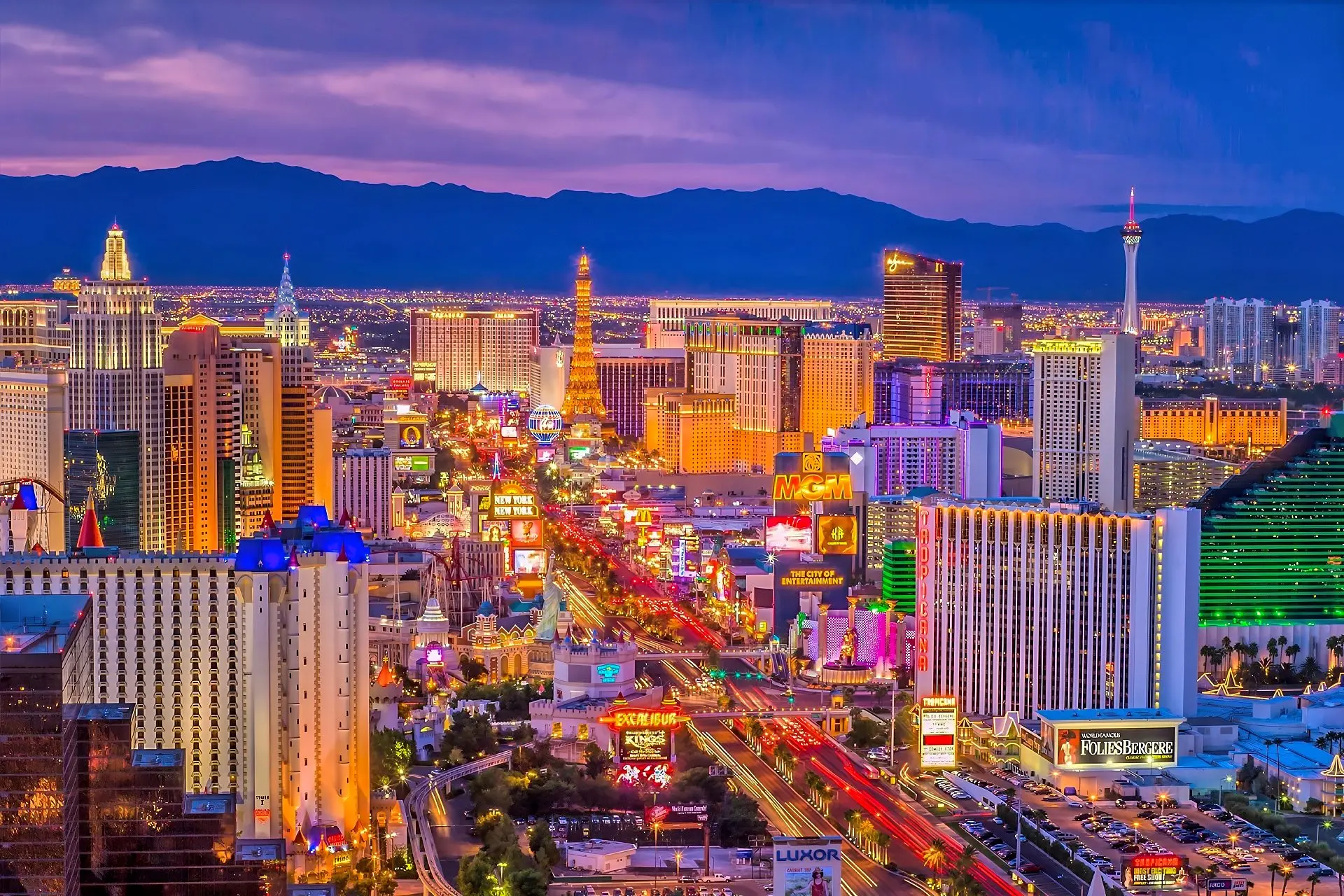
Las Vegas
Comfortable desert mornings make spring the season when Las Vegas can be paired most convincingly with the landscapes beyond the Strip.
Best for: entertainment, dining and travellers who want both urban spectacle and accessible desert scenery

Seasonal perspective
Comfortable desert mornings make spring the season when Las Vegas can be paired most convincingly with the landscapes beyond the Strip.
Spring moderates the Mojave enough to make the contrast between the Strip and surrounding desert especially attractive. Casinos, restaurants, performances and pools provide the urban programme, while nearby conservation areas offer sandstone, wildflowers and long views. This combination works only when heat and distance are respected.
Red Rock Canyon and other public landscapes may use timed entry, seasonal road rules or trail closures. Morning is generally the prudent hiking period as spring advances, and every person needs adequate water. Visitors accustomed to humid climates often underestimate dry heat because sweat evaporates quickly.
In the city, major events can alter room prices and traffic. Show schedules, pool openings and restaurant access are also changeable. Booking one or two anchor experiences preserves room for spontaneous choices and avoids spending the trip moving between reservations inside enormous resorts.
Las Vegas is not a substitute for desert preparation, and the desert is not a casual break from gambling. Both sides deserve deliberate time. Travellers who separate nightlife from an early hiking morning reduce risk and gain a more coherent understanding of southern Nevada.
Central America
Costa Rica
Spring can bridge the end of drier Pacific conditions and the first return of rain across a country of sharply varied microclimates.
Best for: wildlife, rainforest, volcanoes and travellers willing to focus on two regions rather than tour the whole country

Seasonal perspective
Spring can bridge the end of drier Pacific conditions and the first return of rain across a country of sharply varied microclimates.
Costa Rica's seasons are often described simply as dry and green, but geography complicates that division. Pacific beaches, the Central Valley, cloud forests, highlands and the Caribbean side can experience different weather on the same day. A spring itinerary should therefore be regional rather than based on a single national forecast.
Wildlife is a central attraction, yet sightings are not guaranteed performances. Skilled local naturalist guides can reveal animals and ecological relationships that an untrained visitor would miss. Park rules, trail conditions and capacity systems protect both habitat and people. Feeding, touching or crowding wildlife for photographs undermines the experience.
Road distances appear short on a map but can take time because of terrain, traffic and weather. Combining two complementary bases—perhaps coast and highlands—usually creates more depth than moving every night. Rafting, canopy tours, surfing and night walks require reputable operators and current safety assessment.
Spring can bring excellent mornings and increasingly active rain patterns as the season turns. Rain is not merely an inconvenience; it sustains the landscapes travellers come to see. Waterproof organisation, flexible days and respect for closures allow Costa Rica to remain adventurous without becoming reckless.
Dominican Republic
Punta Cana
Long beaches and all-inclusive infrastructure make Punta Cana simple to book, while the eastern Dominican landscape offers reasons to look beyond the resort.
Best for: resort relaxation, warm sea and travellers who value an easy beach framework

Seasonal perspective
Long beaches and all-inclusive infrastructure make Punta Cana simple to book, while the eastern Dominican landscape offers reasons to look beyond the resort.
Punta Cana is designed for ease. Transfers, meals, pools, beaches and organised activities can be bundled into a single stay, which appeals to families and travellers who want rest rather than daily planning. The quality and atmosphere of resorts differ greatly, so location, beach character and guest profile matter more than a generic star category.
Spring may offer favourable beach conditions, but crowding around school holidays can be intense. Seaweed, wind and currents vary, and individual beaches respond differently. Resort maintenance cannot control the ocean; current flags and local advice should determine swimming.
Excursions can introduce caves, ecological reserves, nearby communities and offshore environments. Boat and wildlife activities should be selected for safety and environmental practice, not only price. Long day trips require honest calculation because a bus schedule can consume more of the holiday than expected.
A resort stay does not prevent cultural curiosity. Dominican food, music and history deserve more than a themed evening. Respectful locally owned experiences and proper compensation for guides help connect the beach economy to the wider region.
Portugal
Lisbon
Spring light, tiled streets and Atlantic air make Lisbon ideal for walking, provided hills and weather are treated realistically.
Best for: neighbourhoods, viewpoints, food and day trips that can move according to the forecast

Seasonal perspective
Spring light, tiled streets and Atlantic air make Lisbon ideal for walking, provided hills and weather are treated realistically.
Lisbon's spring charm comes from movement between light and shelter. A bright morning can illuminate azulejos and river viewpoints, while Atlantic cloud or wind can change the mood quickly. Layers and footwear with grip matter on steep, polished paving. The city's beauty is physical, and it asks effort from the walker.
Alfama, Mouraria, Baixa, Chiado, Estrela and newer creative districts offer different histories. Historic trams are useful transport but also heavily demanded attractions; walking or alternative routes can be more efficient. Viewpoints should punctuate the day rather than become a competitive collection.
Belém's monuments and museums require more time than their map distance suggests. Sintra is a separate excursion with its own reservations, microclimate and crowd pattern. Keeping the clearest day flexible allows gardens and palace views to be enjoyed rather than endured in dense fog or rain.
Spring events vary each year, and Lisbon's popular festivals do not all fall within the same seasonal window. Official calendars should guide planning. The city is most generous when a trip balances monuments with bakeries, markets, ferries and neighbourhood evenings.
Florida · United States
Miami Beach
Warm, dry-leaning spring weather brings architecture, beach life and major events into the same compact island city.
Best for: Art Deco, swimming, nightlife and travellers who choose their dates carefully around high-impact events

Seasonal perspective
Warm, dry-leaning spring weather brings architecture, beach life and major events into the same compact island city.
Miami Beach can feel almost purpose-built for spring: warm air, active sidewalks and outdoor dining before the deepest summer humidity. Yet the season contains several different cities. College spring-break periods, international events and quieter late-spring weeks produce very different crowd and price patterns.
South Beach combines broad sand with one of the world's most recognisable concentrations of Art Deco architecture. A guided architectural walk adds social and preservation history that a drive along Ocean Drive cannot provide. Northward districts offer calmer beaches and a more residential atmosphere, though conditions and lifeguard coverage vary.
The wider Miami region expands the trip through Cuban, Caribbean and Latin American food cultures, contemporary art and neighbourhoods across the bay. Transport time should be calculated realistically; Miami Beach is not the same place as Wynwood, Little Havana or downtown Miami.
Beach flags, rip-current information and heat guidance are essential even on visually perfect days. Event security and road closures can also alter movement. Choosing dates by desired atmosphere is the single most important planning decision: the same hotel can feel like a different property from one week to the next.
Flexibility is the advantage
Build a spring itinerary that can survive imperfect weather
The strongest seasonal trips protect rare reservations while leaving ordinary days movable.
Use current official sources during the final week, not only when the trip is booked.
Begin by separating fixed and flexible elements. A timed museum, festival, park permit or inter-island flight may anchor a date. A neighbourhood walk, beach afternoon or viewpoint can move when the forecast changes. Booking every hour removes the main advantage of shoulder-season travel: the ability to follow conditions.
Travel days should not be disguised as sightseeing days. Ferries, island flights, long resort transfers and unfamiliar rail systems consume attention even when they appear short on a map. A relaxed arrival evening makes the next morning more useful and provides a buffer for delays.
Spring packing works through layers and systems. One waterproof outer layer, sun protection, comfortable shoes and a small method for protecting electronics solve more problems than multiple single-purpose outfits. Beach travellers still need a warmer layer for boats or windy evenings; city travellers still need hydration and sunscreen.
Finally, a seasonal trip should not depend on one natural event. Cherry blossom, tulips and wildflowers are living systems, not scheduled performances. A destination chosen for its food, neighbourhoods, museums and landscape remains worthwhile when the signature bloom is early, late or altered by weather.
| Priority | Strong candidates | Main uncertainty | Planning response |
|---|---|---|---|
| Blossom and gardens | Tokyo, Kyoto, Amsterdam | Peak timing and crowding | Use live forecasts and maintain strong non-flower plans |
| Warm beach | Cancún, Hawaiʻi, Montego Bay, Punta Cana, Miami Beach | Currents, seaweed, events and local weather | Follow beach flags and choose dates by desired atmosphere |
| Mediterranean walking | Corfu, Santorini, Mykonos | Wind, cool sea and reduced services | Pack layers and verify ferries and seasonal openings |
| Urban culture | Milan, Lisbon, Amsterdam, Las Vegas | Event-driven prices and reservations | Book capacity-limited anchors, leave neighbourhood time open |
| Wildlife and landscape | Costa Rica, Hawaiʻi, Las Vegas region | Park access, heat, rain and ecological sensitivity | Use official alerts and reputable local guides |
Is spring always cheaper than summer?
No. Major events, school holidays, blossom peaks and favourable tropical weather can create peak demand. Compare exact dates rather than relying on the label 'shoulder season'.
How far ahead should blossom travel be booked?
Flights and hotels may require early commitment, but exact flowering cannot be known far in advance. Build a trip that remains rewarding across a range of dates and use live forecasts only for daily sequencing.
Are Greek islands fully open in early spring?
Larger islands and towns maintain year-round life, but seasonal hotels, beach businesses and ferry frequencies may be limited. Verify each island and route independently.
Does warm spring air mean safe swimming?
No. Water temperature, currents, surf, wind, marine hazards and lifeguard coverage are separate variables. Follow local flags and official guidance.
Seasonal perspective
Spring is valuable because a destination has not yet settled into its summer performance.
The best spring journeys are alert to transition. Tokyo and Kyoto teach attention to impermanence; Corfu and the Cyclades reveal islands before high season; Costa Rica shows weather beginning to turn; Milan and Lisbon return to public life; Caribbean and Pacific coasts invite warmth while still demanding respect for the sea.
No destination on this list guarantees empty streets, perfect temperatures or a precise natural spectacle. What spring offers is flexibility and contrast. Travellers who plan the scarce elements, recheck live conditions and leave room for weather can experience not an idealised season but a place visibly changing.