






Top 10 – Thành phố tiệc tùng Châu Âu
Khám phá cuộc sống về đêm sôi động của những thành phố hấp dẫn nhất Châu Âu và du lịch đến những điểm đến đáng nhớ! Từ vẻ đẹp sôi động của London đến năng lượng thú vị…


12
khẩu phần ăn60
phút120
phút600
calo40
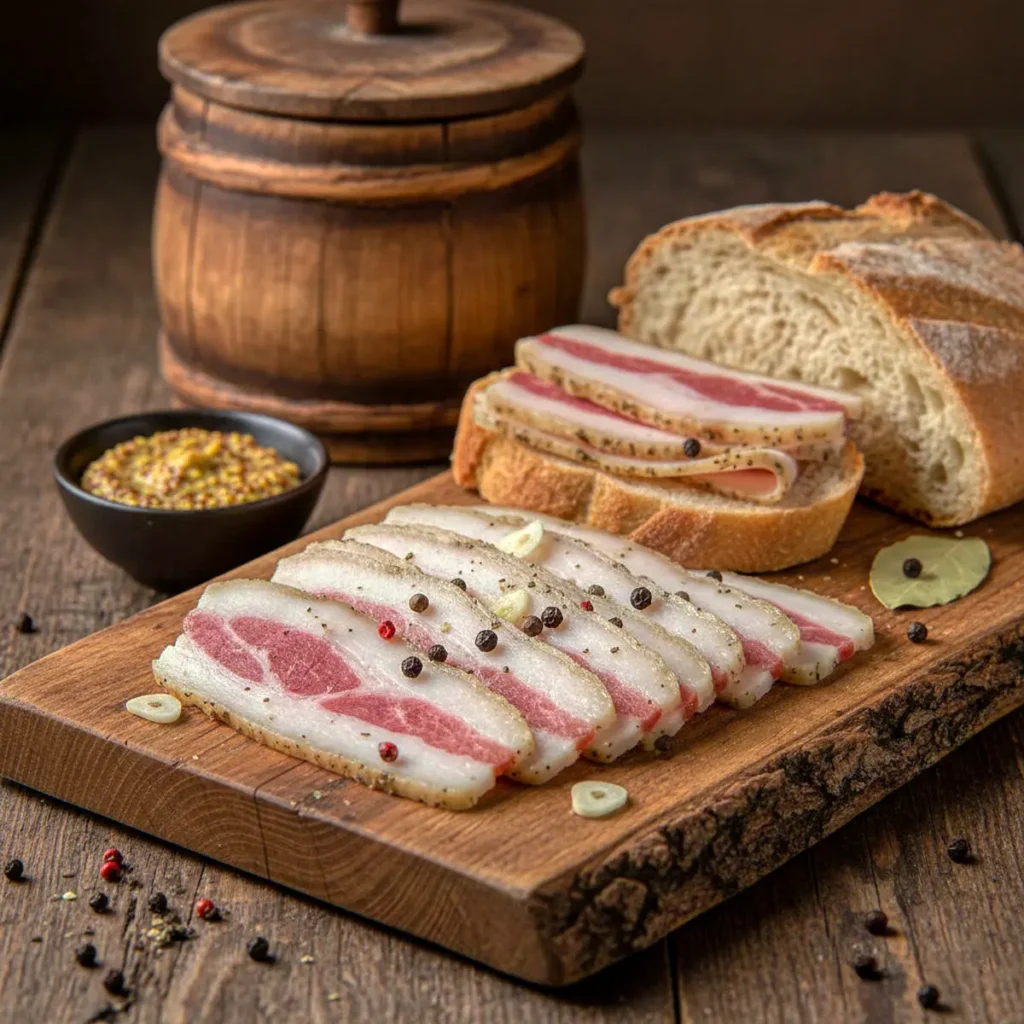
ngàyMeso 'z tiblice is a traditional pork dish from Međimurje, where seasoned chunks of pork shoulder and belly cook slowly in lard, then rest fully covered in that same fat. The result is tender, garlicky meat that slices cleanly when chilled and softens to near-confit richness when warmed. This recipe adapts the original cellar method to a refrigerator-friendly approach with clear salt ratios and a low, steady oven. Active work stays modest—mainly cutting, seasoning, and browning—while the oven and the lard handle the rest. Once prepared, the pork keeps well for days, ready for cold platters, rustic sandwiches, or quick skillet meals. It suits festive spreads, casual gatherings, and make-ahead winter dinners alike.
2.5 kg (about 5½ lb) pork leg or loin, skinless, cut in 4–5 cm chunks – Traditional versions favour high-quality leg or loin; a small portion of shoulder can be included for extra juiciness.
50 g fine sea salt (about 2% of meat weight) – Weighing the salt keeps seasoning and preservation consistent.
8 large garlic cloves, finely grated or crushed – Garlic is a defining aromatic in classic descriptions of the dish.
2 tsp freshly ground black pepper – Some will go into the cure; whole peppercorns appear again in the lard.
2 tsp sweet paprika (optional but common in regional cooking) – Adds gentle colour and warmth; smoked paprika gives a stronger profile.
1 tsp ground caraway or cumin – Not mandatory, though it pairs well with pork and reflects local spice habits.
1 tsp dried marjoram – A familiar herb in northern Croatian pork dishes.
6 bay leaves, lightly crushed – Part of the curing mix and the lard layer; repeatedly mentioned in regional sources.
150 ml (⅔ cup) dry white wine or water – Helps distribute the seasoning around the meat during curing.
2–2.5 litres (8–10 cups) high-quality rendered pork lard – Enough to submerge the meat with a 2–3 cm cap of fat. Neutral, unsmoked lard keeps the flavour balanced.
10–15 whole black peppercorns
4 additional bay leaves
1 small dried chilli (optional) – For a light heat that infuses the lard.
1 small onion, halved (for the cooking broth, optional) – Adds background sweetness to the cooking liquid; the broth can be saved for soups.
Rustic sourdough or country-style bread, sliced
Thinly sliced red or white onion
Pickled peppers or gherkins
Fresh cottage cheese or young cow’s cheese (optional)
Pork is integral to this preparation; there is no direct meat substitute that reproduces the same texture and flavour.
The dish itself contains no gluten, dairy, nuts or eggs. Allergen exposure comes mainly from side dishes or cross-contact.
If pork lard is unavailable, duck or goose fat can fill the same functional role, although the flavour will move away from the Croatian original.
For a plant-based idea inspired by the concept, a white-bean and smoked paprika spread stored under olive oil can echo the format (spread plus protective fat layer), though it remains a separate dish rather than a direct equivalent.
Trim and cut the meat. Remove any loose sinew from the pork and cut into even 4–5 cm cubes so they cure and cook at the same rate.
Mix the curing paste. In a bowl, combine the salt, crushed garlic, ground pepper, paprika (if using), caraway and marjoram to form a thick, fragrant paste.
Season the pork thoroughly. Toss the meat with the paste, working it into all sides, then add the crushed bay leaves and massage them through the pieces.
Pack and chill. Place the seasoned pork in a non-reactive container, pour in the wine or water, cover tightly and refrigerate for 3–5 days, turning the pieces once per day so the cure distributes evenly.
Rinse lightly and set up the pot. After curing, briefly rinse the surface of each piece under cold water to remove excess salt and aromatics, then pat dry and place in a large pot.
Add aromatics and water. Add the onion halves (if using), a few bay leaves and some whole peppercorns, then cover with cold water by 3–4 cm.
Simmer gently until tender. Bring to a bare simmer over medium heat, then lower the heat and cook for about 60–90 minutes, skimming foam as needed, until the meat is tender yet still holds its shape and reaches at least 75°C (167°F) in the centre.
Cool the meat. Lift the pork out of the liquid with a slotted spoon and set on a rack or tray to cool to room temperature; strain and reserve the broth for soup or sauces.
Optional browning step. For a deeper roasted note, transfer the cooled pork pieces to a roasting pan and bake at 200°C (390°F) for 20–25 minutes, turning once, until the edges take on a light golden colour, then cool completely.
Melt the lard gently. Place the lard in a large pot and warm over low heat until fully liquid and clear, keeping the temperature moderate so it stays fluid without frying or browning.
Arrange the meat in the container. Place the cooled pork pieces snugly in a scrupulously clean ceramic crock or several glass jars, tucking bay leaves, peppercorns and the dried chilli (if using) among the layers.
Cover completely with lard. Pour the warm, liquid lard over the meat, tapping the container gently to release air pockets, and make sure every piece sits under a 2–3 cm cap of fat.
Chill and set. Let the container cool at room temperature until the lard begins to firm, then cover tightly and refrigerate at 2–4°C (36–39°F) for at least 4 weeks so the flavours meld and the meat matures.
Lift and slice the meat. When ready to serve, use a clean spoon or fork to lift a few pieces of meat from the firm lard, scraping off excess fat, and slice across the grain into 5–10 mm thick slices while still well chilled.
Plate with garnishes. Arrange the slices on a platter with small spoonfuls of the seasoned lard, bread slices, onion, pickles and cheese; let the platter stand briefly at cool room temperature so the fat softens slightly before serving.
Return leftovers to the lard. Any remaining meat goes back under the lard cap; make sure it is fully submerged again before closing the container and returning it to the refrigerator.
Khám phá cuộc sống về đêm sôi động của những thành phố hấp dẫn nhất Châu Âu và du lịch đến những điểm đến đáng nhớ! Từ vẻ đẹp sôi động của London đến năng lượng thú vị…
Từ khi Alexander Đại đế thành lập cho đến khi thành phố hiện đại, nơi đây vẫn là ngọn hải đăng của tri thức, sự đa dạng và vẻ đẹp. Sự hấp dẫn vượt thời gian của nó bắt nguồn từ…

Trong khi nhiều thành phố tráng lệ của châu Âu vẫn bị lu mờ bởi những thành phố nổi tiếng hơn, thì đây lại là kho báu của những thị trấn mê hoặc. Từ sức hấp dẫn nghệ thuật…

Với những kênh đào lãng mạn, kiến trúc tuyệt vời và ý nghĩa lịch sử to lớn, Venice, một thành phố quyến rũ trên Biển Adriatic, hấp dẫn du khách. Trung tâm tuyệt vời của…

Lisbon là một thành phố trên bờ biển Bồ Đào Nha kết hợp khéo léo các ý tưởng hiện đại với sức hấp dẫn của thế giới cũ. Lisbon là trung tâm nghệ thuật đường phố thế giới mặc dù…
