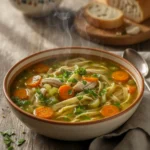
In Istria, that wedge of Croatia that leans toward Italy and Slovenia, maneštra sits at the center of everyday cooking. It appears as a deep bowl of beans, corn, potatoes, and vegetables, thickened by slow heat and perfumed with a modest amount of smoked pork. Families treat it less as a single fixed recipe and more as a method: a way to stretch pantry staples, use what the season offers, and feed a table without fuss.
Writers often describe maneštra as Istria’s answer to minestrone, and that comparison makes sense. Both stews share the same logic of layering legumes, vegetables, and small pieces of cured meat. Yet Istrian maneštra has its own character. TasteAtlas notes that it leans on beans and dried or smoked meats, with frequent additions of fresh corn kernels, potatoes, and other field vegetables, giving the pot a creamy, almost porridge-like thickness that feels closer to a countryside bean stew than a brothy vegetable soup.
Regional cooks speak of many versions. Maneštra od bobići centers sweet corn; maneštra with barley folds in grains; lighter winter versions feature cabbage and tomato. Great British Chefs describes maneštra as “flexible and comforting,” sometimes enriched with a ham hock or pancetta, sometimes left entirely meat-free, depending on budget and occasion. In restaurant write-ups on Croatian food, maneštra appears among signature dishes that visitors meet on menus across Istria, listed simply as bean soup or bean minestrone and served in deep plates with a drizzle of olive oil.
This version focuses on a classic countryside style: borlotti or pinto beans, potatoes, and vegetables, enriched with smoked pork and corn. The beans give body and protein; potatoes and corn bring sweetness and gentle starch; onion, carrot, celery, and garlic create a flavorful base; a small quantity of tomato paste and paprika adds color and depth without turning the stew into a tomato-forward dish. A piece of smoked ham hock or ribs seasons the pot as it simmers, and diced pancetta adds aromatic fat at the beginning.
Texture matters. Traditional maneštra leans toward thick and almost creamy, yet still spoonable. Long, patient simmering breaks down some of the beans, while potatoes soften at the edges. The corn holds its shape, giving pops of sweetness. Home cooks typically adjust thickness with more water or a longer uncovered simmer, aiming for a stew that coats the spoon rather than a thin soup.
Context gives the dish additional weight. In rural Istria, maneštra historically served as a midday meal that sustained fieldwork. Expat-focused guides describe it as a rustic, filling soup that joins beans, corn, potatoes, seasonal vegetables, and cured meat such as pancetta or smoked ham, usually finished with olive oil and herbs. Modern cooks may add grated hard cheese at the table, crusty bread on the side, and a glass of local Malvazija or Teran. The core remains the same: straightforward ingredients, slow cooking, and a gentle smoky background.
From a nutritional point of view, maneštra is more than comfort food. Beans provide fiber and plant protein; borlotti beans, for instance, offer around 16–17 grams of protein and more than 15 grams of fiber per cooked cup. Potatoes and corn supply carbohydrates for energy, while olive oil and cured meat contribute fat and flavor. Built with modest quantities of pork and careful seasoning, this stew can stay balanced enough for regular use in a cool-season rotation.
For home cooks outside Croatia, maneštra has another advantage: it forgives substitutions. Different beans, other root vegetables, or an alternative smoked meat all sit comfortably in this framework. The technique remains steady even when pantry details shift. Once you understand the rhythm—soak, sauté, simmer, and adjust thickness—the dish becomes a reliable template for hearty, one-pot cooking inspired by Istrian kitchens.