






Utforska det antika Alexandrias hemligheter
Från Alexander den stores tillkomst till dess moderna form har staden förblivit en fyr av kunskap, variation och skönhet. Dess tidlösa tilltal härrör från...


4
portioner15
minuter10
minuter380
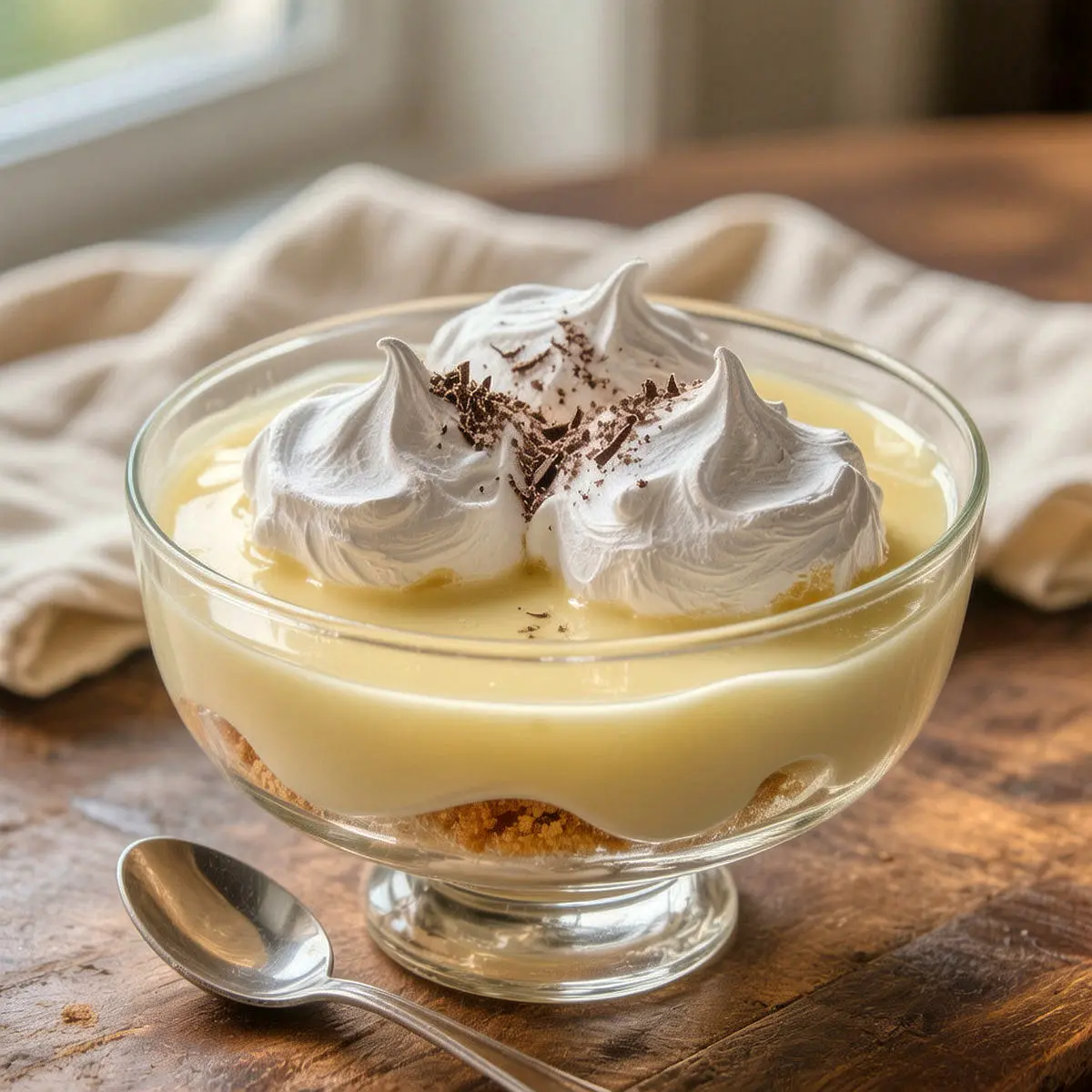
kcalŠnenokle (paradižot) is a light Croatian dessert of vanilla custard topped with poached meringue “islands.” Begin by separating eggs and whisking the whites with a bit of salt and sugar to stiff peaks. Meanwhile, bring milk with vanilla to a gentle simmer. Spoon the whipped egg whites into the simmering milk, poaching each dumpling for 1–2 minutes per side. Remove the meringue islands and, in a bowl, beat the yolks with remaining sugar and vanilla. Slowly temper the yolks with some hot milk, then cook gently to thicken into custard. Pour the warm custard into serving dishes and float the cooled meringue on top. Chill for an hour or more. The result is a nostalgic treat: airy egg-white dumplings floating on a rich, sweet vanilla custard, often garnished with chocolate shavings or cinnamon.
500 ml whole milk – for the custard base and poaching.
4 large eggs – separated into yolks and whites.
100 g granulated sugar (≈½ cup) – divided (about 70g for yolks, 30g for whites).
2 tsp vanilla extract (or 2 tsp vanilla sugar).
Pinch of salt – stabilizes the meringue.
100 g butter cookies (like Petit Beurre) – broken or crushed to line serving bowls (optional, for Dalmatian-style base).
Grated dark chocolate or ground cinnamon – for garnish (optional).
Heat the milk (5 min): In a saucepan, combine the milk, vanilla, and a pinch of salt. Bring to a gentle simmer over medium heat. Once heated, reduce heat to low to keep warm.
Whip the egg whites (3–5 min): In a clean bowl, whisk the egg whites with 30g of the sugar and a pinch of salt until stiff glossy peaks form.
Poach the meringues (5–10 min): Using a spoon or ice cream scoop, carefully drop heaping spoonfuls of the whipped egg whites into the simmering milk. Let each “island” cook 1–2 minutes per side (it will puff up and set). Use a slotted spoon to lift them out and set aside on a plate.
Make the custard (5 min): In another bowl, beat the egg yolks with the remaining 70g sugar until thick and pale. Temper the yolks by whisking in a few tablespoons of the hot milk (off heat), then pour this mixture back into the saucepan.
Thicken the custard: Gently reheat the milk–yolk mixture on low, stirring constantly with a wooden spoon, until it thickens slightly into a sauce (it should coat the back of the spoon). Do not boil or the custard will curdle. Remove from heat once thickened.
Combine and chill: Pour the warm custard into individual serving bowls or a large dish (crushed cookies, if using, should be in the bottom first). Gently place the poached meringue islands on top of the custard. Allow to cool to room temperature, then refrigerate for at least 1 hour (longer chilling fully sets the texture).
Tjäna: Just before serving, sprinkle grated chocolate or a dusting of cinnamon over the top. The dessert is best enjoyed cold. Spoon through the fluffy “islands” and creamy custard for a light, sweet treat.
Från Alexander den stores tillkomst till dess moderna form har staden förblivit en fyr av kunskap, variation och skönhet. Dess tidlösa tilltal härrör från...
Grekland är ett populärt resmål för dem som söker en mer avkopplande strandsemester, tack vare dess överflöd av kustskatter och världsberömda historiska platser, fascinerande…

Med sina romantiska kanaler, fantastiska arkitektur och stora historiska relevans fascinerar Venedig, en charmig stad vid Adriatiska havet, besökare. Det stora centrumet för denna…

Frankrike är känt för sitt betydande kulturarv, exceptionella kök och vackra landskap, vilket gör det till det mest besökta landet i världen. Från att se gamla…

Båtresor – särskilt på en kryssning – erbjuder en distinkt semester med all inclusive. Ändå finns det fördelar och nackdelar att ta hänsyn till, ungefär som med alla typer...
