







Света места: најдуховније дестинације света
Ispitujući njihov istorijski značaj, kulturni uticaj i neodoljivu privlačnost, članak istražuje najpoštovanija duhovna mesta širom sveta. Od drevnih građevina do neverovatnih…


6
porcije25
minuta105
minuta600
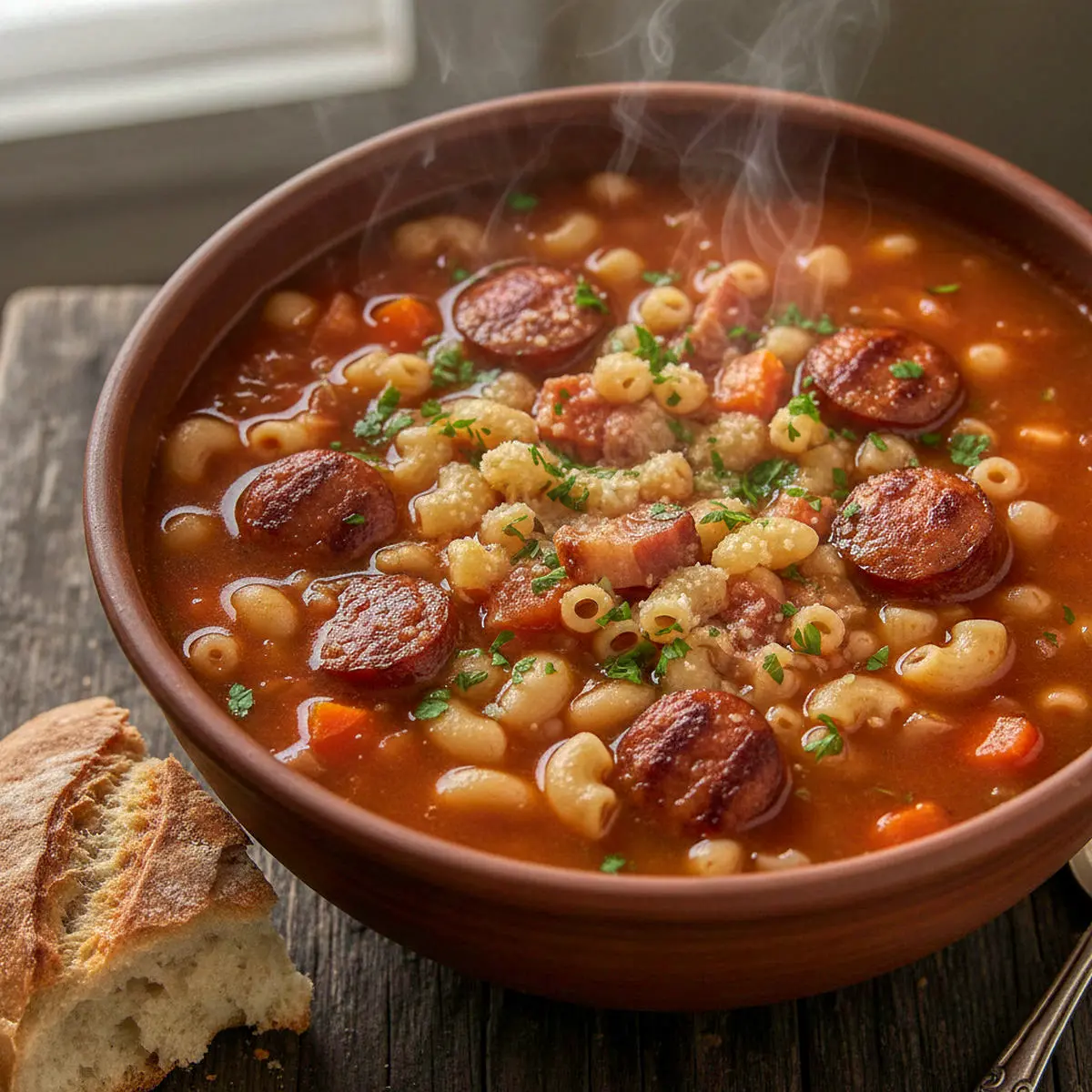
kcalThis Pašta Fažol recipe builds a traditional Croatian pasta and bean soup with a full, smoky backbone. Dried white beans simmer slowly with a ham hock or smoked ribs, onion, carrot, celery, bay, and tomato paste. Pancetta or bacon cooks at the start, forming a flavorful base that gives the broth an almost silky quality once the beans release their starch. Small pasta cooks directly in the pot shortly before serving, so it keeps some firmness while gently thickening the soup. A handful of parsley and a thread of olive oil at the end brighten the bowl without disturbing its rustic character. Served with crusty bread, it works as either a generous first course or a complete cold-weather meal.
1 pound (450 g) dried white beans
Navy, Great Northern, or cannellini; Croatian cooks often choose white beans or borlotti for creamy interiors and sturdy skins.
8 cups (2 liters) water or low-sodium beef or vegetable stock
Forms the base; stock gives a deeper flavor, water keeps the dish lighter.
1 smoked ham hock or 8 oz (225 g) smoked pork ribs
Adds body, smokiness, and tender shreds of meat.
5 oz (140 g) smoked pancetta or thick-cut bacon, diced
Renders fat for sautéing the vegetables and adds cured pork flavor in each spoonful.
3 kašike maslinovog ulja
Supports sautéing and rounds out the broth; reduce slightly if pancetta is very fatty.
1 large yellow onion, finely chopped
Sweetens the base and dissolves into the broth.
2 medium carrots, diced
Bring gentle sweetness and color.
2 celery stalks, diced (include leaves if available)
Adds freshness and aromatic depth.
4 čena belog luka, mlevena
Provides a warm, savory backbone.
2 kašike paradajz paste
Contributes gentle acidity and color without turning the soup into a tomato dish.
2 lovorova lista
Give a subtle herbal note during the long simmer.
1 tsp sweet paprika (regular or smoked)
Smoked paprika amplifies the cured pork character; sweet paprika keeps things milder.
1½ cups (225 g) small pasta
Ditalini, elbow macaroni, small shells, or other short shapes; they should fit comfortably on a spoon.
2 tsp fine sea salt, more to taste
Added progressively so beans soften properly.
½–1 kašičica sveže mlevenog crnog bibera
Balances the richness.
¼ cup (10 g) chopped fresh flat-leaf parsley
Scattered in at the end for color and freshness.
Ekstra devičansko maslinovo ulje, za prelivanje (opciono)
A thin stream on each bowl adds aroma and sheen.
Pasulj: Canned beans work when time is short. Use 4 standard 15-oz (425 g) cans drained and rinsed, shorten the simmer once the vegetables soften, and add beans for only 20–25 minutes so they hold shape.
Svinjetina: For a vegetarian version, omit ham hock and pancetta, add 2 extra tbsp olive oil, and increase smoked paprika to 1½ tsp for a gentle smoky impression.
Stock: Vegetable stock creates a lighter profile; beef stock pushes the dish toward stew territory. Choose low-sodium, then adjust salt at the end.
Pasta / gluten: Use gluten-free small pasta, or serve the bean base over cooked rice or polenta for a gluten-free bowl.
Garlic and alliums: For those sensitive to onion and garlic, use the green parts of leeks and a pinch of asafoetida, then strain them out before adding pasta.
Soak the beans.
Rinse the dried beans under cold water, place in a large bowl, cover with several inches of fresh water, and leave to soak 8–12 hours at room temperature. (Hands-on: 5 minutes; resting: 8–12 hours)
Preheat the pot and render the pancetta.
Warm a large heavy pot or Dutch oven over medium heat, add pancetta and 1 tbsp olive oil, and cook until the fat renders and the edges turn golden. (8–10 minutes)
Sauté the aromatics.
Add onion, carrot, and celery to the pot with a pinch of salt, stir to coat in the fat, and cook until the vegetables soften and the onion turns translucent. (8–10 minutes)
Bloom the garlic, tomato paste, and paprika.
Stir in the garlic, cook until fragrant, then add tomato paste and paprika and cook, stirring, until the paste darkens slightly and clings to the vegetables. (2–3 minutes)
Add beans, smoked pork, bay, and liquid.
Drain the soaked beans, add them to the pot with the ham hock or ribs and bay leaves, then pour in the 8 cups of water or stock. (5 minutes)
Bring to a simmer and cook the beans.
Raise the heat to medium-high until small bubbles appear, then lower to maintain a gentle simmer, partially cover, and cook until the beans are just tender. (45–60 minutes)
Check seasoning and texture.
Fish out a bean and taste; when tender but not falling apart, season the pot with 1½ tsp salt and ½ tsp pepper, adjusting gradually. (5 minutes scattered through simmer time)
Remove and shred the smoked pork.
Lift out the ham hock or ribs with tongs, let cool slightly, remove meat from bone, shred or chop into bite-size pieces, and return the meat to the pot; discard bones and excess fat. (10 minutes)
Thicken the soup slightly.
Use a ladle to scoop out 1–2 cups of beans and liquid, mash them with a fork or potato masher, then stir the mixture back into the pot for a creamier texture. (5 minutes)
Cook the pasta in the soup.
Bring the pot back to a gentle boil, stir in the pasta, and cook until just shy of al dente so it keeps a little bite. (8–10 minutes, follow package times)
Finish with parsley and olive oil.
Stir in parsley, taste and adjust salt and pepper, then swirl in the remaining 2 tbsp olive oil if using. (3–4 minutes)
Odmori se i posluži.
Turn off the heat, let the soup stand for 10 minutes so the pasta finishes hydrating, then ladle into warm bowls and drizzle with a little more olive oil if desired. (10 minutes)
Ispitujući njihov istorijski značaj, kulturni uticaj i neodoljivu privlačnost, članak istražuje najpoštovanija duhovna mesta širom sveta. Od drevnih građevina do neverovatnih…
Lisabon je grad na portugalskoj obali koji vešto kombinuje moderne ideje sa šarmom starog sveta. Lisabon je svetski centar ulične umetnosti iako…

Путовање бродом - посебно на крстарењу - нуди карактеристичан и свеобухватан одмор. Ипак, постоје предности и недостаци које треба узети у обзир, као и код било које врсте…

Sa svojim romantičnim kanalima, neverovatnom arhitekturom i velikim istorijskim značajem, Venecija, šarmantni grad na Jadranskom moru, fascinira posetioce. Veliki centar ovog…

Precizno izgrađeni da budu poslednja linija zaštite za istorijske gradove i njihove ljude, masivni kameni zidovi su tihi stražari iz prošlih vremena.…
