


Lissabon – Stad van Street Art
Lissabon is een stad aan de Portugese kust die moderne ideeën vakkundig combineert met de charme van de oude wereld. Lissabon is een wereldcentrum voor street art, hoewel...


4
porties20
notulen105
notulen520
kcal4
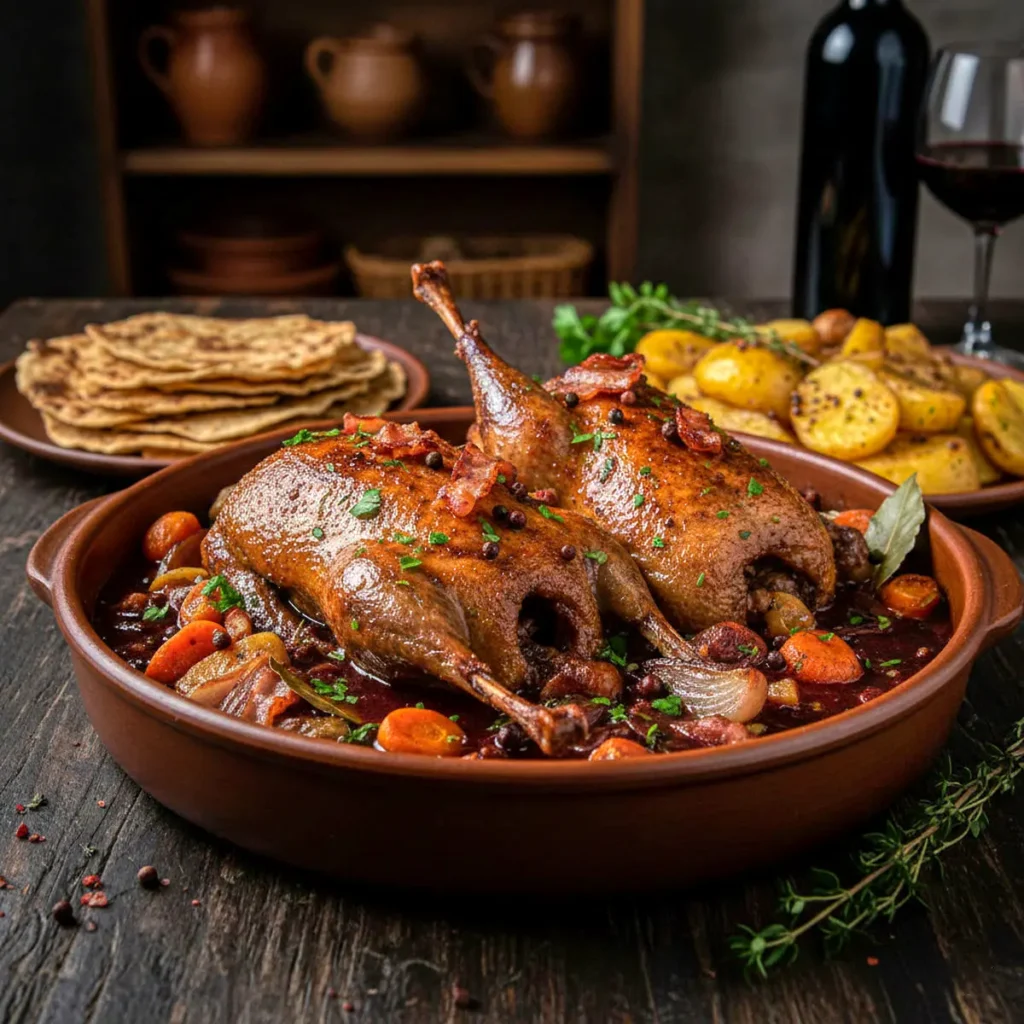
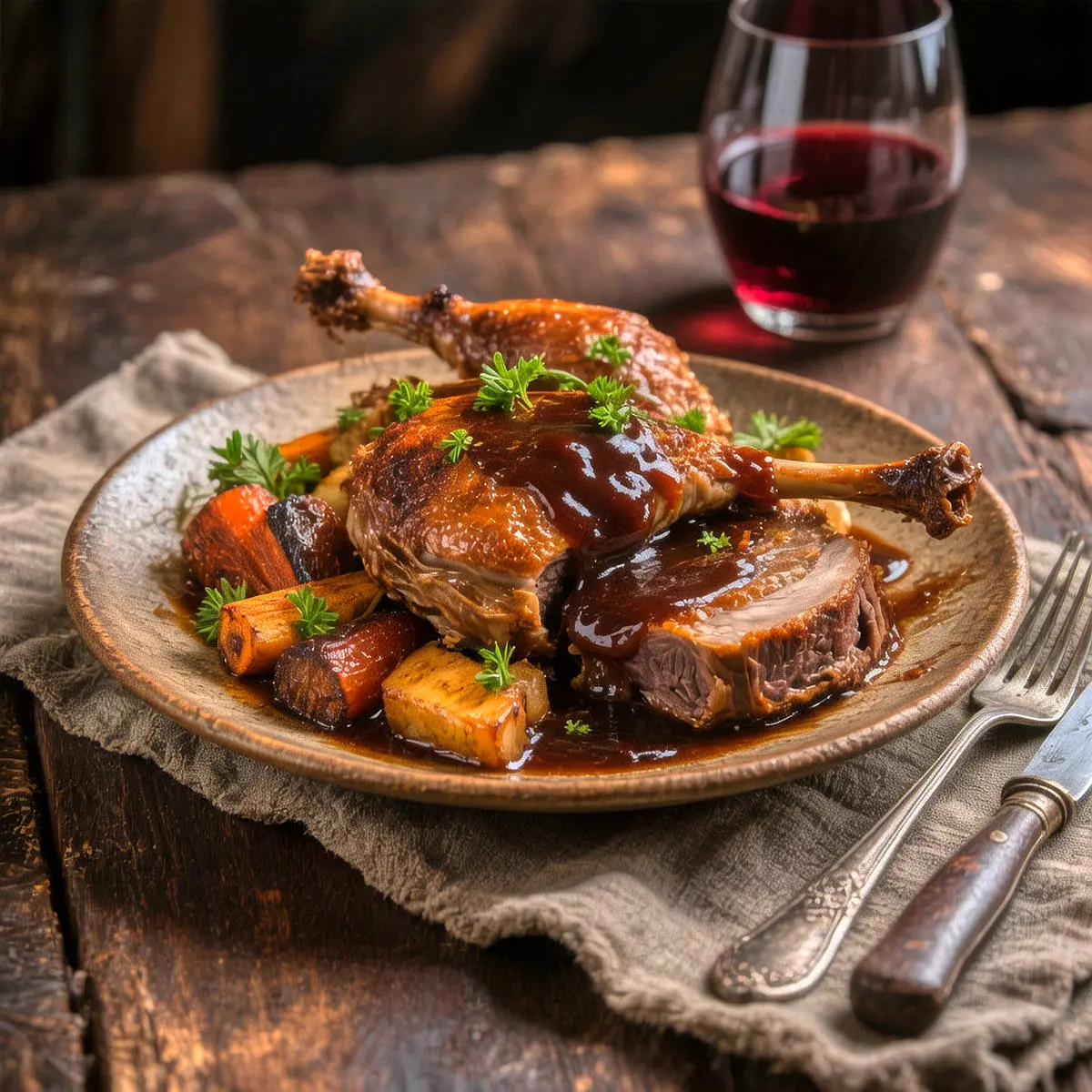
urenThis Wild Duck with Sauce dish features tender roasted duck bathed in a rich red wine gravy. The duck pieces are first marinated in wine, vinegar and herbs, then oven-roasted with vegetables until the meat is moist and flavorful. The pan juices are transformed into a dark, hearty sauce by reducing with stock and wine (often thickened slightly). Though the recipe takes time and attention, the result is a succulent duck with a glossy, flavorful sauce that highlights Croatia’s hunting heritage. Serve the sliced duck with seasonal sides like roasted potatoes or mlinci (toasted flatbread) to complete this rustic meal.
2 whole wild ducks (or equivalent duck legs/breasts, ~2–3 kg total) – cleaned and trimmed; substitutes: farmed duck or goose.
1 kopje droge rode wijn (for marinade and sauce) – e.g. Merlot or Pinot Noir.
¼ cup wine or apple cider vinegar – tenderizes and adds tang to the marinade.
4 garlic cloves, crushed – for aroma.
2 takjes verse tijm En 2 laurierblaadjes – classic game herbs.
1 tbsp juniper berries (crushed) – complements wild flavors.
½ tsp ground allspice – warm spice note (optional).
2 tsp kosher salt (plus extra) – seasons the meat.
2 black peppercorns, cracked – for subtle heat.
4 carrots, sliced into chunks – root vegetables for roasting.
2 parsnips or other root veg, sliced – adds sweetness to the braise.
1 grote ui, quartered – provides savory base.
4 strips thick bacon or pancetta (optional) – adds richness.
2 tbsp vegetable oil (for searing) – to brown the duck.
1 cup chicken or duck broth – to braise and form sauce base.
2 eetlepels tomatenpuree or plum preserves (optional) – deepens color and flavor of sauce.
2 tbsp butter (for sauce) – for richness (can substitute oil).
2 tbsp flour (for thickening) – or use extra broth/stock for a thinner sauce.
Verse peterselie (for garnish).
Marinate (4–12 hours): In a large bowl, combine 1 cup red wine, vinegar, garlic, thyme, bay leaves, juniper, allspice (if using), salt and peppercorns. Submerge the duck pieces in this mixture, cover and refrigerate for at least 4 hours (preferably overnight). Turn occasionally to ensure even marination.
Preheat Oven (10 minutes): Remove the duck from the marinade (reserve both duck and marinade). Pat the meat dry and let it sit at room temperature while you preheat the oven to 180°C (350°F).
Sear Duck (10 minutes): Heat oil in a large roasting pan or Dutch oven over medium-high heat. Place the duck skin-side down and sear until the skin is golden and crisp (about 5–7 minutes). Flip and brown the other side for 2–3 minutes. Remove the duck and set aside (drain off excess fat, leaving about 1 tablespoon in the pan).
Sauté Vegetables (5 minutes): In the same pan, add the bacon (if using), carrots, parsnips and onion. Sauté over medium heat until onions begin to soften, about 3–5 minutes. This builds flavor in the sauce base.
Roast Duck (90 minutes): Nestle the seared duck pieces on top of the vegetables. Pour the reserved marinade and 1 cup broth into the pan. If using, stir in tomato paste or plum preserves for extra depth. Bring to a simmer on the stovetop. Cover the pan (or tent loosely with foil) and transfer it to the oven. Roast for about 90 minutes, basting once or twice, until the duck is tender and the sauce has thickened slightly.
Finish Sauce & Serve: Remove the duck to a cutting board and let it rest 5–10 minutes. Meanwhile, finish the sauce: skim off any excess fat, then stir in a little butter and sprinkle flour over the cooking liquid. Whisk and bring to a boil, reducing slightly to thicken (about 5 minutes). Season the gravy to taste with salt and pepper. Carve the duck and arrange on plates. Spoon the dark sauce and vegetables over the top, and garnish with parsley before serving.
Lissabon is een stad aan de Portugese kust die moderne ideeën vakkundig combineert met de charme van de oude wereld. Lissabon is een wereldcentrum voor street art, hoewel...
Frankrijk staat bekend om zijn belangrijke culturele erfgoed, uitzonderlijke keuken en aantrekkelijke landschappen, waardoor het het meest bezochte land ter wereld is. Van het zien van oude…

De enorme stenen muren zijn nauwkeurig gebouwd om de laatste verdedigingslinie te vormen voor historische steden en hun inwoners. Ze dienen als stille wachters uit een vervlogen tijdperk.

Reizen per boot, met name op een cruise, biedt een onderscheidende en all-inclusive vakantie. Toch zijn er voor- en nadelen om rekening mee te houden, net als bij elke andere vorm van…

Griekenland is een populaire bestemming voor wie op zoek is naar een meer ontspannen strandvakantie, dankzij de overvloed aan kustschatten en wereldberoemde historische locaties, fascinerende…