
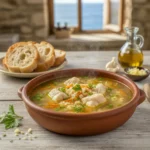
Mussels na Buzaru (Dalmatian Shellfish Stew)

Dalmatian Buzara Mussels – Croatian Shellfish Stew

Along the Dalmatian coast, where fishing boats still set out at first light and family kitchens lean on what the day’s catch brings in, buzara stands as one of the most characteristic ways to cook shellfish. In Croatian cooking, this approach typically means a quick pan of seafood simmered with olive oil, garlic, white wine, and fresh herbs, sometimes with a little breadcrumb to catch the juices. When mussels take the lead role in that pan, the result is til meg og buzaru eller mušule na buzaru—a dish that feels very close to the rhythm of everyday coastal life.

In Dalmatia, mussels na buzaru often appears in simple konobas (traditional taverns) and home kitchens rather than on formal tasting menus. Fishers, home cooks, and small seaside restaurants rely on this method because it respects the shellfish: strong enough in flavor to be satisfying, yet restrained so the taste of the sea remains in front. A typical white buzara (na bijelo) builds a base of olive oil, garlic, and parsley, moistened with white wine; breadcrumbs are added towards the end to give the liquid more body. Tomato and onion create a red version (na crveno), but mussels more often arrive in the white style, which suits their gentle sweetness.

The flavor profile of mussels na buzaru is straightforward and layered at once. The mussels bring brine, a natural sweetness, and a tender, just-bouncy texture. The cooking liquid starts thin and winey, then softens as the mussel juices mingle with olive oil and garlic. Breadcrumbs help suspend that fat and liquid, turning it into a light, spoonable sauce that clings to each shell and begs for bread or polenta on the side. A handful of chopped parsley cuts through the richness with a green, aromatic edge, while optional tomato adds a faint fruitiness without pushing the dish toward a heavy stew.

Nutrition-wise, mussels offer lean protein, notable minerals, and B vitamins, with relatively modest calories compared with many meat dishes. Olive oil forms the main fat in this preparation, aligning the dish with broader Mediterranean patterns of eating, where seafood and plant fats take center stage. The overall result sits comfortably between rustic and light: satisfying enough for a main course, yet not overly heavy, especially when paired with a simple salad or grilled vegetables.

This version of mussels na buzaru follows Dalmatian practice by keeping the ingredient list short and technique-driven. It favors a white buzara base, with optional tomato for cooks who enjoy a slightly richer sauce yet still want the mussels to stay at the center. The method relies on careful timing: the garlic must soften without browning, the wine needs a brief simmer, and the mussels require firm heat and a tight lid so that they open quickly rather than simmer for too long.

For a home cook, mussels na buzaru offers several advantages. It cooks in one pot, within minutes, and adapts well to both casual weeknight meals and relaxed gatherings where a large pot can land on the table for everyone to share. The same technique works for clams or mixed shellfish, so once the basic method is familiar, it becomes a flexible template for coastal-style seafood cooking. When served with bread that can soak up the sauce and a glass of crisp Croatian white wine such as Pošip, Malvasia, or Graševina, it delivers a clear sense of Dalmatian shorelines without demanding elaborate preparation.

Mussels na Buzaru (Dalmatian Shellfish Stew)

Oppskrift av Travel S HelperKurs: HovedMat: Kroatisk, dalmatiskVanskelighet: Moderat
Porsjoner

4

porsjoner
Forberedelsestid

20

minutter
Koketid

10

minutter
Kalorier

430

kcal

Mussels na Buzaru is a Dalmatian shellfish stew that cooks in one pot and relies on a short, focused list of ingredients: fresh mussels, olive oil, garlic, white wine, parsley, and breadcrumbs. The mussels steam open in a fragrant broth, releasing their juices into the pan and forming a light sauce that clings to each shell and collects at the bottom of the pot. Breadcrumbs thicken that liquid just enough to scoop with bread, while parsley and a squeeze of lemon keep the flavors bright. The technique respects the shellfish, with fast cooking over high heat to keep the meat tender. It works as either a generous starter or a full seafood main, especially when paired with crusty bread, polenta, or a simple salad.

Ingredienser

  • For the Mussels na Buzaru
  • Fresh mussels – 2 kg (about 4.4 lb), in shell — scrubbed and debearded; discard any with cracked shells or that stay open after tapping.

  • Extra-virgin olive oil – 60 ml (¼ cup) — forms the base fat; a fruity, medium-intensity oil works well.

  • Garlic – 5–6 medium cloves, finely chopped — core flavor of the sauce; adjust quantity to taste.

  • Flat-leaf parsley – 3 Tbsp finely chopped, plus extra for garnish — added both at the start and end for freshness and aroma.

  • Dry white wine – 200 ml (scant 1 cup) — a crisp, unoaked wine such as Malvasia, Graševina, Pošip, or another neutral white.

  • Fine sea salt – ½–1 tsp, to taste — added cautiously, since mussels and their liquor already contain natural salinity.

  • Freshly ground black pepper – ¼ tsp — adds gentle warmth without overshadowing the shellfish.

  • Fine dry breadcrumbs – 3–4 Tbsp — from day-old white or country bread; thickens the sauce and helps it cling to the mussels.

  • Grated ripe tomato or tomato passata – 2–3 Tbsp (optional) — a small amount adds color and light sweetness while keeping the dish mostly in the white buzara style.

  • Cold water – 2–3 Tbsp, only if needed — used sparingly if the pan needs a touch more liquid at the end.

  • Til servering
  • Lemon wedges – 1–2 lemons, cut into wedges — squeezed over the mussels at the table for brightness.

  • Crusty bread or grilled bread slices – 1 small loaf — essential for soaking up the sauce; country or sourdough loaves work well.

  • Soft polenta or plain boiled potatoes (optional) — traditional sides in some coastal households, especially when serving buzara as a main course.

Veibeskrivelse

  • Prepare the Mussels
  • Clean the mussels. Rinse the mussels under cold running water, scrub any grit from the shells, and pull off the beards with a firm tug toward the hinge.

  • Sort and chill. Discard mussels with cracked shells or that stay open after a sharp tap on the counter; keep the cleaned mussels in a colander over a bowl in the refrigerator while preparing the base.

  • Build the Buzara Base
  • Warm the pot and oil. Set a wide, heavy pot or deep sauté pan (with a tight-fitting lid) over medium heat and pour in the olive oil; heat until the oil feels hot but not smoking, about 1–2 minutes.

  • Soften the garlic. Add the chopped garlic and half of the chopped parsley; cook, stirring constantly, for 30–45 seconds, just until the garlic turns fragrant and barely golden at the edges, without browning.

  • Deglaser med vin. Pour in the white wine, scraping the bottom of the pot with a wooden spoon to loosen any garlic that has stuck, and bring the liquid to a lively simmer.

  • Season the base. Add a small pinch of sea salt and the black pepper, along with the optional grated tomato or passata, and let the mixture simmer for 2–3 minutes to cook off some of the alcohol and slightly concentrate the flavor.

  • Steam the Mussels
  • Add the mussels. Increase the heat to medium-high, tip the cleaned mussels into the pot, and immediately cover with the lid so steam builds quickly.

  • Steam until open. Cook for 4–6 minutes, shaking the pot once or twice without lifting the lid, until most mussels have opened wide; remove the lid and discard any that remain firmly closed.

  • Finish the Sauce and Serve
  • Thicken with breadcrumbs. Sprinkle the breadcrumbs over the mussels, along with the remaining chopped parsley, and gently stir or shake the pot so the crumbs absorb the liquid and the herbs distribute evenly; simmer uncovered for 1–2 minutes, until the sauce looks slightly thickened but still spoonable.

  • Adjust the consistency. If the pot looks very dry, add 2–3 Tbsp cold water and swirl; if the sauce seems too loose, simmer for another 1–2 minutes so it reduces slightly, taking care not to overcook the mussels.

  • Taste and season. Spoon a little sauce into a small dish, taste, and adjust salt and pepper carefully; the natural salinity of the mussels should stay in front while still allowing the garlic and wine to come through.

  • Serve at once. Transfer the mussels and sauce to a wide, warmed serving dish or bring the pot directly to the table; garnish with extra parsley and lemon wedges, and serve immediately with bread, polenta, or potatoes on the side.

Tips, feilsøking og variasjoner

  • Serveringsforslag og kombinasjoner
    Mussels na buzaru works well piled into a broad, shallow bowl or straight from the cooking pot, so that the sauce remains easy to reach. Crusty country bread, grilled bread slices, or soft polenta catch the liquid at the bottom, turning each serving into a full meal. A simple salad of leafy greens with a light vinaigrette or a plate of grilled zucchini, peppers, or eggplant keeps the meal balanced without complicating the flavor profile. On the wine side, a chilled Dalmatian Pošip, Istrian Malvasia, or Graševina pairs neatly with the garlic, parsley, and shellfish, echoing the coastal origin of the dish.
  • Oppbevaring og oppvarming
    Shellfish always tastes best freshly cooked, and mussels na buzaru is usually served immediately after the shells open. Leftovers can be cooled quickly, transferred to an airtight container with the sauce, and refrigerated for up to 1 day. Reheating is gentlest on the stovetop: mussels and sauce can go into a small covered pan over low heat for 3–4 minutes, just until steaming hot. A microwave tends to toughen the mussels more quickly, so low power and short intervals work better if that method is necessary. Freezing is not recommended, since the mussel texture turns mealy after thawing.
  • Variasjoner og erstatninger
    A red buzara variation replaces or supplements the optional tomato with finely chopped onion, cooked slowly in the oil before the garlic, and sometimes swaps part of the white wine for a light red; this version suits cooler weather and richer sides such as polenta. Mixed shellfish—clams, small prawns, or scampi—can share the same pot, with the smaller items added a minute earlier or later, depending on size. For a gluten-free approach, the sauce can thicken through reduction alone, or with gluten-free breadcrumbs, while potatoes or polenta replace bread at the table. A faster weeknight pattern uses pre-cleaned, vacuum-packed mussels; in that case, cleaning time drops, but cooking time remains similar, and careful attention to seasoning prevents the dish from tasting overly salty.
  • Chef’s Tips
    High heat and a tight-fitting lid matter for tender mussels, since fast steaming opens the shells before the meat has time to toughen. Adding salt late in the process keeps the natural salinity of the mussels in check, avoiding an overly salty sauce. Garlic tastes best when chopped by hand and barely colored; a sharp knife gives cleaner flavor than a press, and removing the pot from the heat for a moment if the garlic races toward deep color can save the base from bitterness. A wide pot gives the shells space, helping them open evenly and preventing overcooked mussels trapped at the bottom.
  • Nødvendig utstyr
    A wide, heavy pot or deep sauté pan with a tight-fitting lid sits at the center of this recipe; the wider the base, the more evenly the mussels cook. A sturdy colander and large bowl help with rinsing and draining the shellfish, while a small paring knife assists with trimming beards and checking for damaged shells. A wooden spoon or heatproof spatula is useful for stirring the garlic and scraping the bottom of the pot once the wine goes in. Serving is easier with a large ladle or deep spoon to scoop up both mussels and sauce, plus tongs for moving any reluctant shells. Warm, wide bowls or shallow dishes at the table catch the sauce and give each serving room for bread or sides.

Næringsinnhold

Estimates for one of four servings, without bread, polenta, or other sides; based on standard reference values for mussels, olive oil, and breadcrumbs.

NæringsstoffOmtrentlig beløp
Kalorier~430 kcal
Karbohydrater~12 g
Protein~25 g
Fett~27 g
Fiber~1 g
Natrium~800 mg
Viktige allergenerShellfish (mussels), gluten (breadcrumbs, bread), sulphites from wine (if used)

These values serve as rough guidance rather than clinical data, and they will vary with the exact mussel yield, amount of bread and breadcrumbs, salt level, and choice of sides.

10. august 2024

Cruise i balanse: Fordeler og ulemper

Båtreiser – spesielt på et cruise – tilbyr en særegen ferie med alt inkludert. Likevel er det fordeler og ulemper å ta hensyn til, omtrent som med alle slags...

Fordeler-og-ulemper-ved-reise-med-båt
11. august 2024

Venezia, Adriaterhavets perle

Med sine romantiske kanaler, fantastiske arkitektur og store historiske relevans fascinerer Venezia, en sjarmerende by ved Adriaterhavet, besøkende. Det store sentrum av dette…

Venezia-Adriaterhavets perle