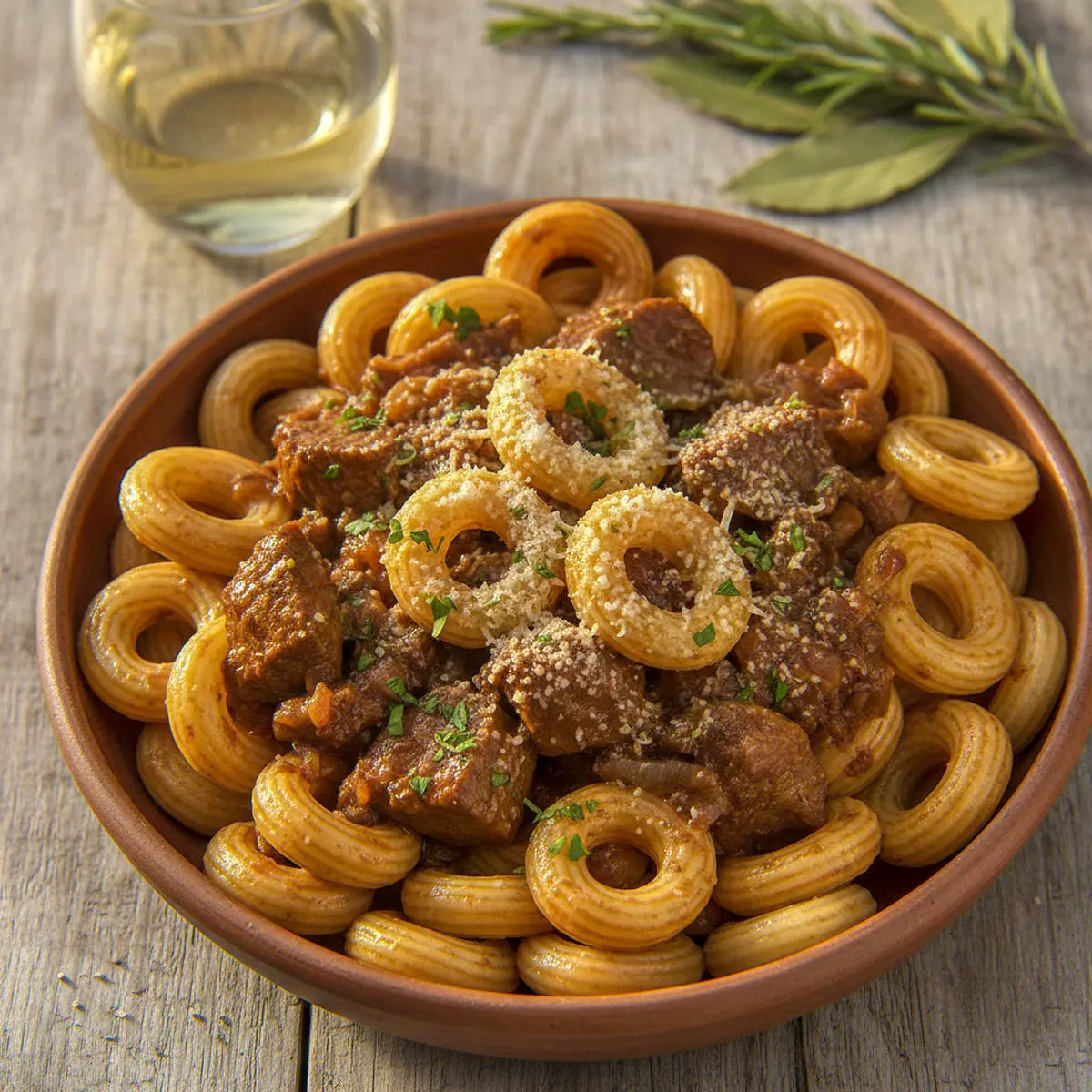
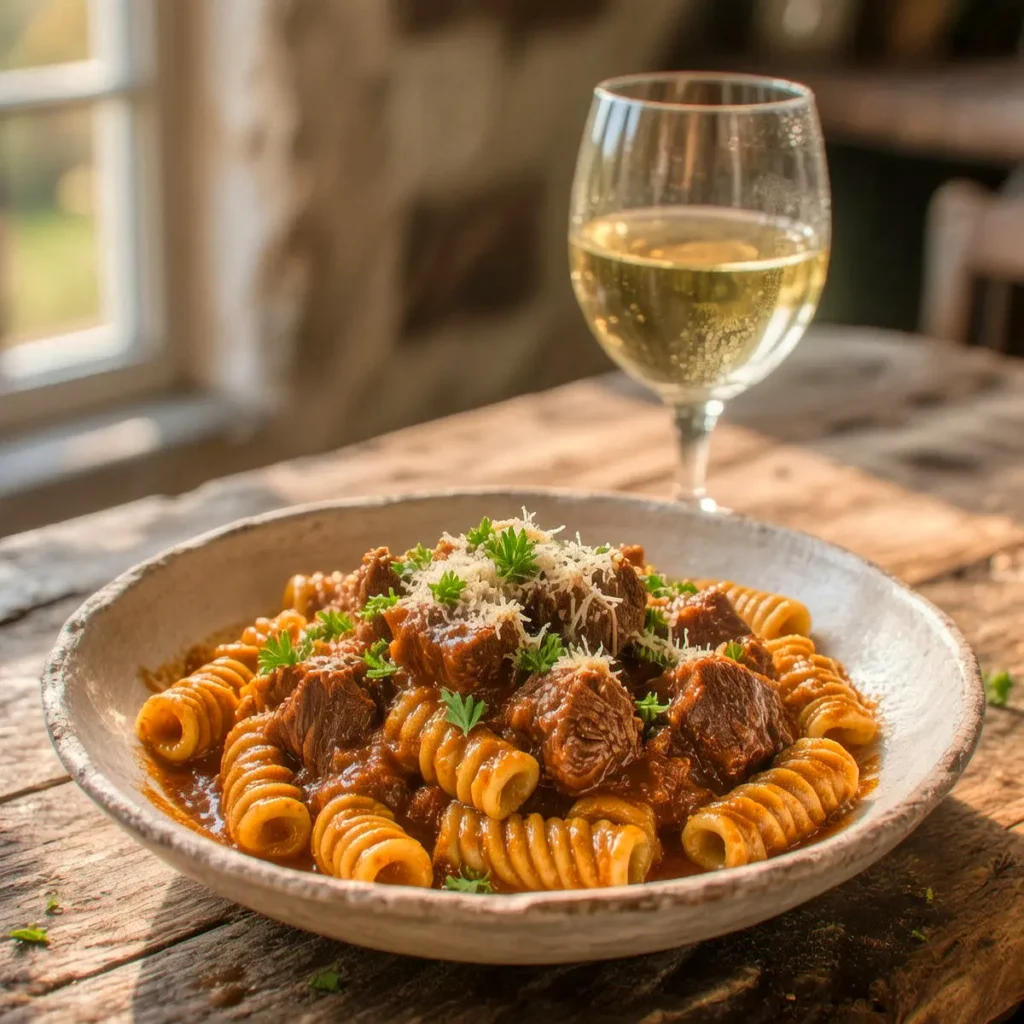
On the northern Croatian island of Krk, a plate of šurlice tells an entire story in flour and water. Long, hollow tubes of dough, curled around a knitting needle and left to dry on floured cloths, form one of the island’s signature foods and a culinary emblem for the broader Kvarner region. Simple ingredients anchor the pasta, yet the shaping work, carried out by hand at kitchen tables and in small taverns, signals care, patience, and local pride.
Šurlice belongs firmly to the home kitchen. The dough starts with flour, water, salt, and often a touch of egg and olive oil, then rests until supple enough to roll into ropes and cut into nuggets. Each small piece is pressed and rolled around a thin stick or knitting needle, then gently slipped off, leaving a hollow center that welcomes sauce. On Krk this method has become so closely tied to local identity that entire events, such as Šurlice Days in Vrbnik, celebrate the pasta with demonstrations and long tables of guests eating it in many forms.
The shape itself feels purpose-built for hearty food. Šurlice resemble a more slender cousin of Istrian fuži, yet stretch longer and carry a thicker wall of dough. That structure gives a pleasing bite—firm yet tender—and creates a kind of tunnel for sauce to run through. Meat ragùs and stews cling to the outer ridges while juices seep into the hollow interior, so every forkful delivers both starch and sauce in balance. On Krk, cooks often pair šurlice with lamb or beef stews, seafood braises, or seasonal vegetables, creating a bridge between inland comfort cooking and Adriatic brightness.
This recipe follows that tradition with a slow-cooked beef goulash, rich with onion, tomato, paprika, and red wine. The pairing reflects long ties between Croatian coastal cooking and Central European stews: plenty of onion cooked until sweet, moderate heat from paprika, and meat simmered until yielding but not falling apart. The resulting sauce tastes deep yet gentle, surrounding the hand-rolled pasta without overwhelming it. Lamb appears often in Krk kitchens for this dish, yet well-marbled beef chuck fits readily into many home pantries and responds generously to a slow simmer.
The making of šurlice rewards a steady pace rather than speed. After the dough rests, shaping turns into a quiet rhythm: roll, cut, press, twist around the stick, slide off, and dust with flour. In many homes the work becomes a social task, with several pairs of hands around the table, talking and rolling while trays fill with pale coils of pasta. At festivals and workshop-style tastings on Krk, visitors often watch this process in person, then sit down to plates of steaming pasta dressed with goulash or tomato sauce.
For a home kitchen far from the Adriatic, the same method relies on equipment that feels reassuringly modest: a bowl, a board, and a slim dowel, skewer, or knitting needle. The dough does not require a machine. The sauce calls for time on the stove rather than complex technique. The finished bowl, however, carries a quiet sense of feast—deeply flavored meat over handmade pasta, finished with a little sharp sheep cheese or pecorino and fresh parsley.
Prepared for a weekend gathering or a winter evening, šurlice with beef goulash invites diners into Krk’s food culture through texture and repetition: the chew of the pasta, the gloss of the sauce, the way each hollow tube captures just enough gravy. Once the method settles into hand memory, the dish can move from special project to recurring centerpiece, open to many regional variations—from seafood to spring vegetables—without losing its island character.