スラニナ – 豚脂身の塩漬けスラブ(クロアチア産ベーコン)

Home Slanina is the Croatian word for a slab of salt-cured pork fat – essentially old-world bacon. In much of Eastern Europe it’s known as salo, and in Croatia slanina is a beloved staple. This lightly smoked, savory fatback can be sliced thinly and eaten raw, or fried until crisp. It is a foundational flavor in traditional Croatian cooking, adding richness to stews, beans, sauerkraut, and even pastries. Farmers once kept slabs of slanina hanging in their smokehouses year-round as a preserved energy food. For many Croatians, a simple morning meal might be bread smeared with slanina and rubbed with fresh garlic or topped with pickles. What sets slanina apart […]
オンボロ – イストリア産豚ロース肉

Home Ombolo is a classic cured pork loin from Croatia’s Istria peninsula, a region often called the “Tuscan of Croatia.” This lean, tender cut is transformed through a centuries-old process of salting, spicing, and air-drying. Once cured, Ombolo has a rich but refined flavor that combines savory pork with subtle aromatic notes of bay leaf and black pepper. Families in Istria have passed down recipes for Ombolo across generations, making it a beloved tradition at holiday feasts and village gatherings. In winter, slabs of Ombolo would hang in cool stone cellars, infusing the air with a warm, spiced scent that recalls wood smoke and festive banquets. What makes Ombolo special […]
アーモンド入りラビオリ(ダルメシアンラビオリ)

Home In the seaside regions of Dalmatia, rafioli are a beloved symbol of celebration. Despite the Italian-sounding name, they are very Croatian: sweet, almond-filled “ravioli” that are almost always on the table at weddings, baptisms, and Christmas feasts. Legend says the first rafioli were baked by a lady named Rafioli imprisoned in Trogir’s fortress; she passed the time making treats, and after her rescue they became a token of gratitude. Today, every Dalmatian family has its own recipe for rafioli, small delicate pockets of flavor that bring an elegant touch to the dessert spread. Rafioli are made by sandwiching a sweet almond (or hazelnut) filling between two thin circles of […]
司教のパン(クロアチアの祝日のナッツ入りパン)

Home When the winter holidays arrive along the Adriatic coast and inland villages, Croatian families often celebrate with Bishop’s Bread (biskupov kruh), a dense, cake-like loaf studded with fruits and nuts. Despite the name, this bread is more like a fruitcake than ordinary bread. Its origin is unclear—some call it “broken glass bread” or “stained glass bread” because the chunks of cherries, nuts, and sometimes chocolate look like jewels or stained glass when sliced. It’s said the name “Bishop” might hint at the special occasions it marks, although no one knows exactly why it’s called that. Bishop’s Bread is a festive quick bread made without yeast. Instead, a batter of […]
自家製ジャムとコンポート

Home In Croatia, preserving the harvest for winter is a cherished tradition. Generations of homemakers would spend late summer days turning ripe fruits into džem (jam) and kompot (stewed fruit), filling rows of glass jars with vibrant preserves. Common flavors include plum, apricot, cherry, fig, and pear. When winter’s short days arrive, these sweet jars are like little pieces of summer ready to brighten breakfast or dessert. A spoonful of homemade plum jam on buttered bread, or warm apple compote spooned over vanilla pudding, are comforts that evoke grandparents’ kitchens. Fruit jams in Croatia are often thick and glossy. The basic method is simple: cook fruit with sugar (and sometimes […]
ファーマーズチーズケーキ(クロアチアチーズケーキ)

Home A Croatian farmer’s cheese cake is a tender, custard-like dessert baked with rich quark or cottage cheese. Unlike the dense American-style cheesecake, this version is lighter and often crustless. In villages and small towns it is known simply as kolač sa sirom (cake with cheese) or sirnica, reflecting its main ingredient. The cake dates back to the Austro-Hungarian era, sharing roots with Czech and Slovak tvaroh cakes. Home cooks prized its simple ingredients—fresh cheese, eggs, sugar and a bit of flour or semolina—and its warm, comforting flavor. This cake has a delicate texture somewhere between a firm pudding and a sponge. It bakes until golden on top, with a […]
ウサギのグーラッシュ(イストリア風ウサギのシチュー)
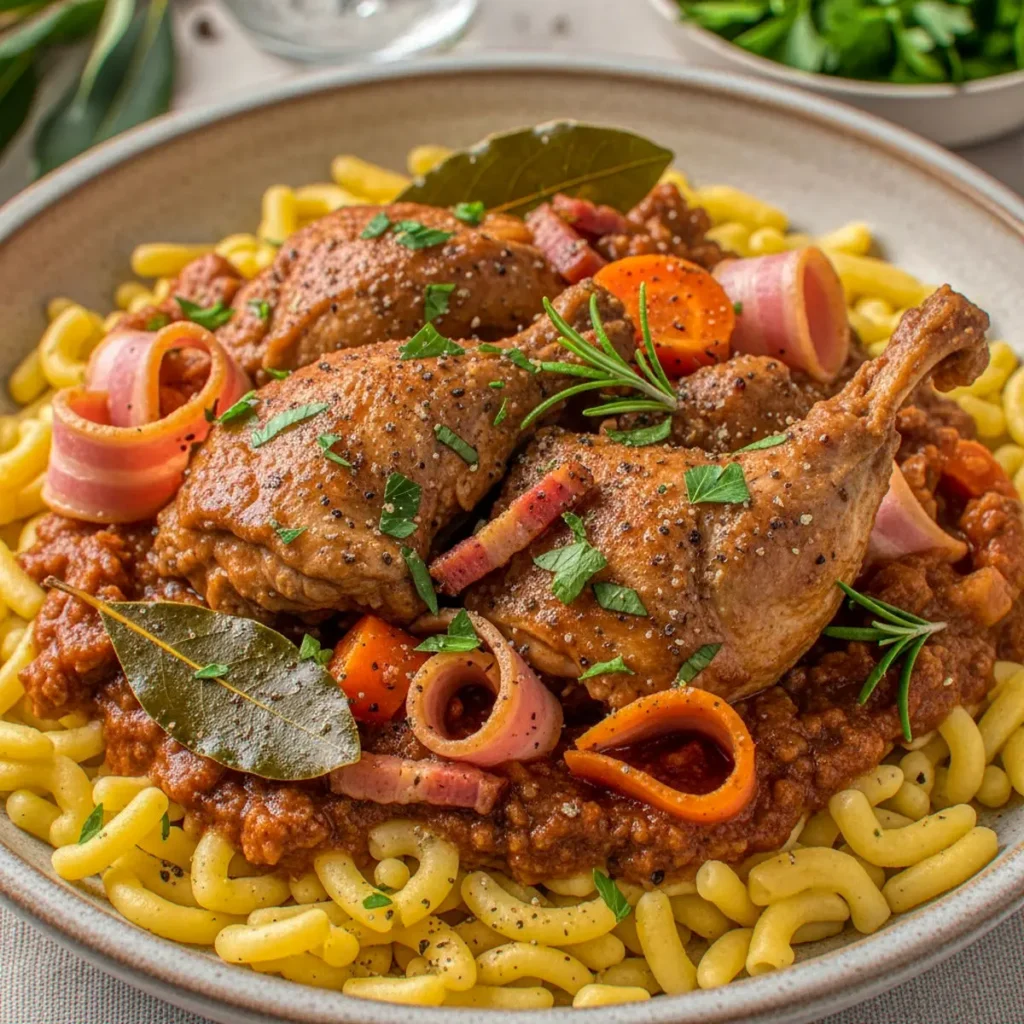
Home Rabbit goulash is a comforting rustic stew from Istria, Croatia’s sunlit peninsula known for its game meat traditions. In Istrian kitchens and rural farmhouses, wild or farmed rabbit is often used in slow-cooked stews. This dish celebrates local flavors: strips of rabbit simmer with ribbons of pancetta (cured bacon), sweet vegetables, and aromatic herbs. A splash of dry wine and ripe tomatoes enrich the sauce, while bay leaves and rosemary infuse a woodsy fragrance. The result is tender, savory-sweet rabbit meat in a warmly spiced gravy. Traditionally served over homemade pasta or golden gnocchi, this stew brings a taste of Istria’s countryside to the table. In Croatia’s coastal regions, […]
マニストラ・ナ・ポメ(トマトソースのダルマチア風パスタ)

Home Manistra na pome literally means “pasta in tomatoes” in the local dialect, and it truly epitomizes the taste of summer along Croatia’s Dalmatian coast. This humble dish is simply everyday pasta dressed in a bright, fragrant tomato sauce. But what it lacks in fuss it more than makes up for in flavor and nostalgia. Each bite is a taste of warm, sun-ripened tomatoes and sweet onions, gently simmered in olive oil. In Dalmatian households, making manistra na pome is as much a ritual as it is a meal: grandmothers would sing folk songs about it (even the old town taverns hang signs proclaiming, “Volin te ka manistru na pome,” […]
ニョッキ(ンジョキ) - ダルメシアン風ジャガイモ団子

Home Soft, pillowy gnocchi – known as njoki in Croatian – are a beloved accompaniment to hearty stews and sauces across Dalmatia. These potato dumplings have a simple origin: mashed potatoes combined with flour and egg, shaped into bite-sized pillows. The beauty lies in their lightness and versatility. In Dalmatia, njoki often appear at Sunday family lunches, especially alongside rich dishes like pašticada (braised beef stew) or goulash. Making gnocchi by hand is a comforting tradition; as the dough comes together, the kitchen fills with a warm potato scent. In the coastal villages, njoki might be served with hearty tomato-based sauces or rosemary-infused butter. Unlike Italian versions, Croatian njoki sometimes […]