Škripavac – Formaggio contadino fresco croato “cigolante”

Home Škripavac, whose name comes from the Croatian verb škripati (to squeak), is a traditional fresh cheese from the mountainous regions of Lika, Gorski Kotar, and Kordun in Croatia. It earned the nickname “squeaky cheese” because of its distinctive rubbery texture that literally squeaks between the teeth when eaten. Locally made from rich cow’s milk […]
Paški Sir – Formaggio di pecora dell'isola di Pag

Home Paški sir (pronounced “pahsh-kee seer”) is Croatia’s most renowned artisanal cheese, hailing from the windswept island of Pag on the Adriatic. Its fame comes from the island’s unique environment: a cold, saline wind called the bora carries sea spray onto the grazing pastures. Only the hardiest herbs thrive on this salt-dusted soil – sage, […]
Gulasch di cervo Feines con prugne

Home Feines venison goulash is a luxurious twist on traditional game stew, savoring the balance of savory and sweet that game meats welcome. In this dish, lean venison (typically from deer or antelope) is braised slowly with aromatics, wine, and a handful of sweet dried prunes. The addition of prunes, along with whole spices like […]
Slanina – Lastra di grasso di maiale stagionato (pancetta croata)

Home Slanina is the Croatian word for a slab of salt-cured pork fat – essentially old-world bacon. In much of Eastern Europe it’s known as salo, and in Croatia slanina is a beloved staple. This lightly smoked, savory fatback can be sliced thinly and eaten raw, or fried until crisp. It is a foundational flavor […]
Ombolo – Lombo di maiale istriano stagionato

Home Ombolo is a classic cured pork loin from Croatia’s Istria peninsula, a region often called the “Tuscan of Croatia.” This lean, tender cut is transformed through a centuries-old process of salting, spicing, and air-drying. Once cured, Ombolo has a rich but refined flavor that combines savory pork with subtle aromatic notes of bay leaf […]
Ravioli ripieni di mandorle (ravioli dalmata)

Home In the seaside regions of Dalmatia, rafioli are a beloved symbol of celebration. Despite the Italian-sounding name, they are very Croatian: sweet, almond-filled “ravioli” that are almost always on the table at weddings, baptisms, and Christmas feasts. Legend says the first rafioli were baked by a lady named Rafioli imprisoned in Trogir’s fortress; she […]
Pane del vescovo (pagnotta di noci tipica delle feste croate)

Home When the winter holidays arrive along the Adriatic coast and inland villages, Croatian families often celebrate with Bishop’s Bread (biskupov kruh), a dense, cake-like loaf studded with fruits and nuts. Despite the name, this bread is more like a fruitcake than ordinary bread. Its origin is unclear—some call it “broken glass bread” or “stained […]
Marmellate e composte fatte in casa

Home In Croatia, preserving the harvest for winter is a cherished tradition. Generations of homemakers would spend late summer days turning ripe fruits into džem (jam) and kompot (stewed fruit), filling rows of glass jars with vibrant preserves. Common flavors include plum, apricot, cherry, fig, and pear. When winter’s short days arrive, these sweet jars […]
Cheesecake del contadino (Cheesecake croata)

Home A Croatian farmer’s cheese cake is a tender, custard-like dessert baked with rich quark or cottage cheese. Unlike the dense American-style cheesecake, this version is lighter and often crustless. In villages and small towns it is known simply as kolač sa sirom (cake with cheese) or sirnica, reflecting its main ingredient. The cake dates […]
Gulasch di coniglio (stufato di coniglio istriano)
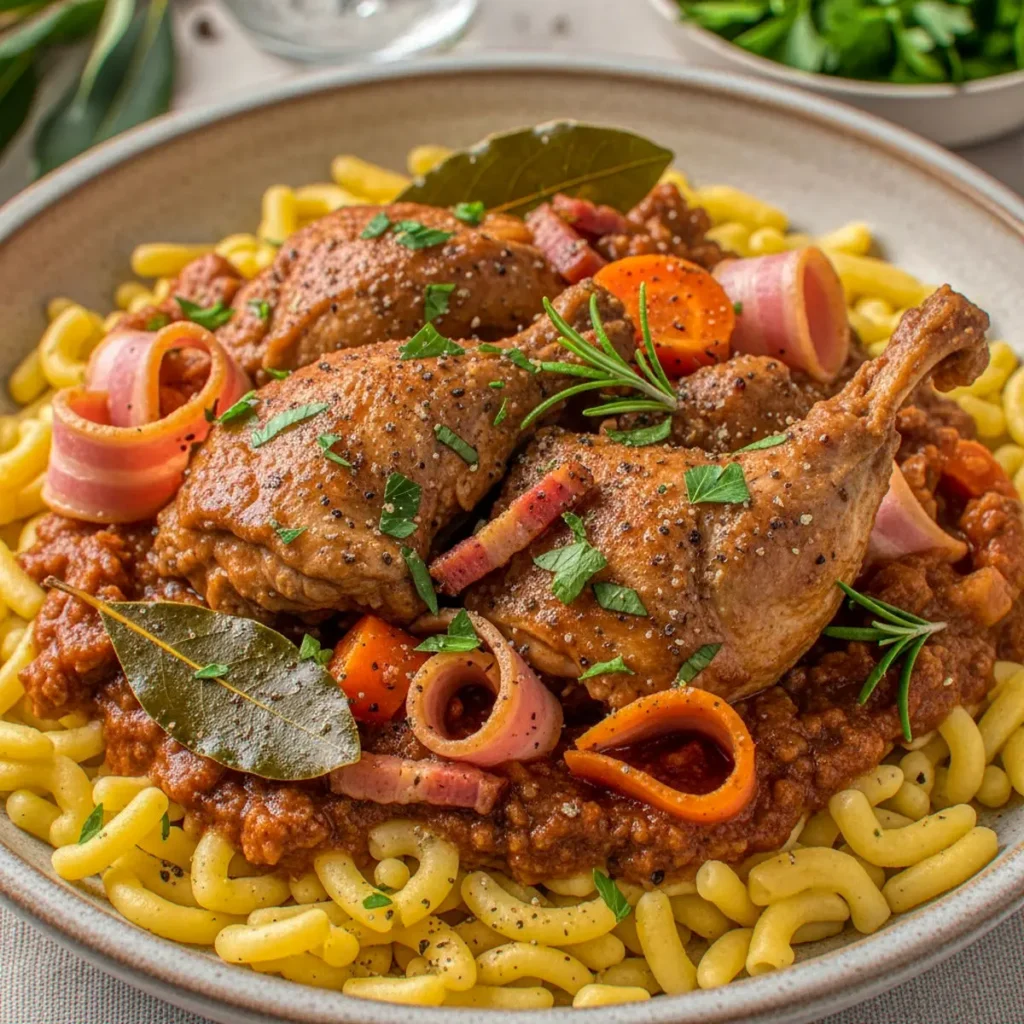
Home Rabbit goulash is a comforting rustic stew from Istria, Croatia’s sunlit peninsula known for its game meat traditions. In Istrian kitchens and rural farmhouses, wild or farmed rabbit is often used in slow-cooked stews. This dish celebrates local flavors: strips of rabbit simmer with ribbons of pancetta (cured bacon), sweet vegetables, and aromatic herbs. […]