Meso ‘z tiblice comes from Međimurje, a small region in northern Croatia bordered by rivers, vineyards, and long winters. For generations, families there relied on careful meat preservation to carry them through the colder months, and this dish grew directly from that need. It turns pork and lard into a compact reserve of sustenance and flavor, packed into a wooden tub called a tiblica and kept in a cold cellar for weeks or even months.
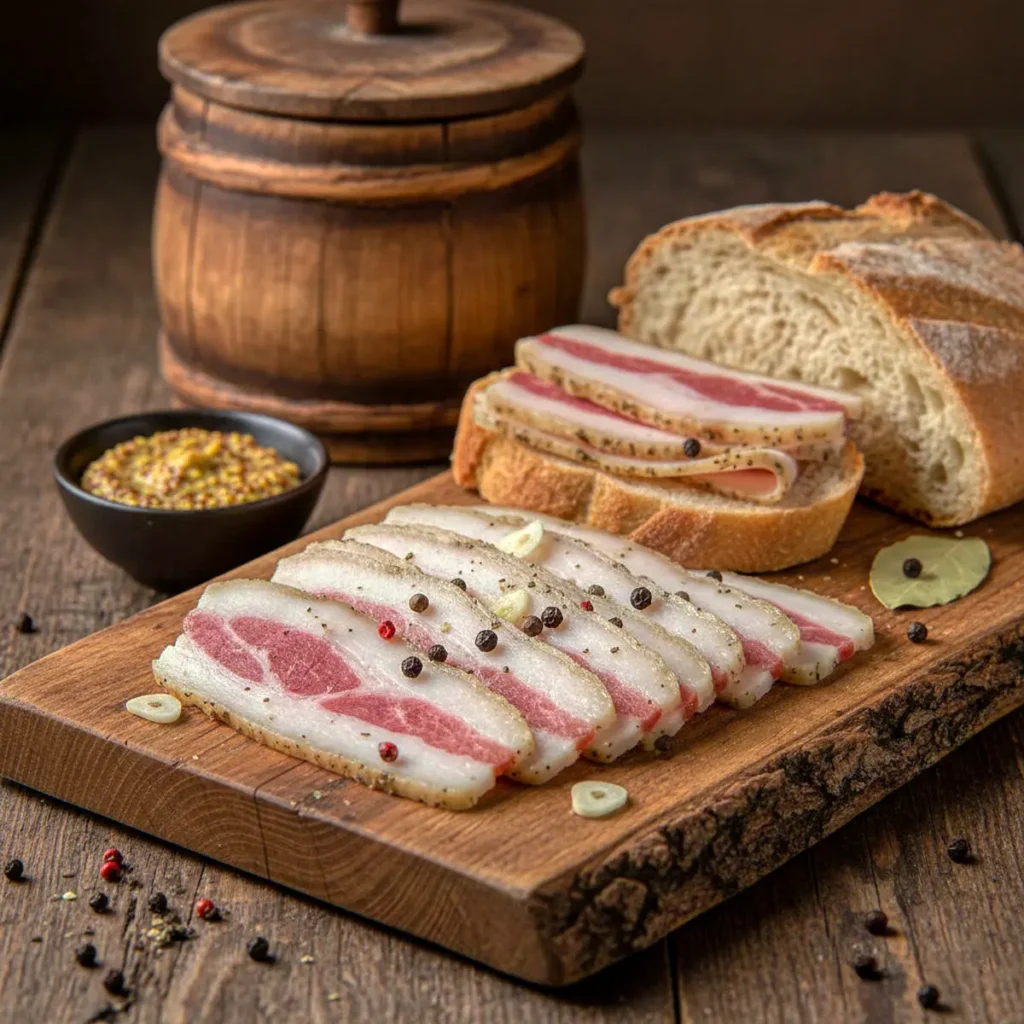
At its heart, meso ‘z tiblice is pork confit in local form. Chunks of pork shoulder and belly rest in salt, paprika, garlic, and pepper, then simmer very gently in fragrant lard until completely tender. Once cooked, the pieces are transferred to a crock or tub and fully submerged in the rendered fat. As the lard cools, it forms a firm seal that keeps air away from the meat and slows spoilage. Under that pale lid of fat, the pork stays soft, richly seasoned, and ready for slicing at a moment’s notice.
The flavor is bold yet balanced. Paprika, garlic, and black pepper give the meat a deep, almost smoky warmth, while the lard carries those aromas into every fibre. The texture lands between slow-roasted pork and confit duck: supple, juicy, and sliceable, with a faint outer crust from the initial browning. Chilled, the meat cuts cleanly into neat pieces for platters. Gently warmed, it softens further and almost flakes, cloaked in a glossy sheen of melted fat.
In Međimurje, this preserved pork often appears on the table during winter holidays, family gatherings, and traditional pig-slaughter days (kolinje). Hosts set out a wooden board crowded with meso ‘z tiblice, fresh bread, sliced red onion, pickled peppers, and sauerkraut. Guests cut thin slices of meat, spread a little seasoned lard on bread, and build their own small bites. For many households, a tub of pork in lard in the cellar signals comfort and security: something hearty on hand when visitors arrive or snow closes in.
This version keeps the soul of the dish while translating it to a modern kitchen. Instead of a large wooden tub and unheated cellar, it uses a Dutch oven for slow cooking and a ceramic crock or wide-mouthed glass jar for storage in the refrigerator. Salt quantities are measured for food safety, and oven temperatures stay low and steady for even, gentle cooking. The method suits a home cook who wants traditional character without managing a whole pig or a stone cellar.
From a planning point of view, meso ‘z tiblice fits especially well into busy weeks and social seasons. The pork cures overnight, cooks once, then rests under lard, gaining flavor every day. The cook can slice off portions as needed, serve them cold with bread and salads, or crisp them quickly in a skillet for a warm supper. The dish is naturally gluten-free; any gluten enters only through accompaniments such as bread or dumplings. Those who prefer smaller portions can halve the recipe and store the meat in several smaller jars for flexible use.
For anyone interested in Croatian food, this preserved pork offers a direct line into everyday rural life, past and present. It shows how a few basic ingredients—pork, lard, salt, paprika, and garlic—can turn into something both practical and deeply satisfying, with a form of quiet luxury that comes from time, patience, and good fat.