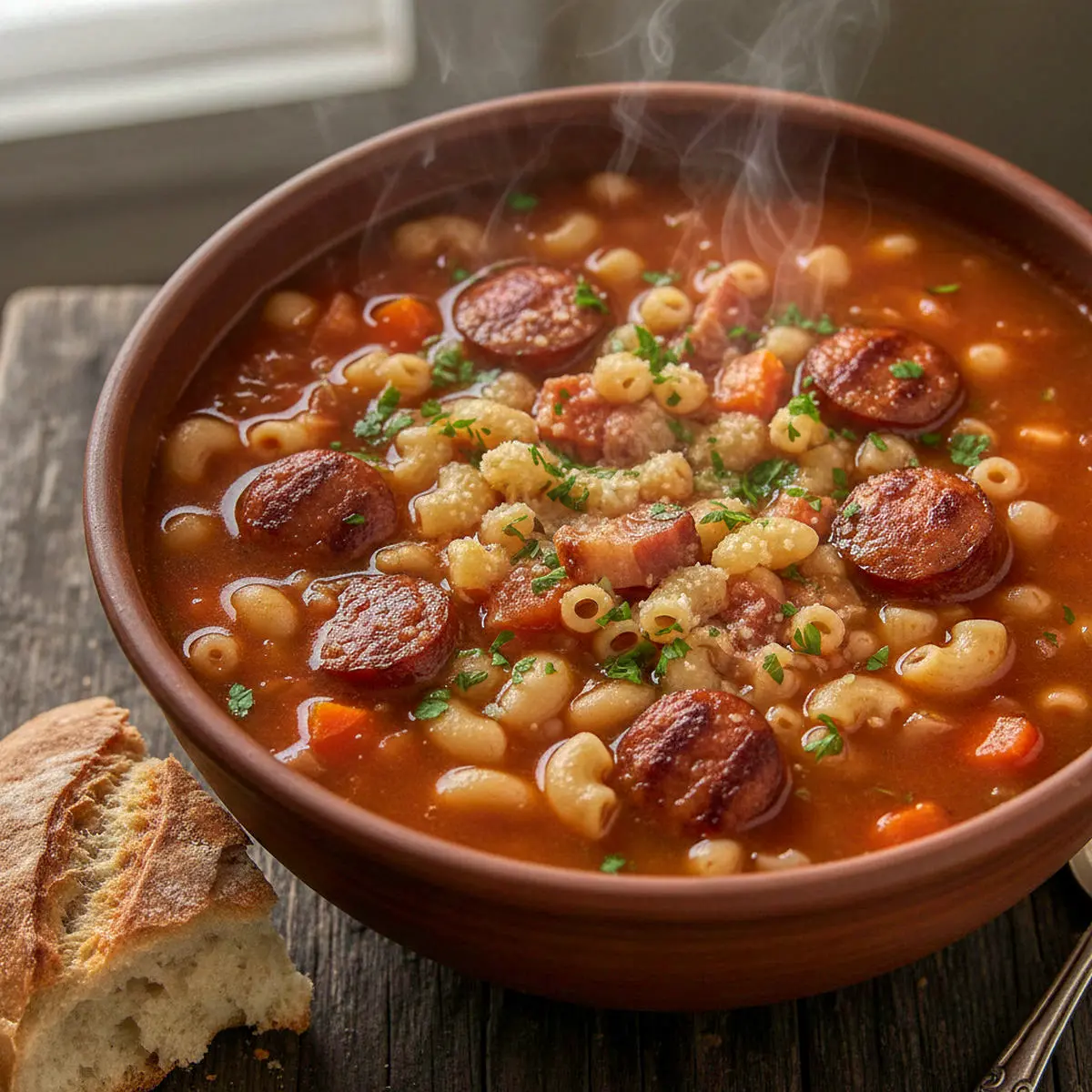
Pašta Fažol sits near the heart of Croatian home cooking: a dense, fragrant pot of beans, small pasta, and smoked pork that can serve as soup, stew, or full meal, depending on how long it simmers and how much liquid remains. Across the Adriatic coast and inland regions, families treat it as dependable winter fuel and everyday comfort, not a showpiece. The pot lands on the table slightly stained with tomato, thick with starch from beans and pasta, and carrying the unmistakable aroma of smoked meat that has given up its flavor over a long, quiet simmer.
The name tells a story of movement and contact. “Fažol” comes from the Italian word for beans, “fagioli,” a reminder of the centuries-long presence of Venetian traders and governors along the Dalmatian coast. In those coastal towns, cooks often favor white beans such as cannellini, while colder inland areas lean toward borlotti and other speckled varieties that stand up well to long cooking. Everywhere in Croatia the idea remains the same: a pot filled with beans, a few scraps of smoked pork, and a handful of pasta, stretched to feed several hungry people with modest means.
Pašta Fažol shares a family resemblance with Italian pasta e fagioli, yet Croatian versions tend to lean more heavily on smoked pork—ham hock, ribs, bacon, or pancetta—rather than olive oil alone. The pork bone or rind enriches the broth with gelatin and gentle smokiness, while cubes of pancetta or bacon give tiny bursts of salt and fat in the bowl. Tomato paste often plays a secondary role: a spoon or two for color and a faint acidity, rather than a bright, tomato-forward base. The result is robust and round, with beans taking center stage.
Texture matters just as much as flavor. In many households, part of the bean mixture is lightly mashed or blended, thickening the broth until it coats the back of a spoon. Pasta then cooks directly in this base, releasing starch that turns the broth almost velvety. Some families stop while the dish still eats like soup; others push it into clear stew territory, where a spoon will stand nearly upright. Both interpretations feel authentic, shaped more by habit and appetite than any single written standard.
The recipe below aims for a middle path: enough liquid to ladle, enough body to feel substantial as a main course. Dried beans simmer slowly with smoked pork and a classic mirepoix of onion, carrot, and celery. Pancetta brings a deep, cured flavor; tomato paste, bay leaves, and paprika fill in the background. The pasta goes in near the end so it keeps a bit of bite instead of sagging. The method respects traditional Croatian technique, yet it stays manageable for a modern home kitchen, with clear stages and room for substitution where needed.
Pašta Fažol suits many moments: a weekend pot that feeds a crowd, a make-ahead lunch that improves overnight, or a quiet evening meal with just bread and a simple salad. Once cooked, the soup keeps well and thickens nicely, which means leftovers often feel even more satisfying. Learned in coastal towns, inland villages, and immigrant kitchens abroad, it offers an accessible way to enter Croatian cooking through a dish that feels instantly familiar yet distinct in its smoked depth and bean-rich comfort.