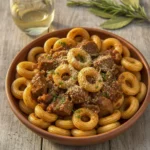
Across Croatia’s Adriatic coast, the scent of warm oil, citrus zest, and vanilla often signals that a plate of fritule is on the way. These bite-sized fried dough balls, dotted with raisins and dusted generously with powdered sugar, form a familiar thread through winter gatherings from Istria and Kvarner to Dalmatia. For many households, Advent markets, Christmas Eve, and carnival season feel incomplete without at least one large bowl piled high with these irregular little spheres of dough.
Fritule occupy a comfortable space between street food and home baking. At festive stands they sit under heat lamps beside plastic cups of mulled wine, ready for visitors who want a small, sweet snack to eat on the move. At home, they arrive in metal bowls or enamel dishes lined with paper towels, brought to the table by a grandmother or aunt with sugar still on her hands. The batter itself remains straightforward: flour, eggs, sugar, and a dairy element such as yogurt, sour cream, or milk form the base, joined by baking powder or yeast for lift.
What turns this simple dough into a distinctly Croatian treat lies in a few key accents. Raisins, often soaked in dark rum, rakija, or Maraschino, punctuate the interior with pockets of sweetness. Lemon or orange zest supplies a fresh, perfumed note that cuts through the richness of the fried dough. Vanilla sugar or extract rounds out the aroma. Many families keep to a yogurt-based batter that comes together quickly, while others follow a yeast dough that requires a longer rise and yields a slightly airier interior. There are versions with grated apple, chopped nuts, or even a little mashed potato, but raisin and citrus remain the most widely recognised combination.
Culturally, fritule live closely beside other seasonal sweets such as kroštule (twisted fried pastry strips) and krafne (filled doughnuts). Yet fritule hold a particular link with midwinter rituals. Dalmatian sources describe Christmas mornings scented by trays of fresh fritule, while local accounts of Christmas Eve speak of women standing at the stove, frying batch after batch while men sing kolende, traditional carols, in squares and streets.
The size of fritule gives them a unique texture profile. Each piece is small enough to eat in two bites, which means plenty of surface area for a thin, crisp shell and a generous dusting of powdered sugar. The interior stays tender and slightly springy, never heavy when the oil temperature is correct and the batter balanced. Good fritule feel light in the hand and carry the flavours of citrus and liqueur without harshness. Poorly made ones can taste greasy or dense, so attention to batter consistency and frying temperature matters.
This recipe uses a baking powder and yogurt base, a common modern approach in Croatian kitchens that offers a reliable, relatively quick method with minimal resting time. The batter folds in rum-soaked raisins and fresh zest, then fries in small spoonfuls until deep golden. The result fits both weeknight cravings and a Christmas table. With a thermometer, a sturdy pot, and a little practice shaping spoonfuls of batter, home cooks can produce a tray of fritule that matches the spirit of coastal bakeries and family kitchens: informal, fragrant, and very easy to share.