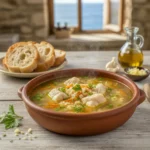
Tripice, often called fileki in Zagreb and parts of continental Croatia, stands among the most characteristic offal dishes in the country. In this stew, strips of beef tripe simmer slowly in a paprika-tinted tomato base, enriched with bacon or pancetta, root vegetables, and often potatoes. The result is a spoonable meal with real depth: velvety broth, soft tripe with a gentle chew, and a smoky, savory aroma that suits cold evenings and crowded family tables. In many Croatian regions, tripe has long belonged to a frugal, rural repertoire, where every part of the animal carried value and nothing went to waste.
Across Europe, tripe appears in dozens of forms, from Iberian versions with mushrooms to Italian and French variations in wine or tomato sauces. In Croatia, the approach leans toward a one-pot stew or soup, often spicy and paprika-forward. In continental areas, the dish frequently goes by the name špek fileki, literally “bacon tripe,” which signals one of its defining touches: cured pork that adds smoke, salt, and a rounded, savory finish. Onions, carrots, celery, tomato paste, and paprika form the backbone, while the tripe brings protein and a pleasantly collagen-rich texture.
Within Croatian cooking, tripice sits somewhere between a humble worker’s meal and a nostalgic specialty. Once associated with inexpensive cuts and “poor man’s” cooking, it now appears on menus of traditional taverns and more ambitious bistros, especially in colder months and in central Croatian regions around Zagreb. One well-known description speaks of fileki as a stew eaten with a spoon, with thickness and spicing levels that vary from kitchen to kitchen, sometimes with polenta or pasta, sometimes with bread alone for dipping into the glossy sauce.
From a nutritional angle, tripe is relatively lean compared with many other meat cuts, supplying solid protein and a good amount of vitamin B12 with moderate fat. Reference data for cooked beef tripe lists roughly 80–125 kcal per 100 g, with about 10–18 g of protein and 3–5 g of fat, which makes it a satisfying yet not overly heavy base for a stew.
This version of Croatian Tripice Stew aims to reflect Zagreb-style fileki while remaining accessible in a home kitchen. The recipe starts with pre-cleaned, pre-cooked tripe, which still gains flavor from a short blanching step that freshens its aroma. From there, a slow process of building flavor begins: rendering bacon or pancetta, softening a generous amount of onion and root vegetables, toasting sweet paprika briefly so it blooms in the fat, then layering in tomato paste, white wine, and stock. Tripe and potatoes simmer together until the pieces soften and the broth thickens into a rich, faintly gelatinous sauce.
Several small choices guide the stew toward balance. Tomato remains present but not dominant, letting paprika, onion, and cured pork lead. The amount of bacon stays measured, enough for smoke and depth without tipping the dish into excessive richness. Potatoes cook directly in the stew rather than separately, lending starch that naturally thickens the liquid. A restrained use of hot paprika or chili keeps the heat level adjustable, from gentle warmth to something more assertive.
In flavor terms, the stew lands somewhere between a goulash-style soup and a rustic casserole. The tripe becomes tender yet still holds enough structure to feel satisfying. Bacon and paprika form a smoky, slightly sweet base, while tomato and wine add acidity that brightens the collagen-heavy broth. A final handful of parsley, stirred in off the heat, brings freshness and a subtle herbal note.
This recipe suits cooks who enjoy patient, slow simmering and want to explore traditional Croatian flavors in a practical way. Tripice requires time rather than complicated technique, and it rewards that time with a pot of stew that can feed a small group, reheat well, and stand on its own with nothing more than bread or polenta on the side.