Across Croatia, a clear, fragrant pot of chicken soup—pileća juha—often opens the meal before anyone even reaches for a knife and fork. The table may hold roasted meats, baked potatoes, or cabbage rolls, yet the first ladle of comfort is nearly always this pale golden broth. In many homes it signals Sunday, holidays, or a visit from relatives, a quiet marker that the day carries a little more ceremony than usual.
This style of soup sits at the intersection of Central European precision and Balkan warmth. The broth aims for clarity and depth at the same time: no aggressive herbs, no heavy cream, no flour-thickened texture, just clean chicken flavor supported by root vegetables and a handful of very fine noodles. Each spoonful feels light yet steadying, the sort of dish grandparents trust for children, older family members, and anyone recovering from a long week or a winter cold.
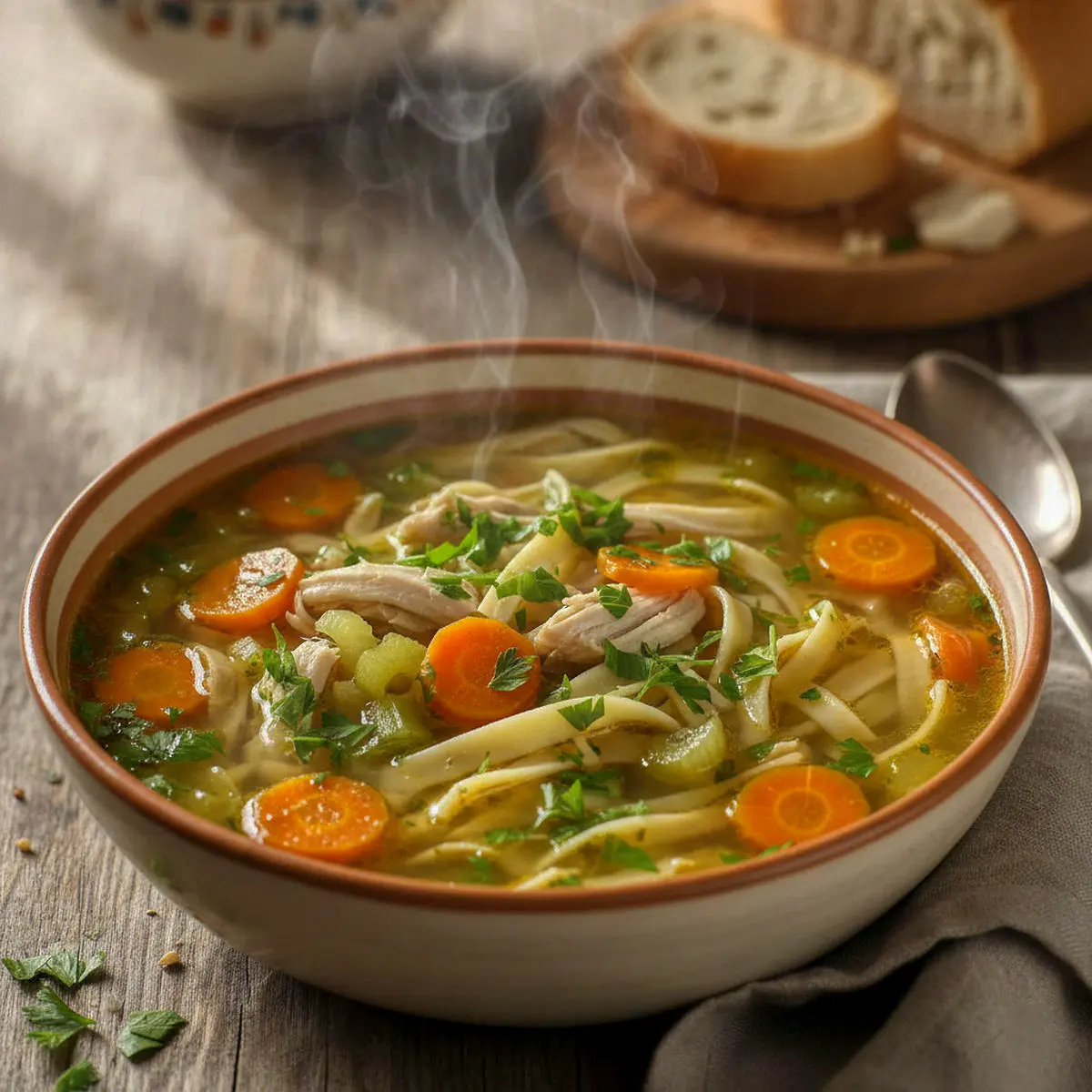
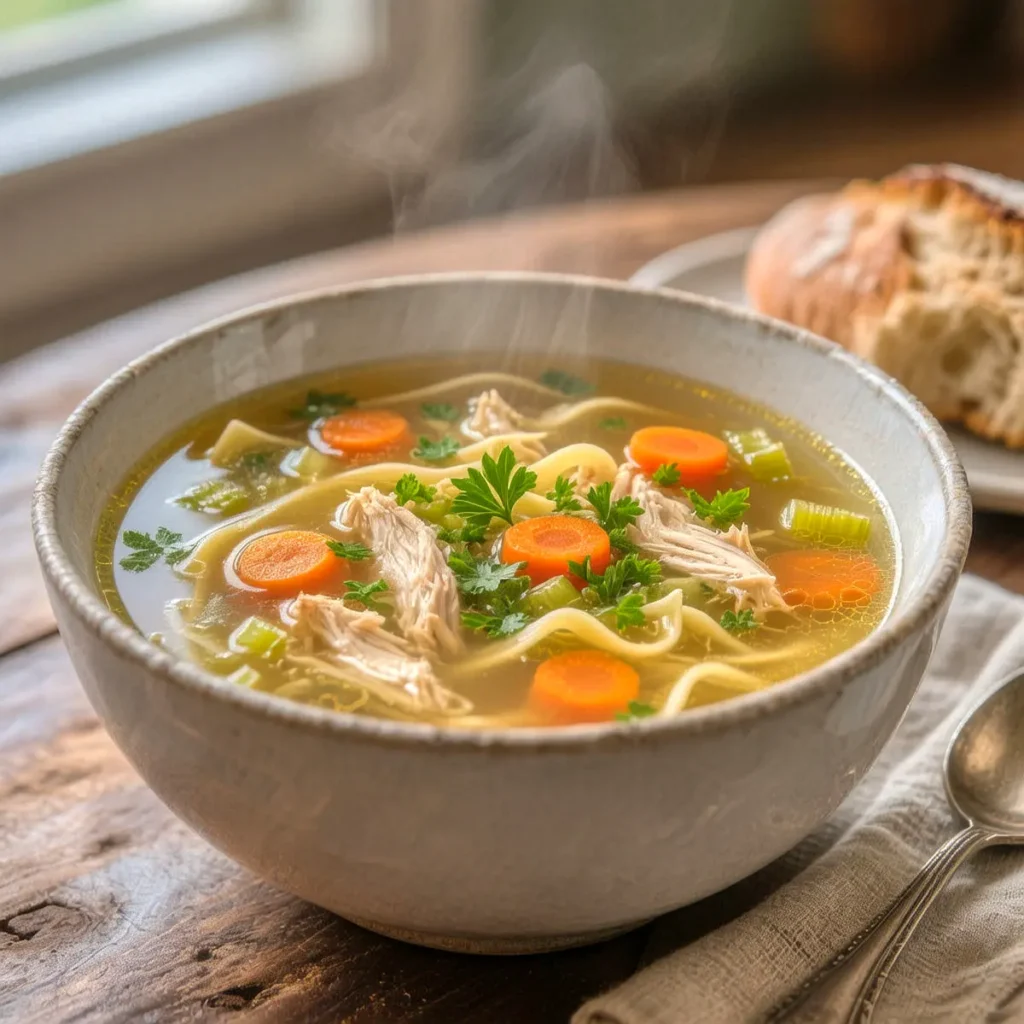
From a culinary standpoint, Croatian chicken soup belongs to a family of long-simmered, bone-forward broths found from Vienna to Sarajevo. The local approach favors a whole chicken or a mix of bony pieces, plenty of carrots, parsnip, onion, leek, and often celeriac. The vegetables contribute natural sweetness and a faint earthiness that rounds the flavor without overshadowing the meat. The broth stays gently salted, leaving room for diners to adjust seasoning at the table. Fresh parsley often lands in the bowl at the last moment, bright but measured.
Texture tells the rest of the story. The liquid should appear clear but not thin, with a slight sheen from rendered chicken fat. Carrots and parsnips retain their shape yet yield easily to the spoon. The noodles—usually very thin egg noodles cut into short strands—soften in the hot broth while remaining distinct, never mushy. Shreds of tender chicken may float in each bowl, though some families prefer to reserve the meat for a second course.
Test kitchens pay close attention to a few key variables here: starting the chicken in cold water, maintaining a bare simmer instead of a rolling boil, and skimming the surface during the first part of cooking. These steps help produce a broth that tastes rich but looks clear. The choice of chicken matters as well; a smaller bird or a mix of legs and wings often yields better flavor than a large, very lean chicken. Vegetables stay in large chunks so they infuse the broth without disintegrating.
This version of Croatian chicken soup follows the rhythm of many family kitchens throughout the country while adding measured, stepwise guidance for modern cooks. The recipe yields a generous pot, with enough broth for six starter portions and some extra to freeze. It invites quiet variations—different noodle shapes, more or fewer vegetables, a touch of extra parsley—without losing its character. At the table, it feels understated yet complete: a clear, light broth that still anchors a meal.