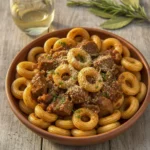
Along the sun-bleached coastline of Dalmatia, where fishing boats return each morning heavy with the night’s catch, a particular dish appears on nearly every seaside tavern table. Salata od hobotnice—octopus salad—stands as one of Croatian cuisine’s most treasured preparations, a study in restraint that allows the sweet, briny character of fresh octopus to speak without interruption. This is not a dish of complication or fuss. Rather, it is a celebration of the sea, rendered through time-honored technique and an unwavering commitment to quality ingredients.
The preparation has roots stretching back centuries along the Adriatic, where fishing communities developed countless methods for preparing their abundant cephalopod harvest. Unlike the grilled or braised octopus dishes common throughout the Mediterranean, Dalmatian octopus salad takes a gentler path. The octopus is simmered slowly until fork-tender, then cooled and dressed while still slightly warm—a detail that allows it to absorb the generous coating of local olive oil and the bright acidity of wine vinegar or fresh lemon. Waxy potatoes, cooked alongside or separately and cut into thick rounds, provide earthy ballast to the dish, while raw onion rings, garlic, and copious amounts of flat-leaf parsley complete the composition.
What makes this salad exceptional is its directness. There are no heavy sauces to mask inferior ingredients, no elaborate spice blends to distract the palate. The dish succeeds or fails based on the quality of its core components: the freshness of the octopus, the fruitiness of the olive oil, the ripeness of the parsley. Croatian grandmothers along the coast have long understood this truth, passing down through generations not complex recipes but rather the knowledge of how to select the best octopus at market, how to test olive oil for bitterness, how to recognize potatoes that will hold their shape during cooking.
The traditional serving context for salata od hobotnice varies by occasion. As a starter, it might precede grilled fish at a family gathering, arranged on a simple white platter and offered with crusty bread for soaking up the fragrant oil. During summer months, the salad often serves as a complete light meal, particularly during the afternoon hours when the Dalmatian heat discourages heavier fare. At festive occasions—name days, holidays, wedding celebrations—octopus salad frequently appears as part of an extensive cold table alongside cured meats, sheep’s milk cheeses, and pickled vegetables.
The texture of properly prepared octopus salad rewards patient cooking. When simmered at a bare tremor rather than a rolling boil, octopus undergoes a transformation from rubbery to silken, developing a tender bite that yields without excessive chewiness. The purple-red skin softens and clings to the white flesh beneath, contributing both color and a subtle marine intensity. Cut into thick coins or rustic chunks, the octopus pieces become almost creamy at their centers while maintaining enough structure to stand up to fork and knife.
Temperature plays a role often overlooked in home preparations. While the dish is served cold or at cool room temperature, the dressing should be applied when the octopus and potatoes retain some residual warmth from cooking. This technique, observed in konoba kitchens from Split to Dubrovnik, allows the olive oil and seasonings to penetrate the still-porous ingredients rather than simply coating their surfaces. The result is a salad that tastes deeply seasoned throughout, each bite carrying the full expression of its simple components.
For those cooking this dish outside Croatia, the approach demands attention to sourcing. Frozen octopus, counterintuitively, often produces more tender results than fresh, as the freezing process breaks down tough muscle fibers—a fact that Croatian fishermen’s wives have long employed by freezing their catch before cooking. Good-quality extra-virgin olive oil remains non-negotiable, as cheaper refined oils contribute little beyond lubrication. With these considerations addressed, salata od hobotnice becomes not merely reproducible but genuinely transportive, offering a taste of the Dalmatian coast wherever one’s kitchen may be.