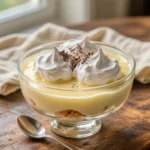
Kremšnita occupies a special niche in Croatian dessert culture: familiar, comforting, and still ceremonial enough to mark a day as noteworthy. Under its snow-white veil of powdered sugar sits a clean geometry of textures—flaky puff pastry top and bottom, a high central layer of custard that holds its shape, yet trembles lightly when cut. In towns around Zagreb, and especially in Samobor, this slice signals an outing, a stroll, a coffee shared with family or friends.
The dessert traces its ancestry to the wider Austro-Hungarian tradition of cremeschnitte, a custard slice found in various forms from Vienna to Bled. Croatia’s version, known as kremšnita or krempita, settled into its own identity in the 20th century. In Samobor, confectioner Đuro Lukačić created a signature style in the 1920s: a tall, pale filling anchored between two sheets of puff pastry, served in generous portions on the town square. That Samobor kremšnita later gained recognition as part of Croatia’s intangible cultural heritage, a formal nod to something locals had felt for decades.
At its core, the dessert remains deceptively simple. Puff pastry forms the frame; the centre relies on milk, eggs, sugar, a modest amount of flour or starch, and vanilla. Some bakers work with a custard enriched by whipped egg whites, giving a light, aerated structure that still slices neatly. Others add a slim layer of whipped cream or stabilise the cream with gelatine for clean bakery lines. Each variant reflects a slightly different priority: cloud-like lightness, sharp edges for display, or an emphasis on eggy depth.
This version leans toward a Samobor-inspired balance. The puff pastry bakes separately for crispness. The filling starts as a classic cooked custard, then receives whipped egg whites to create a light yet stable cream. A tall pan—around 23×33 cm (9×13 inches)—allows for a generous layer of filling that feels true to the style seen in Croatian pastry shops.
The flavour profile reads as vanilla forward, with warmth from egg yolks and the gentle sweetness of milk. Puff pastry contributes buttery notes and a contrasting crunch, particularly on the top layer, which softens slowly over several hours in the refrigerator. That change over time is one of the quiet pleasures of kremšnita: freshly assembled slices show a clearer contrast between crisp pastry and cream; by the next day, the layers settle, the pastry yielding slightly into the custard, giving a more unified bite.
In cafés, kremšnita often appears beside a small espresso or strong Turkish-style coffee, though tea or a glass of cold milk suits it equally well. One slice usually suffices, yet the dessert remains light enough to follow a full lunch of soup, meat, and salad—a common structure for family meals in continental Croatia.
Home cooks sometimes treat it as a festive project, reserved for weekends, holidays, or visits from relatives who remember the “original” version from a specific pastry shop. The recipe here respects that sense of tradition while offering clear timing, modern food-safety standards for egg handling, and a structure that can be adapted toward whipped-cream or gelatine-stabilised variants if desired.
Prepared with care, kremšnita brings a Croatian pastry-shop classic to the home kitchen: a slice that looks impressive on the plate yet arises from ingredients most pantries already know well.